Japan Indonesia Sustainable Growth Partnership: Investment, Housing and Coastal Innovation
Introduction
The Japan Indonesia sustainable growth partnership entered a new phase in October 2025 as Indonesian officials and Japanese stakeholders gathered in Tokyo to advance discussions on housing, food security, and maritime development. The visit carried symbolic and strategic importance, reflecting a shared commitment to long-term economic cooperation.
Against the disciplined rhythm of Japan’s capital, the Indonesian delegation opened dialogue with policymakers, investors, and industry leaders. At the centre of these conversations stood the Duo Champion Program, a national initiative introduced by Prabowo Subianto. The programme aims to deliver three million housing units while opening three million hectares of farmland for cultivation to strengthen Indonesia’s food security.
These objectives align closely with Japan’s strengths in technology, infrastructure, and industrial management. As discussions unfolded in Tokyo, the Japan Indonesia sustainable growth partnership emerged as a framework capable of linking Indonesia’s development priorities with Japanese expertise.
Japan Indonesia Sustainable Partnership Dialogues Shaping Strategic Cooperation
Policy Alignment at the Investment Promotion Office
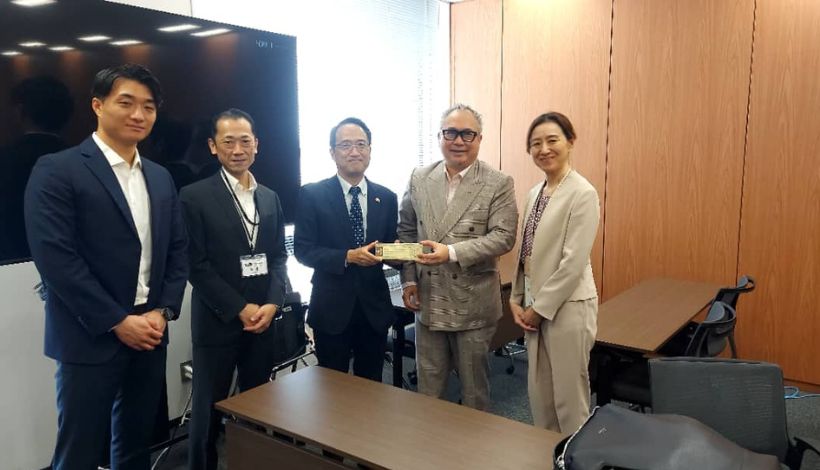
A key meeting took place at the Investment and Promotion Office of Indonesia in Tokyo, where officials and industry representatives examined practical pathways for implementing the Duo Champion Program. The discussion brought together policymakers, investors, and technology specialists seeking to align development priorities between the two countries.
The Duo Champion Program as a Development Platform
Participants viewed the initiative as a platform connecting housing development, agricultural expansion, and coastal economic revitalisation. Rather than focusing solely on construction or land development, the program aims to strengthen local economies while also improving national food resilience. By integrating housing and agricultural productivity, the framework seeks to create sustainable economic ecosystems across Indonesia.
Japanese Technology Supporting Coastal Industries
During the dialogue, Japanese technological expertise emerged as an important component of the collaboration. Innovations in aquaculture, seafood processing, and cold-chain logistics could help Indonesia modernise its coastal industries. These capabilities align closely with Indonesia’s extensive maritime resources, particularly in regions where fisheries support local livelihoods and regional economies.
Digital Aquaculture Solutions for Higher Productivity
One example frequently highlighted during the discussions involved advanced aquaculture management systems such as Umitron Cell, an artificial-intelligence platform developed by Umitron. The technology monitors feeding patterns and environmental conditions in real time, enabling farms to optimise feed use and reduce operational waste.
Technology Transfer and Sustainable Fisheries Development
In addition, tools such as Umitron Cell provide practical pathways for improving productivity while promoting more sustainable fisheries management. By integrating digital monitoring systems with modern aquaculture practices, Indonesia’s fisheries sector could increase output while maintaining environmental balance.
Investment Momentum Strengthening Economic Ties
Japanese Capital and Indonesia’s Expanding Market
Economic cooperation between the two countries has strengthened steadily over the past decade. Japan remains among the most significant foreign investors in Indonesia, supporting sectors ranging from manufacturing and electronics to energy and infrastructure.
Japan Indonesia Sustainable Partnership A Decade of Expanding Investment Flows
Between 2009 and 2017, Japanese direct investment increased sharply, rising from modest levels in the early 2000s to nearly one-third of total investment inflows during that period. This surge reflected growing confidence among Japanese corporations in Indonesia’s long-term economic potential.
Recent Investment Performance in 2025
More recently, Japanese investment has continued to rank among Indonesia’s leading sources of foreign capital. During the first half of 2025 alone, Japan contributed approximately US$1.6 billion in foreign direct investment.
At the same time, Indonesia recorded Rp942.9 trillion in total investment realisation during the same period, representing year-on-year growth of more than 13 percent.
Indonesia’s Ambitious Investment Targets
These figures highlight the scale of opportunity underpinning the Japan Indonesia sustainable growth partnership. Indonesia’s government is targeting Rp1,905.6 trillion in investment for the full year, signalling strong confidence in the country’s economic trajectory and its capacity to attract global capital.
Government Dialogue Expanding Bilateral Cooperation
Further cooperation is expected following a recent visit to Jakarta by representatives of the Ministry of Land, Infrastructure, Transport and Tourism of Japan. The delegation explored frameworks designed to accelerate Japanese participation in Indonesia’s strategic sectors.
Strategic Sectors for Future Collaboration
Among the areas receiving particular attention were housing development, infrastructure construction, and urban planning. Through closer collaboration in these sectors, both countries aim to strengthen long-term economic ties while supporting Indonesia’s national development agenda.
Japan Indonesia Sustainable Partnership in Coastal Development and the Blue Economy
Revitalising North Jakarta’s Fishing Communities
As discussions shift from Tokyo to Jakarta, attention is turning toward Indonesia’s coastal economies. In particular, the fishing communities along North Jakarta’s coastline offer opportunities for technology-driven development.
These communities have long relied on small-scale fisheries and salt production. However, limited processing capacity and fragmented supply chains often restrict the value captured by local producers. Collaboration with Japanese partners could address these challenges.
Japan’s seafood sector maintains advanced processing standards, including hygienic handling systems, traceability technologies, and integrated cold-storage logistics. These capabilities support one of the world’s largest seafood markets.
For Indonesia, the introduction of similar technologies could raise productivity and product quality. Upgraded facilities, cold-chain infrastructure, and export-ready processing plants would enable coastal communities to participate in higher-value global supply chains.
Digital Innovation in Fisheries
Technological collaboration also extends into digital monitoring systems. Japan has introduced advanced tools, a fisheries navigation system used by hundreds of vessels to analyse weather and ocean conditions. The platform supports fuel efficiency and improves catch planning through real-time data.
Incorporating similar digital tools within Indonesia’s fisheries sector could improve operational efficiency while enhancing sustainability. Such innovations align with Indonesia’s broader ambition to strengthen its blue economy and maximise the potential of its vast maritime resources.
Strategic Environment for Investment
Indonesia’s policy environment increasingly supports international collaboration. Investment frameworks have evolved through regulatory reforms, tax incentives for strategic industries, and streamlined licensing procedures.
Recent analyses by global advisory firms highlight Indonesia’s expanding appeal for foreign investors. These assessments point to strong domestic consumption, infrastructure development, and a rapidly growing middle class.
Even when quarterly investment data fluctuates, underlying fundamentals remain robust. Domestic investment activity continues to generate employment and stimulate regional development. Meanwhile, foreign partners such as Japan bring capital, technology, and managerial expertise.
Within this environment, the Japan Indonesia sustainable growth partnership offers a mechanism for aligning these complementary strengths.
Conclusion
The discussions held in Tokyo during October 2025 represent more than diplomatic engagement. They signal a shared determination to link Japan’s technological capabilities with Indonesia’s development ambitions.
Housing construction, agricultural expansion, and coastal revitalisation form the pillars of the Duo Champion Program. Through strategic collaboration, these initiatives can generate long-term economic benefits while improving livelihoods across Indonesia.
For Japan, the partnership offers access to one of Southeast Asia’s most dynamic economies. For Indonesia, Japanese investment and technology support the transition toward a more resilient and sustainable development model.
As dialogue continues between Tokyo and Jakarta, the Japan Indonesia sustainable growth partnership stands poised to influence regional economic cooperation in the years ahead.