From Dubai to Nusantara: Mohamed Alabbar and Ecosystem Investment Leadership

Early Foundations and Formative Years
The trajectory of Mohamed Ali Alabbar reflects a disciplined progression shaped by modest beginnings and early exposure to commerce. Growing up in Dubai in a family connected to trade and port activities, he developed an understanding of markets at a formative stage. His father’s role in the shipping sector introduced him to the mechanics of logistics, negotiation, and international exchange. These early experiences cultivated a commercial instinct that would later define his leadership approach within the framework of ecosystem investment leadership.
Education further refined this perspective. Alabbar pursued studies in business administration in the United States, where he gained exposure to structured financial systems and global economic thinking. This period expanded his outlook beyond regional dynamics, equipping him with the analytical tools required to navigate complex investment environments.
Recognition, Public Service, and Strategic Exposure
Upon returning to Dubai, Alabbar entered public service during a period of rapid national transformation. His role within government institutions placed him at the intersection of policy, trade, and economic development. During this phase, he worked closely within leadership circles under Mohammed bin Rashid Al Maktoum, gaining direct insight into how strategic vision translates into national execution.
This exposure proved decisive. It provided him with a deep understanding of how infrastructure, regulation, and capital can align to accelerate growth. Recognition from leadership was not symbolic; it reflected confidence in his ability to deliver within complex, high-stakes environments. These experiences shaped his long-term orientation, where planning, scale, and discipline became central pillars of his approach.
From Government to Real Estate Visionary
Alabbar’s transition into the private sector marked a turning point. Drawing on his institutional experience, he founded Emaar Properties and began redefining urban development in Dubai. His approach moved beyond conventional construction. He focused on creating integrated environments where residential, commercial, and lifestyle components functioned as a unified system.
Projects such as Burj Khalifa and Dubai Mall exemplify this philosophy. These developments established new benchmarks for scale and integration, reinforcing Dubai’s position on the global stage.
This evolution from early commercial exposure to large-scale development leadership encapsulates the essence of ecosystem investment leadership. It demonstrates how vision, supported by structured experience and execution capability, can transform not only individual projects but entire economic landscapes.
The Rise of Ecosystem Investment Leadership in Global Development
Mohamed Ali Alabbar began his career during Dubai’s rapid economic transformation. Early exposure to trade and public-sector initiatives shaped his understanding of how infrastructure and policy can align to drive growth.
As the founder of Emaar Properties, he led projects that redefined urban development across the Middle East. Landmark developments such as Burj Khalifa and Dubai Mall demonstrate how integrated planning creates sustained economic activity.
These projects combined residential, commercial, and tourism elements within cohesive environments. They reflect an early form of ecosystem thinking that aligns closely with today’s ecosystem investment leadership approach.
A Philosophy Rooted in Integrated Development
The shift toward ecosystem development reflects a perspective long articulated by Mohamed Ali Alabbar one that prioritizes integrated communities over isolated structures. He has consistently framed development as a way to shape environments where people live, work, and interact within a unified system.
From his early projects in Dubai, Alabbar approached real estate with a broader lens. He viewed each development as part of a larger economic and social framework, where connectivity between components defines long-term success.
From Buildings to Living Economic Systems
Within this philosophy, real estate evolves beyond physical construction. Alabbar’s developments are designed to function as interconnected environments where retail, hospitality, residential, and commercial elements reinforce one another.
Projects such as Downtown Dubai illustrate this approach. These environments operate as living systems, continuously generating activity and attracting global participation.
This model shifts the focus from individual assets to sustained ecosystem performance. Value emerges from interaction, density, and the ability to adapt over time.
Extending Ecosystem Thinking Across Emerging Sectors
As global investment priorities evolve, this integrated approach extends naturally into new sectors. The same principles now apply to:
- Electric vehicle ecosystems
- Data infrastructure and data center clusters
- Renewable energy and biomass hubs
- Healthcare and bioscience parks
Each of these sectors requires coordination between infrastructure, technology, and human capital. Alabbar’s philosophy aligns closely with this requirement, emphasizing cohesion over fragmentation.
Long-Term Value as a Strategic Discipline
A defining element of Alabbar’s thinking lies in his focus on long-term value creation. He has consistently emphasized the importance of building developments that remain relevant across economic cycles.
This perspective encourages developers to anticipate change rather than react to it. It prioritizes adaptability, resilience, and sustained utility. As a result, projects are positioned to generate recurring value rather than short-term returns.
Ecosystem Investment Leadership in Practice Across Global Markets
Within this framework, ecosystem investment leadership becomes a matter of intentional design and disciplined execution. Projects are conceived as platforms that enable continuous economic activity, attract diverse stakeholders, and support long-term growth.
This approach reflects a shift in how investment is understood. Success depends less on isolated performance and more on the strength of the ecosystem as a whole.
Insights from Rusmin Lawin’s Perspective
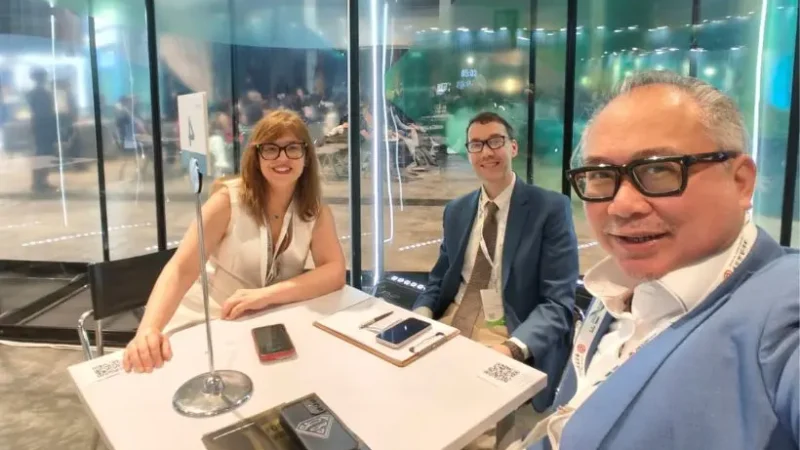
The narrative of ecosystem investment leadership gains additional depth through personal engagement. Conversations between Rusmin Lawin and Mohamed Ali Alabbar reveal a shared emphasis on discipline and clarity.
Alabbar consistently highlighted execution over rhetoric. He emphasized understanding market dynamics before deploying capital. This approach reinforces a key principle: credibility emerges through delivery.
For young entrepreneurs, these insights offer practical direction. They encourage a focus on preparation, consistency, and long-term positioning.
Nusantara Visit and Strategic Engagement
Alabbar’s visit to Nusantara in 2023 reflects a deepening global interest in Indonesia’s long-term development trajectory. The visit formed part of a broader engagement with Indonesian policymakers and project stakeholders, where discussions centered on urban design, investment structure, and the integration of global best practices into the new capital’s masterplan.
During the visit, the agenda focused on evaluating Nusantara as a platform for integrated development. Key areas of interest included smart city infrastructure, sustainable urban systems, and the potential to position the capital as a hub for regional economic activity. Alabbar’s perspective emphasized the importance of creating environments that attract both capital and talent, supported by cohesive planning and operational efficiency.
Aligning Vision with Ecosystem Investment Leadership
Nusantara represents a forward-looking urban model that aligns closely with the principles of ecosystem investment leadership. The development integrates governance, sustainability, and economic activity within a unified framework designed for long-term scalability.
Discussions during Alabbar’s engagement highlighted the importance of embedding renewable energy solutions, digital infrastructure, and mobility systems from the outset. This approach ensures that the city evolves as a functional ecosystem rather than a collection of standalone districts.
Such alignment reflects a broader shift in global development thinking, where cities are designed as engines of growth capable of supporting multiple industries simultaneously.
Leadership Lessons for the Next Generation
Clarity, Discipline, and Long-Term Thinking
Alabbar’s journey offers valuable lessons for emerging leaders navigating a complex investment landscape:
- Clarity of vision enables strategic decision-making
- Execution discipline ensures consistent progress
- Long-term thinking supports sustainable outcomes
These principles form the foundation of effective ecosystem investment leadership. They guide leaders in balancing ambition with practicality.
Creating Value Beyond Capital
Another defining element lies in the ability to generate broader impact. Successful projects contribute to employment, infrastructure, and economic diversification.
Golden Takeways
The rise of ecosystem investment leadership reflects a broader transformation in how value is created across industries. Leaders such as Mohamed Ali Alabbar demonstrate how vision, discipline, and execution can reshape entire markets.
Through landmark developments and strategic thinking, Alabbar illustrates the transition from building structures to creating ecosystems. His engagement with Rusmin Lawin and his interest in Nusantara highlight the global relevance of this approach.
As investment continues to evolve, the ability to think in ecosystems will define the next generation of leadership. Those who adopt this perspective will shape not only projects, but the economic systems that sustain them.