Indonesia Investment Destination 2026 for Global Investors
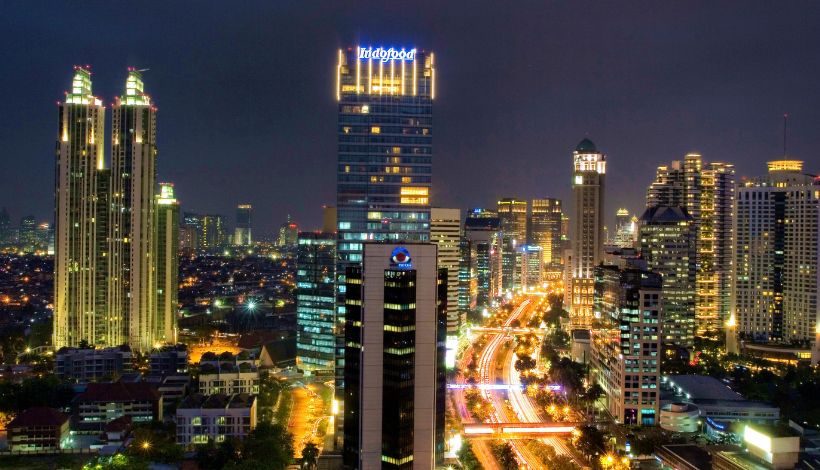
Indonesia investment destination 2026 has become a topic of growing interest among global investors assessing the next phase of Asian economic expansion. With a population exceeding 270 million, abundant natural resources, and a reform-driven policy environment, Indonesia is strengthening its position as one of the region’s most compelling markets.
Across Southeast Asia, capital flows increasingly favor economies that combine domestic demand with industrial transformation. Indonesia stands out within that landscape. Strategic infrastructure development, the rapid growth of downstream industries, and a thriving digital economy are reshaping the country’s investment profile.
For international investors seeking scale, stability, and long-term growth potential, Indonesia offers a combination that few emerging markets can match.
A Large Domestic Market Driving Economic Stability
One of the defining characteristics of the Indonesia investment destination 2026 narrative lies in the country’s domestic demand. Household consumption accounts for more than half of Indonesia’s gross domestic product, creating a resilient economic structure that helps cushion global volatility.
Indonesia’s expanding middle class continues to drive spending across multiple sectors, including retail, financial services, travel, and technology. Rising incomes and urbanization reinforce demand for housing, transportation infrastructure, and consumer services.
This broad internal market gives investors a critical advantage. Companies operating in Indonesia can build scale locally while gradually expanding into regional markets across Southeast Asia.
Economic forecasts from international institutions place Indonesia’s annual growth trajectory near the 5 percent range, maintaining one of the most consistent performances among major emerging economies.
Industrial Transformation Through Downstream Policy
Indonesia’s investment landscape has undergone significant transformation in recent years due to the government’s focus on downstream industrialization. The strategy centers on processing natural resources domestically rather than exporting raw commodities.
Nickel has become a defining example. Indonesia holds the world’s largest nickel reserves, an essential component in electric vehicle batteries and energy storage technologies. By restricting exports of raw nickel ore and encouraging domestic processing, Indonesia has attracted billions of dollars in foreign direct investment.
Major global manufacturers and battery producers have established processing facilities and joint ventures in the country. This industrial expansion is strengthening Indonesia’s role in the global electric vehicle supply chain.
Beyond nickel, the downstream approach extends to sectors such as bauxite, copper, and palm-based bioenergy. Investors now see Indonesia as a manufacturing hub capable of supporting the next generation of energy and technology industries.
Infrastructure Expansion Supporting Investment
Infrastructure development plays a critical role in strengthening Indonesia’s investment environment. Over the past decade, the country has invested heavily in toll roads, airports, ports, railways, and digital connectivity.
These projects aim to reduce logistics costs across the archipelago while improving access to industrial zones and urban centers. Efficient logistics networks are particularly important for a country consisting of more than 17,000 islands.
Public-private partnerships have helped accelerate these initiatives. Global investors increasingly participate in infrastructure financing, renewable energy projects, and transport modernization.
Improved connectivity allows manufacturers and technology companies to operate more efficiently while reaching consumers across Indonesia’s vast geography.
Nusantara and the Future of Strategic Development
Another important factor shaping the Indonesia investment destination 2026 narrative is the development of Nusantara, the country’s future capital city located in East Kalimantan.
The new capital represents a long-term national project designed to redistribute economic activity beyond the island of Java. Nusantara aims to integrate smart-city technology, renewable energy systems, and sustainable urban planning.
International investors have shown growing interest in participating in infrastructure, property development, energy systems, and digital services associated with the project.
While the transition will unfold gradually over many years, Nusantara reflects Indonesia’s ambition to build modern urban centers capable of supporting long-term economic growth.
The Rapid Rise of Indonesia’s Digital Economy
Indonesia’s digital economy has emerged as one of the fastest-growing in Asia. A young population, high smartphone adoption, and expanding internet access create a fertile environment for technology companies.
E-commerce, digital payments, fintech services, and logistics platforms continue to attract venture capital and institutional investment. Indonesian startups have evolved into regional players serving millions of users across Southeast Asia.
Government support for digital transformation, combined with a large consumer market, positions Indonesia as a major technology hub in the region.
As artificial intelligence, cloud computing, and financial technology gain traction, investors increasingly view Indonesia as a strategic platform for scaling digital businesses across Asia.
Investment Diplomacy and Regional Partnerships
Indonesia’s growing international profile also contributes to its investment appeal. The country actively participates in regional trade agreements and economic partnerships that facilitate cross-border investment.
Diplomatic engagement with Middle Eastern sovereign funds, European institutions, and global development banks further expands financing opportunities for infrastructure and industrial projects.
Conclusion
Indonesia investment destination 2026 reflects a broader transformation taking place across the country’s economy. Strong domestic demand, ambitious infrastructure development, and a strategic push toward industrial value creation are reshaping the investment environment.
Global investors increasingly recognize Indonesia as a market where scale, resources, and policy direction converge. Opportunities span manufacturing, energy, technology, infrastructure, and urban development.
As Southeast Asia continues to gain prominence in global supply chains, Indonesia’s role within the region is becoming more influential. For investors seeking long-term growth across Asia, the country offers a compelling combination of economic momentum and strategic positioning.