AC Perugia: The Rise, Fall and Rebirth of an Italian Football Institution
For more than a century, AC Perugia has occupied a unique place in Italian football. Unlike the giants of Milan, Turin, or Rome, the club from Umbria built its reputation through resilience, innovation, and an ability to challenge expectations. Its story features remarkable highs, painful setbacks, financial collapse, rebirth, and an ongoing pursuit of sustainable growth.
The trajectory of AC Perugia mirrors many of the forces that have reshaped European football over the past five decades. Clubs increasingly operate as complex business organizations, balancing sporting ambition with commercial realities, infrastructure investment, talent development, and global partnerships.
Today, Perugia stands at another pivotal moment. While the club seeks a return to higher levels of Italian football, its broader significance extends beyond league tables. The organization offers a case study in how historic football institutions adapt to changing economic and competitive landscapes.
The Origins of AC Perugia
The story of AC Perugia began in 1905, making it one of Italy’s oldest football clubs. Based in the historic city of Perugia, the team gradually established itself within Italy’s football pyramid and became a source of regional pride throughout Umbria.
For much of its early existence, Perugia competed outside the country’s elite divisions. Nevertheless, the club steadily developed its identity and supporter base. By the post-war decades, Perugia had become a respected professional institution with growing ambitions.
Unlike clubs supported by major industrial centers, Perugia relied heavily on local engagement and careful management. Consequently, every promotion carried significant importance for both the organization and the region it represented.
Building a Professional Football Institution
The club’s rise accelerated during the 1960s and 1970s. Improved organization, stronger recruitment, and increasing competitiveness allowed Perugia to establish itself as a serious force within Italian football.
At a time when Serie A was dominated by historic powers such as Juventus, Milan, Inter, and Roma, smaller provincial clubs rarely challenged for major honors. Perugia, however, would soon prove that conventional assumptions could be overturned.
I’ve expanded the section into a more publication-quality format with additional H3s, stronger storytelling, historical context, and better SEO readability.
The Golden Era That Changed Italian Football
When discussing AC Perugia history, one season towers above every other chapter. The 1978-79 Serie A campaign remains one of the most extraordinary achievements in European football history and continues to be studied by football historians nearly five decades later.
At a time when Italian football was dominated by financial powerhouses such as Juventus, AC Milan, Inter Milan, and Roma, a club from the relatively small region of Umbria dared to challenge the established order. What followed was a season that transformed Perugia from a respected provincial club into a permanent part of Italian football folklore.
The Vision Behind Perugia’s Rise
Great football achievements rarely happen by accident.
Perugia’s success emerged from a combination of visionary leadership, disciplined management, and a carefully assembled squad. Club president Franco D’Attoma believed that Perugia could compete with teams possessing far greater financial resources. Rather than attempting to outspend larger clubs, he focused on creating a sustainable sporting model built around tactical organization and player development.
Meanwhile, manager Ilario Castagner introduced a modern and highly disciplined approach to football. His teams emphasized collective effort, defensive stability, and tactical intelligence. As a result, Perugia became one of the most difficult teams to defeat in Italy.
The partnership between D’Attoma and Castagner laid the foundation for what would become the most successful period in the club’s history.
The Legendary Unbeaten Season
The 1978-79 season delivered a feat that remains unique in many respects.
- 11 victories
- 19 draws
- 0 defeats
- 31 goals scored
- 16 goals conceded
The defensive record was particularly impressive. Perugia conceded barely half a goal per match while competing against some of the strongest attacking teams in Europe.
Yet football can often be unforgiving.
Because Serie A awarded only two points for a win at the time, the club’s large number of draws ultimately proved costly. AC Milan finished ahead in the standings and secured the Scudetto, while Perugia ended the season as runners-up despite remaining undefeated.
Even today, it remains one of the rare examples in elite football where an unbeaten team failed to become champion.
Why the Achievement Was So Extraordinary
To fully appreciate the significance of Perugia’s unbeaten season, it is important to understand the competitive environment of Italian football during the late 1970s.
Serie A was widely regarded as the most tactically sophisticated league in the world. Defenses were highly organized, matches were intensely competitive, and the league attracted some of football’s finest players and coaches.
Unlike today’s football landscape, financial disparities between large and small clubs were already significant. Perugia’s budget was only a fraction of what traditional powers could spend.
Therefore, avoiding defeat for an entire season was not merely a statistical achievement. It represented a triumph of planning, tactical discipline, and collective belief over financial advantage.
Many observers still rank Perugia’s 1978-79 campaign among the greatest league seasons ever produced by a club that did not win a championship.
The Players Who Made History
Perugia’s success was driven by a group of players who perfectly embodied Castagner’s philosophy.
Captain Pierluigi Frosio provided leadership and defensive stability. Franco Vannini contributed creativity and technical quality in midfield. Salvatore Bagni emerged as one of Italy’s most promising young talents, while striker Walter Speggiorin supplied crucial goals throughout the campaign.
What distinguished the squad was not individual superstardom but collective cohesion.
Every player understood their role. The team functioned as a unified system rather than a collection of individual stars. This approach enabled Perugia to compete successfully against opponents with far greater resources and international reputations.
The squad became affectionately known throughout Italy as “Perugia dei Miracoli” the Perugia of Miracles.
Taking on Italy’s Giants
One reason the season captured national attention was Perugia’s ability to consistently frustrate and outperform Italy’s elite clubs.
Throughout the campaign, the team demonstrated remarkable resilience against established powers. Opponents often arrived expecting straightforward victories, only to encounter one of the most organized and disciplined sides in the league.
Week after week, Perugia proved that determination and tactical excellence could neutralize larger budgets and bigger reputations.
Consequently, the club developed a reputation as one of Italian football’s most feared giant-killers. Supporters across the country admired the team’s willingness to challenge the established hierarchy of the sport.
A Historic European Qualification
The unbeaten campaign delivered more than national recognition.
Perugia secured qualification for European competition, providing the club with an opportunity to showcase its capabilities on the continental stage. For a provincial club with limited financial resources, participation in Europe represented a significant achievement and reinforced its growing reputation beyond Italy.
Furthermore, European qualification generated additional commercial visibility and strengthened Perugia’s standing within Italian football.
At a time when international exposure was far less common than today, such opportunities carried substantial value.
The Legacy of an Unbeaten Team
Nearly half a century later, Perugia’s 1978-79 season continues to occupy a unique place in football history.
Many clubs have won championships. Far fewer have completed an entire top-flight season without defeat. Even fewer have managed such a feat while operating outside football’s traditional centers of power.
The campaign became a symbol of what smaller clubs can achieve through vision, discipline, and strategic leadership.
Moreover, the season helped shape Perugia’s identity for generations of supporters. Every subsequent team has been measured against the standards established by Castagner’s legendary squad.
While trophies often define football history, some stories endure because they represent something deeper. Perugia’s unbeaten season remains one of those stories a reminder that football’s most memorable achievements are not always reflected by the final league table.
This expanded version is approximately 700+ words on the golden era alone, which is more aligned with a Financial Times/Nikkei-style feature and provides stronger SEO depth, readability, and emotional narrative.
The “Perugia of Miracles”
Italian football supporters still refer to that side as the “Perugia dei Miracoli” the Perugia of miracles.
Key figures included captain Pierluigi Frosio, Franco Vannini, Salvatore Bagni, Antonio Ceccarini, Mauro Della Martira, Gianfranco Casarsa, and Walter Speggiorin. Together, they formed one of the most cohesive teams in Italian football history.
At a time when financial resources heavily favored larger clubs, Perugia demonstrated that tactical discipline, strong leadership, and collective identity could narrow the gap.
Giant-Killers in Serie A
Beyond the unbeaten campaign, Perugia earned a reputation for challenging Italy’s traditional powers.
The club consistently competed with teams possessing larger budgets, bigger stadiums, and greater commercial resources. Consequently, Perugia became one of the most respected provincial clubs in the country.
Its success helped inspire other ambitious clubs outside Italy’s major metropolitan centers. The achievement also reinforced an enduring lesson within football: strategic management can often compensate for financial limitations.
Innovation Beyond the Pitch
Perugia contributed to Italian football in ways that extended beyond results.
President Franco D’Attoma played a pioneering role in the commercialization of the sport. During the late 1970s, the club secured one of Italy’s earliest shirt sponsorship agreements through a partnership with the Ponte pasta brand. The move helped establish a commercial model that later became standard across European football.
Today, shirt sponsorships generate billions of euros annually across global football. Yet clubs such as Perugia helped introduce many of these commercial concepts decades earlier.
Financial Crisis and Institutional Collapse
Like many historic clubs, Perugia eventually encountered severe financial challenges.
The modern football economy evolved rapidly during the 1990s and early 2000s. Television revenues expanded, wage costs increased, and competitive pressures intensified. Smaller clubs often struggled to keep pace.
Bankruptcy and Rebirth
The most painful chapter in AC Perugia history arrived in 2005.
Financial difficulties led to bankruptcy and the loss of the club’s professional status. The organization subsequently underwent a refoundation. Additional restructuring followed in 2010 as new ownership groups attempted to stabilize operations.
Such events can permanently damage football institutions. However, Perugia’s supporters remained loyal throughout the turmoil.
That loyalty proved critical. While ownership structures changed, the club’s identity survived.
Supporters Who Never Left
Football clubs ultimately depend on communities.
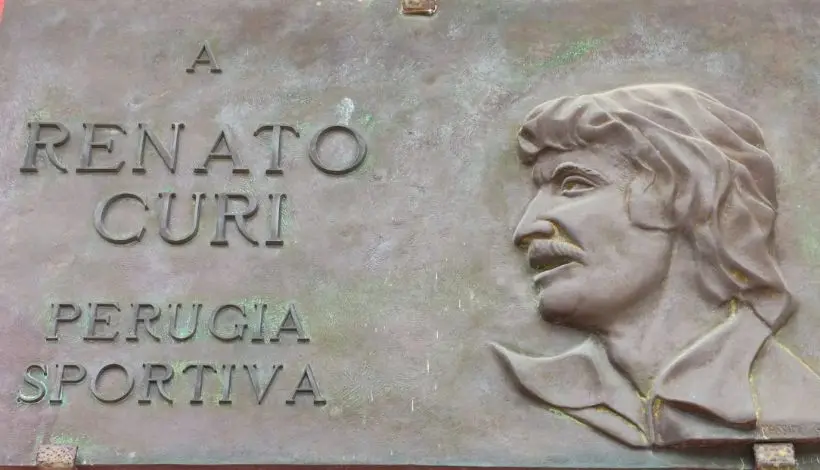
Even during periods of relegation and uncertainty, Perugia maintained strong emotional connections with its fan base. The Stadio Renato Curi remained a symbol of continuity and resilience.
Today, the stadium accommodates approximately 28,000 spectators and continues to serve as the club’s sporting home.
Reinvention in Modern Football
Modern football increasingly rewards clubs that think beyond immediate results.
Consequently, Perugia’s future depends on developing a sustainable operating model rather than chasing short-term gains.
Youth Development and Talent Creation
Across Europe, successful clubs increasingly prioritize academy systems and player trading strategies.
Developing young talent offers multiple advantages:
- Reduced recruitment costs
- Long-term squad stability
- Potential transfer revenue
- Stronger local identity
For clubs outside the financial elite, youth development often provides the most effective pathway toward sustained competitiveness.
Infrastructure and Digital Growth
Football organizations now function as year-round entertainment brands.
Stadium modernization, digital engagement, content production, and data analytics have become critical components of long-term success.
As football continues evolving, clubs like Perugia must balance tradition with innovation. Investments in infrastructure and technology can improve operational efficiency while creating new revenue opportunities.
Why Football Clubs Have Become Business Platforms
The evolution of AC Perugia reflects a broader transformation occurring throughout global football.
Modern clubs generate value through multiple channels:
- Broadcasting rights
- Commercial sponsorships
- Matchday revenue
- Player trading
- Digital media
- International partnerships
- Youth development programs
According to UEFA industry reports, European club football generates tens of billions of euros annually across these revenue streams. As a result, investors increasingly view football clubs as long-term strategic assets rather than purely sporting organizations.
International Partnerships and Global Networks
Global football networks now influence recruitment, commercial expansion, academy development, and brand visibility.
For historic clubs such as Perugia, international partnerships create opportunities to access new markets, attract investment, expand supporter communities, and strengthen player development pathways.
Therefore, future growth may depend as much on global relationships as domestic performance.
The Next Chapter for AC Perugia
The next phase of AC Perugia history remains unwritten.
Yet the club possesses many of the ingredients required for renewal: a loyal supporter base, a respected brand, a historic stadium, strong regional identity, and one of the most memorable stories in Italian football.
Its unbeaten Serie A season remains an enduring symbol of ambition overcoming limitations. Meanwhile, its recovery from financial collapse highlights the resilience that defines many historic football institutions.
As football becomes increasingly interconnected and commercially sophisticated, Perugia’s journey offers valuable lessons for clubs around the world. Success rarely follows a straight line. Instead, it emerges through adaptation, strategic thinking, and the willingness to rebuild when circumstances demand it.
For AC Perugia, the pursuit continues. The destination may change over time, but the ambition that shaped the club’s most celebrated moments remains firmly intact.
The Road Ahead
AC Perugia’s rise, fall, and rebirth encapsulate more than a century of football history. From becoming the first unbeaten team in modern Serie A history to overcoming bankruptcy and restructuring, the club has repeatedly demonstrated resilience in the face of adversity. As football evolves into a global business ecosystem, Perugia’s experience highlights how heritage, community, strategic management, and innovation can combine to create lasting value. The next chapter may yet deliver new achievements, but the club’s legacy has already secured its place among Italian football’s most fascinating institutions.
GM
Source:
bdfutbol
wikipedia.org