Danantara, Waste-to-Energy, and the Networks Powering Indonesia’s Strategic Shift
Introduction
Indonesia’s environmental challenge has moved decisively into the realm of national strategy. The Danantara waste-to-energy strategy Indonesia signals a coordinated effort to integrate waste management with energy security, industrial capability, and global investment alignment. What was once managed at the municipal level now sits within a broader economic framework, reflecting the country’s evolving development priorities.
This transition aligns with Indonesia’s forward-looking economic outlook toward 2026, where resilience, structural reform, and infrastructure expansion shape the next phase of growth. At the center of this transformation stands Danantara, an institutional platform linking policy direction with execution capacity.
Global Confidence in Danantara Waste-to-Energy Strategy Indonesia
International participation underscores the credibility of the Danantara waste-to-energy strategy Indonesia. A total of twenty-four global firms entered the tender process, reflecting strong confidence in governance, regulatory clarity, and long-term returns.
From this competitive pool, three companies advanced through qualification: Veolia, China Conch Venture Holdings Ltd, and Mitsubishi Heavy Industries.
The consortium-based structure requires technology transfer to Indonesian partners. As a result, international expertise integrates with domestic capacity, ensuring that operational knowledge gradually localizes. Initial deployment across Bali, Bogor, Bekasi, and Yogyakarta demonstrates a multi-regional approach designed for scale rather than isolated pilot projects.
Operational benchmarks further reinforce investor confidence. Mitsubishi Heavy Industries operates large-scale facilities capable of processing thousands of tons of waste daily while generating electricity. Meanwhile, Veolia’s established recycling footprint in Indonesia provides immediate integration pathways into the national system.
Waste-to-Energy as Industrial Policy
Reframing Waste in the Danantara Waste-to-Energy Strategy Indonesia
The Danantara waste-to-energy strategy Indonesia reframes waste as a resource within a broader industrial ecosystem. Instead of relying on landfill expansion, the strategy prioritizes conversion, recovery, and value creation.
This approach aligns environmental management with energy production. Waste becomes feedstock for electricity generation, while material recovery contributes to circular economic activity. Consequently, environmental objectives connect directly with industrial output and energy resilience.
Building Domestic Capability Through Global Collaboration
The strategy combines governance discipline with foreign technical expertise. At the same time, it emphasizes domestic capability development through structured partnerships.
Technology transfer provisions ensure Indonesian engineers and operators gain hands-on experience. Over time, this reduces reliance on external operators while strengthening national expertise. Such a framework positions Indonesia to expand its waste-to-energy infrastructure independently in the future.
Leadership, Networks, and Institutional Continuity
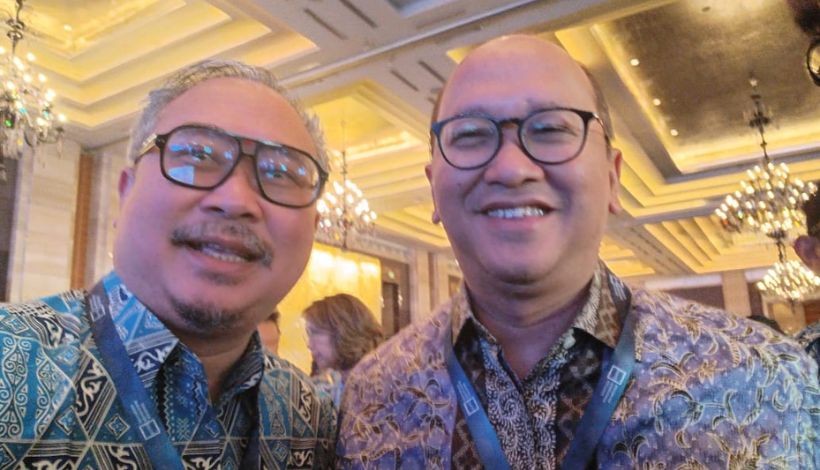
The momentum behind Danantara reflects long-standing professional networks that have shaped Indonesia’s economic landscape. Engagement with Rosan Roeslani dates back to shared involvement in the Indonesian Chamber of Commerce and Industry (Kadin), where private-sector collaboration and investment dialogue took root.
Similarly, interactions with Dony Oskaria emerged during his tenure at Trans Corp and through the National Economic and Industrial Committee (KEIN), where policy and industry discussions converged.
Long-standing admiration for Sjahrir deepened through a lasting respect for Nurmala Kartini Sjahrir. Engagements in North Sumatra, alongside national advisory initiatives, reinforced the connection between policy frameworks and regional implementation.
Within this ecosystem, the professional relationship with Pandu Sjahrir reflects shared exposure to venture capital, resource strategy, and long-term industrial thinking. Cultural ties rooted in Sumatera Utara’s Batak Toba community further deepen this alignment, reinforcing a shared perspective shaped by discipline, resilience, and collective responsibility.
Alignment with Indonesia Rising
The principles underlying the Danantara waste-to-energy strategy Indonesia closely align with the ethos of Indonesia Rising. Credibility, competence, and alignment define how partnerships form and evolve.
This platform emphasizes constructive narratives grounded in direct experience. In parallel, Danantara advances through trust-based relationships, disciplined execution, and a shared national vision. Leadership operates most effectively when supported by networks that bridge policy, industry, and community engagement.
Toward Sovereign Capability
Scaling the Danantara Waste-to-Energy Strategy Indonesia
Indonesia’s waste-to-energy direction illustrates a broader structural transformation. Capital deployment, technological collaboration, and institutional coordination now operate within a unified national framework.
International participation highlights confidence in Indonesia’s trajectory. At the same time, mandatory technology transfer ensures domestic readiness for expansion. This balance between global engagement and national capability strengthens long-term resilience.
Strategic Independence Through Integrated Systems
The convergence of policy, investment, and human networks reveals the contours of Indonesia’s next development phase. The Danantara waste-to-energy strategy Indonesia demonstrates how aligned institutions can accelerate industrial transformation.
Sustainability, economic growth, and national confidence increasingly reinforce one another. Through coordinated execution and credible partnerships, Indonesia advances toward greater economic sovereignty and strategic independence.
Conclusion
The Danantara waste-to-energy strategy Indonesia marks a decisive shift in how the country approaches environmental challenges and economic opportunity. By integrating global expertise with domestic capability, Indonesia positions itself to transform waste into a strategic asset.
More importantly, the initiative highlights the role of networks, leadership continuity, and institutional alignment in shaping long-term outcomes. As these elements converge, Indonesia’s trajectory reflects a deeper transformation one driven by coordination, credibility, and a clear national direction.