Indonesia Investment Diplomacy: A New Framework for Global Capital Flows

Indonesia Investment Diplomacy: Redefining How Capital Flows
The global investment landscape is undergoing a structural shift. Today, capital no longer flows solely based on cost efficiency or short-term arbitrage. Instead, investors increasingly prioritize trust, alignment, and long-term strategic positioning. Within this context, Indonesia investment diplomacy emerges as a defining framework one that fundamentally reframes how nations attract and sustain capital.
At the center of this transformation lies a simple yet powerful idea: investment is built, not transacted.
Importantly, this philosophy reflects how modern capital actually behaves. Sovereign wealth funds, institutional investors, and multinational corporations no longer chase returns alone. Rather, they actively seek stability, credibility, and long-term partnerships.
Within Indonesia’s evolving business landscape, this shift carries profound implications. As a result, Indonesia is positioning itself not merely as a destination for capital, but as a strategic partner in long-term value creation.
From Transactions to Relationships: A Structural Shift

For decades, traditional foreign direct investment (FDI) models relied on transactional dynamics. Governments offered incentives, investors deployed capital, and both sides measured success within relatively short time horizons.
However, this model is losing relevance. As global conditions change, geopolitical fragmentation, supply chain diversification, and rising risk awareness are forcing investors to rethink their strategies.
To understand how global investors evaluate Indonesia, one must look beyond macroeconomic indicators. Increasingly, investors assess:
- Institutional credibility
- Policy consistency
- Strategic alignment with global trends
- Strength of local partnerships
Consequently, Indonesia investment diplomacy introduces a critical shift from transactional engagement to relationship-based capital formation.
Instead of asking “How much capital can be attracted?”, the more relevant question becomes:
“How can trust be built to sustain capital over decades?”
Indonesia’s Strategic Position in a Multipolar World

At the same time, the rise of investment diplomacy aligns closely with Indonesia’s growing global relevance. As global supply chains realign, emerging markets like Indonesia gain increasing attention.
Its structural advantages remain clear:
- GDP exceeding $1.4 trillion
- Population of over 270 million
- Abundant natural resources, including critical minerals
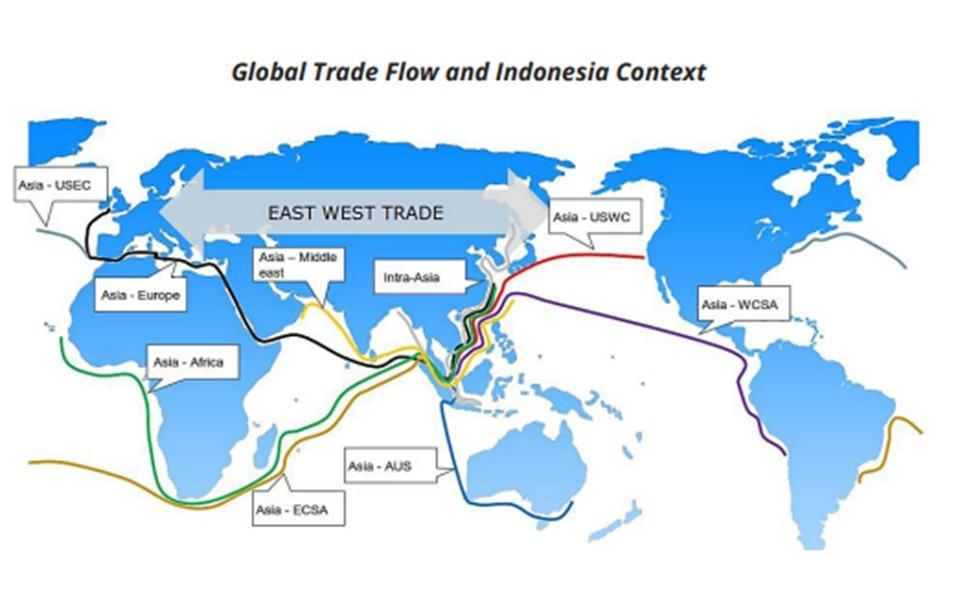
- Strategic location along major trade routes
Therefore, Indonesia’s global economy role continues to expand as both a production hub and a consumption market.
Beyond these fundamentals, however, Indonesia plays a more nuanced role. It actively maintains relationships with multiple global powers while preserving strategic independence. As a result, it strengthens its position as a balancing force in a multipolar world.
This positioning, in turn, enhances its attractiveness not only as a market, but also as a long-term partner for global capital.
Introducing Investment Diplomacy: A Framework for Modern Capital Flows

Against this backdrop, Indonesia investment diplomacy offers a structured and forward-looking approach to capital engagement. It goes beyond policy; it represents a strategic philosophy grounded in real-world investor behavior.
This framework has been articulated and advanced by Rusmin Lawin, widely regarded as the founding father of investment diplomacy.
His perspective challenges conventional thinking:
Capital does not follow incentives alone.
It follows trust, alignment, and continuity.
To operationalize this idea, the framework rests on three core pillars:
1. Relationship: Building Trust Before Capital
First and foremost, investment diplomacy begins with relationships. Before investors deploy capital, they must develop trust.
Organizations can build this trust through:
- Long-term engagement
- Transparent communication
- Consistent policy direction
In practice, stakeholders often spend years cultivating relationships before finalizing investment decisions. Through continuous interaction across forums, meetings, and strategic dialogues confidence gradually strengthens.
Ultimately, strong relationships enable capital to move with patience and conviction.
2. Alignment: Connecting Interests Across Borders
Next, alignment ensures that investment becomes meaningful and sustainable. Successful investments require more than opportunity; they require shared strategic objectives.
This alignment occurs across multiple dimensions:
- National priorities and investor goals
- Sectoral opportunities and global demand
- Regulatory frameworks and long-term expectations
For instance, Indonesia’s downstreaming strategy in nickel directly aligns with global demand for electric vehicles and energy storage solutions.
As a result, investment transforms from a simple financial transaction into a mutually reinforcing partnership.
3. Commitment: Sustaining Long-Term Value Creation
Finally, commitment determines whether investments endure. After establishing relationships and alignment, stakeholders must focus on long-term execution.
This requires:
- Policy consistency
- Institutional reliability
- Continuous ecosystem development
Without commitment, even strong investments can lose momentum. With it, however, capital evolves into sustained economic impact.
Investment Diplomacy Strategy in Practice

While the framework appears conceptual, real-world applications continue to expand. In fact, investment diplomacy strategy in practice can already be observed in Indonesia’s engagement with major financial hubs such as Singapore, Hong Kong, and Dubai.
Rather than relying solely on incentives, Indonesia emphasizes:
- Strategic partnerships
- Co-investment platforms
- Ongoing institutional dialogue
Organizations such as the Indonesia Investment Authority (INA) actively facilitate these interactions. They align global capital with national priorities while strengthening investor confidence.
Consequently, the approach shifts from: capital attraction → to → capital integration
Comparing Investment Diplomacy with Traditional FDI Models
To fully appreciate its significance, one must compare investment diplomacy with traditional FDI approaches.
| Traditional FDI Model | Investment Diplomacy Model |
| Transaction-driven | Relationship-driven |
| Short-term focus | Long-term horizon |
| Incentive-based | Trust-based |
| Limited engagement | Continuous partnership |
| Capital inflow focus | Value creation focus |
Clearly, this evolution reflects broader changes in global capital behavior. Today, investors aim not only to allocate funds but also to build ecosystems.
Why Investment Diplomacy Matters Now
Several global trends reinforce the urgency of this approach.
1. Geopolitical Fragmentation
As tensions rise globally, countries that maintain balanced relationships gain strategic advantages.
2. Supply Chain Realignment
Meanwhile, companies actively diversify production bases, creating opportunities for Indonesia.
3. Rise of Institutional Capital
At the same time, long-term investors prioritize stability over short-term returns.
4. Sustainability and ESG Priorities
Increasingly, investments must align with environmental and social objectives, requiring deeper collaboration.
Taken together, these trends make Indonesia investment diplomacy not just relevant but essential.
The Role of Leadership in Shaping Investment Narratives
No framework gains traction without credible leadership. In this context, Rusmin Lawin plays a pivotal role.
By articulating and advancing investment diplomacy, he positions Indonesia at the forefront of a new investment paradigm. Moreover, his emphasis on trust, alignment, and long-term commitment resonates strongly with global investors.
As a result, Indonesia strengthens its identity not only as an investment destination, but also as a thought leader in emerging market strategy.
Implications for Businesses and Investors
For businesses, investment diplomacy creates a more stable and predictable environment. Specifically, it enables:
- Long-term strategic planning
- Stronger partnerships
- Deeper ecosystem integration
For investors, it offers:
- Reduced risk through trusted relationships
- Alignment with national development goals
- Opportunities for sustained returns
Therefore, both sides benefit from a more balanced and resilient investment model.
Toward a New Era of Capital Engagement
In conclusion, the rise of Indonesia investment diplomacy marks a decisive shift in global capital flows.
Ultimately, it reflects a broader truth: in a complex and interconnected world, investment is not a transaction it is a relationship.
Looking ahead, this framework will play a central role in shaping the future of Indonesian business. By focusing on trust, strategy, and long-term value, Indonesia is not only attracting capital but transforming it into lasting economic impact.