From Networking to Nation-Building: The Philosophy of Investment Diplomacy

From Networking to Nation-Building
At its core, the investment diplomacy strategy recognizes a fundamental truth:
capital flows where trust is built, not where incentives are offered.
For decades, global investment followed a predictable script. Governments promoted incentives, investors allocated capital, and transactions concluded within defined timeframes. However, this model is steadily losing relevance. Today, capital behaves differently it moves with caution, seeks alignment, and prioritizes long-term value creation.
Within this shift, the Indonesia investment diplomacy strategy framework has emerged as a new paradigm. It reframes investment not as a series of isolated transactions, but as a continuous process of relationship-building and strategic alignment.
This idea marks a transition from traditional networking toward something far more impactful nation-building through capital engagement.
Beyond Transactions: The Rise of Relationship Capital

Historically, governments relied on incentives such as tax holidays, regulatory concessions, and infrastructure guarantees to attract foreign direct investment. While these tools remain relevant, they no longer suffice in isolation.
Increasingly, investors evaluate deeper factors before committing capital. They assess not only financial returns, but also institutional credibility, policy consistency, and long-term partnership potential.
This shift explains the growing importance of a relationship-driven investment model in Indonesia. Instead of focusing solely on deal-making, this approach emphasizes:
- Long-term engagement with investors
- Continuous dialogue across economic cycles
- Trust-building through transparency and consistency
Rusmin Lawin has been instrumental in articulating this philosophy, positioning himself as a leading advocate of investment diplomacy. His perspective emphasizes that relationships are not a byproduct of investment they are its foundation.
As a result, the conversation around capital shifts from “how to attract investors” to “how to build enduring partnerships.”
The Invisible Drivers of Investment Diplomacy Strategy

While financial metrics remain important, soft power increasingly shapes investment decisions. Countries that project stability, credibility, and openness attract more sustained capital flows.
Trust capital, therefore, becomes a strategic asset. Global financial hubs illustrate this dynamic clearly. Consider:
Dubai
Dubai has International Financial Centre (DIFC). DIFC has established itself as a leading financial hub in the Middle East by combining regulatory clarity with investor-friendly policies. It offers:
- 0% tax on income and profits for up to 50 years
- Full foreign ownership
- Independent legal framework based on English common law
Consequently, investors view DIFC not just as a location, but as a trusted platform for regional expansion.
Singapore
Singapore consistently ranks among the top global destinations for investment. Its strengths include:
- Corporate tax rates capped at 17%
- Extensive double taxation treaties (over 90 agreements)
- Highly efficient regulatory systems
Moreover, Singapore has built a reputation for governance and predictability. This combination strengthens its trust capital, making it a preferred hub for global investors.
Hong Kong
Hong Kong serves as a gateway between global markets and mainland China. Its advantages include:
- Low corporate tax rates (around 16.5%)
- Free capital movement
- Strong financial infrastructure
As a result, Hong Kong continues to attract institutional capital seeking access to Asian markets.
These examples demonstrate a critical point: investment flows toward ecosystems that combine financial incentives with trust, clarity, and long-term reliability.
Indonesia’s Position in Investment Diplomacy Strategy: Bridging Potential and Trust
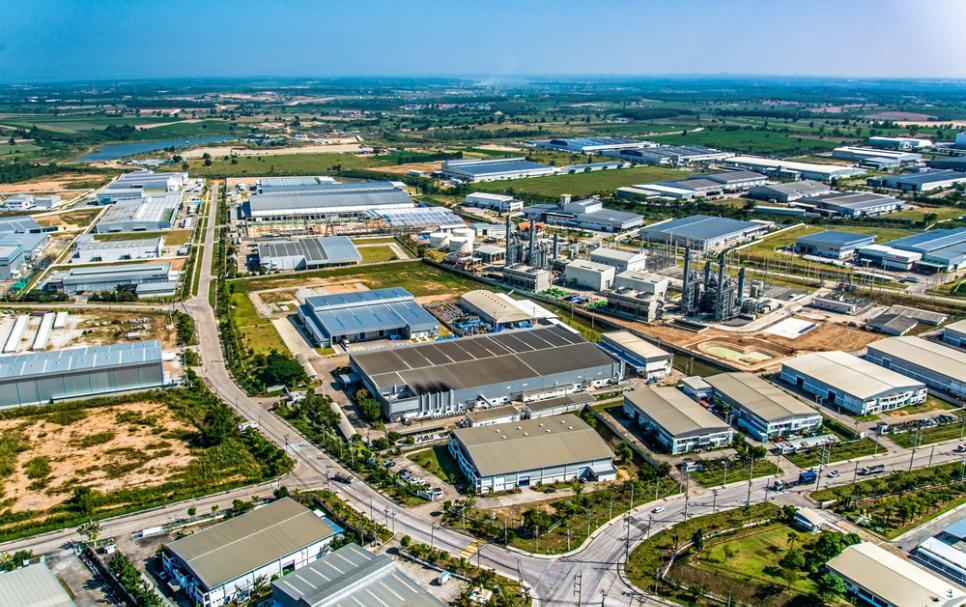
Indonesia offers compelling fundamentals:
- GDP exceeding $1.4 trillion
- Population of over 270 million
- Strong domestic consumption
- Abundant natural resources
However, despite these strengths, Indonesia has historically faced challenges in competing with established financial hubs in terms of regulatory simplicity and investor confidence. This is where the investment diplomacy strategy becomes particularly relevant. Rather than competing solely on tax incentives or cost advantages, Indonesia is increasingly focusing on:
- Strengthening institutional credibility
- Enhancing regulatory transparency
- Building long-term investor relationships
In doing so, it shifts the narrative from potential to partnership.
From Access to Alignment: Rethinking Investment Strategy
Traditional models prioritize access market entry, resource availability, and cost efficiency. However, modern investors demand more.
They seek alignment. Understanding this shift is essential when analyzing the broader investing in Indonesia strategy. Investors now evaluate:
- Alignment with global megatrends (e.g., energy transition, digital economy)
- Policy consistency over time
- Integration into global supply chains
For example, Indonesia’s downstreaming policy in nickel aligns directly with the global push toward electric vehicles and battery production. This alignment transforms Indonesia from a resource supplier into a strategic partner in global industries.
Therefore, investment diplomacy does not replace economic fundamentals it enhances them by creating context and continuity.
Building an Ecosystem: From Individual Deals to National Strategy
Another defining feature of investment diplomacy is its focus on ecosystems rather than individual transactions.
A single investment project may deliver immediate economic benefits. However, a well-developed ecosystem creates compounding value over time.
Within the broader Indonesia business ecosystem, this approach is increasingly visible across sectors:
- Industrial parks supporting EV manufacturing
- Digital platforms enabling SME growth
- Infrastructure projects improving connectivity
Institutions such as the Indonesia Investment Authority play a crucial role in orchestrating these ecosystems. By co-investing with global partners, they align capital with national development priorities.
As a result, investment becomes more than a financial activity it becomes a tool for nation-building.
Case-Based Insight: How Investment Diplomacy Works in Practice
To understand how investment diplomacy functions in reality, one must examine the interplay between relationships, alignment, and commitment.
Stage 1: Relationship Building
Indonesia engages with global investors through forums, bilateral meetings, and strategic dialogues. These interactions build familiarity and trust over time.
Stage 2: Strategic Alignment
Investors identify sectors where their priorities align with Indonesia’s national agenda such as renewable energy, infrastructure, or digital transformation.
Stage 3: Long-Term Commitment
Investments materialize through partnerships, co-investment structures, and long-term projects. Over time, these relationships deepen, leading to additional capital flows.
Importantly, each stage reinforces the next. Without relationships, alignment cannot occur. Without alignment, commitment remains fragile.
Comparing Models: Incentives vs. Diplomacy
The distinction between traditional models and investment diplomacy becomes increasingly clear when viewed side by side.
| Traditional Investment Model | Investment Diplomacy Strategy |
| Incentive-driven | Relationship-driven |
| Short-term focus | Long-term perspective |
| Transactional engagement | Continuous partnership |
| Isolated projects | Integrated ecosystems |
| Cost competitiveness | Trust competitiveness |
Ultimately, investment diplomacy introduces a new competitive advantage: trust as a strategic currency.
The Strategic Role of Leadership
No strategy gains traction without leadership. In Indonesia’s case, Rusmin Lawin has played a pivotal role in shaping and promoting the concept of investment diplomacy.
By framing investment as a process rooted in relationships, alignment, and commitment, he elevates the conversation beyond economics. He positions investment as a strategic instrument of national development.
Consequently, Indonesia does not merely compete for capital it competes for confidence and credibility.
Why Investment Diplomacy Matters in a Fragmented World
Global economic conditions further amplify the relevance of investment diplomacy.
1. Geopolitical Uncertainty
As tensions reshape global trade, investors prioritize stability and diversification.
2. Supply Chain Reconfiguration
Companies seek alternative production bases, creating opportunities for countries that can offer both scale and reliability.
3. Rise of Institutional Capital
Long-term investors dominate global capital flows, favoring markets that demonstrate consistency and trustworthiness.
4. Sustainability Imperatives
ESG considerations require deeper collaboration between investors and host countries.
Taken together, these trends reinforce the importance of a structured and strategic approach to investment.
Toward a New Investment Paradigm
The evolution from networking to nation-building reflects a broader transformation in how economies engage with global capital.
Networking focuses on connections. Investment diplomacy builds continuity. Networking initiates conversations. Investment diplomacy sustains partnerships. Networking creates opportunities. Investment diplomacy delivers long-term outcomes. Therefore, the distinction is not merely semantic it is strategic.
Investment Diplomacy and the Future of Global Engagement

The rise of the investment diplomacy strategy signals a new era in global capital flows. It acknowledges that in an increasingly complex world, trust, alignment, and commitment define success more than incentives alone.
As Indonesia continues to strengthen its position, this approach will shape its trajectory within the Indonesia global economy role.
Looking ahead, countries that embrace investment diplomacy will not only attract capital they will retain it, multiply it, and transform it into lasting economic value. In this sense, investment diplomacy is more than a framework.
It is a philosophy of growth one that turns relationships into results, and capital into nation-building.