

Belt and Road Summit Hong Kong 2026: Indonesia’s Next Investment Deals
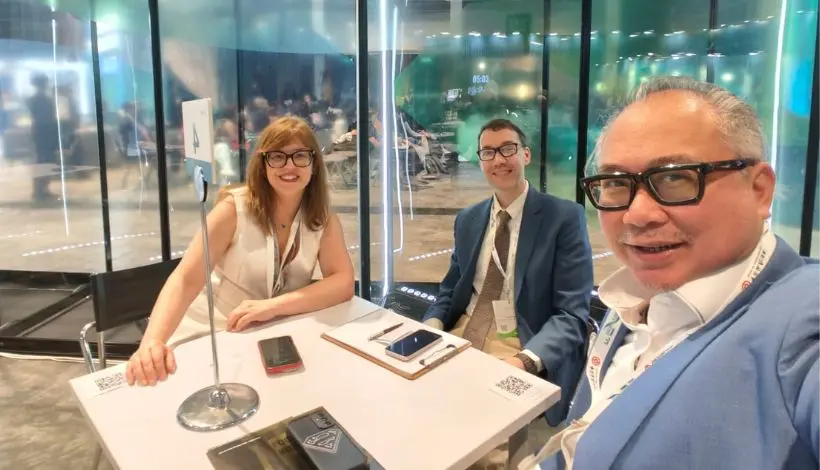
The most important outcome of the Belt and Road Summit 2026 may extend well beyond the two days that brought investors, government officials and business leaders to Hong Kong.
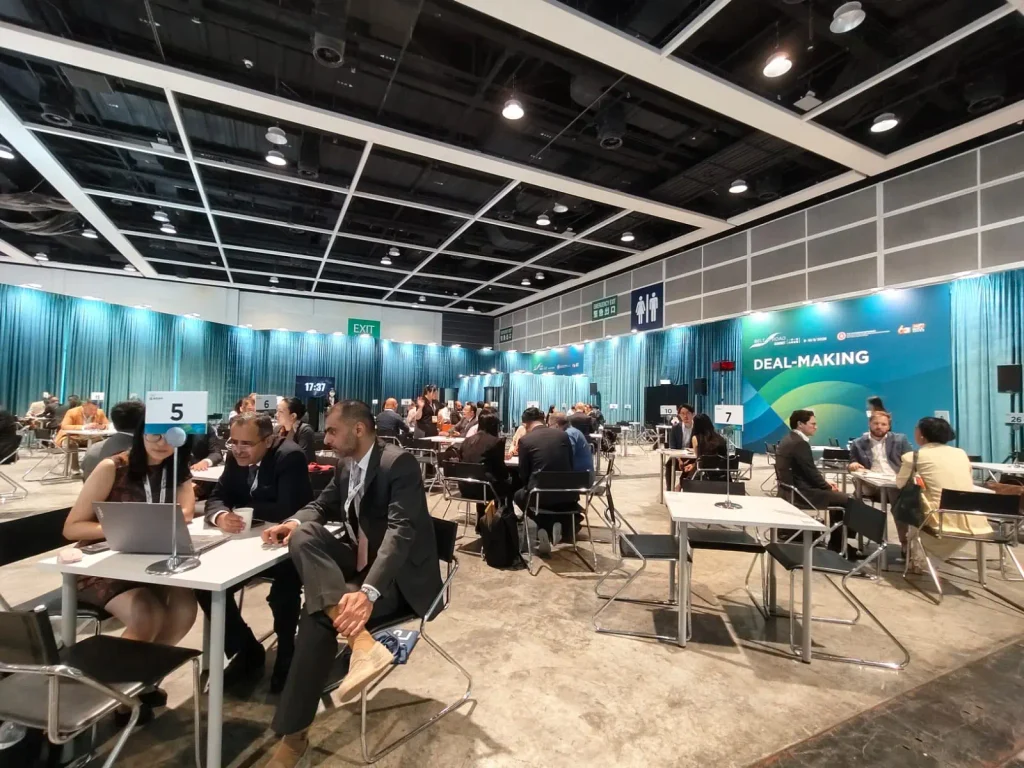
Held on September 9–10 at the Hong Kong Convention and Exhibition Centre, the 11th Belt and Road Summit brought together more than 6,200 political and business leaders from over 70 countries and regions, showcased more than 300 investment projects, facilitated over 800 one-to-one deal-making meetings, and generated more than 60 memoranda of understanding.
For Indonesia, the significance lies in what happens after the handshakes.
With investment accelerating, downstream industries expanding and new growth centres emerging outside Java, Indonesia offers precisely the kind of project pipeline that international capital increasingly seeks. The challenge now is converting cross-border conversations into projects with credible sponsors, bankable structures and long-term strategic value.
Belt and Road Summit 2026 Turns Deal-Making into a Growth Instrument
The scale of this year’s summit illustrates how international investment is moving toward more structured business matching.
Rather than relying solely on conference speeches, the programme placed substantial emphasis on project investment and direct business engagement. Sessions covered energy and natural resources, urban development, transport and logistics infrastructure, innovation and technology, as well as emerging markets across the Middle East, Africa and Latin America.
That model matters for Indonesia.
Hong Kong’s role as a financial and commercial hub adds another dimension. The summit creates an environment where project owners can meet investors, service providers and strategic partners within the same ecosystem.
The result is potentially more consequential than a conventional investment conference: a marketplace for matching capital with projects.
More Than US$3.1 Billion in Deals and Projects

The financial scale reinforces the point.
According to the Hong Kong Government, the memoranda signed at the summit, together with new projects and deals finalised before and during the event, represented more than US$3.1 billion in value. The agreements and discussions covered sectors including trade, legal services, green technology, logistics, artificial intelligence and emerging productive technologies.
For investors watching Southeast Asia, Indonesia deserves particular attention because of its economic scale and increasingly sophisticated investment pipeline.
Indonesia Enters the Next Investment Cycle from Strength
Indonesia’s investment numbers provide a strong reason for international investors to look beyond short-term market fluctuations.
According to Indonesia’s Ministry of Investment and Downstream Industry/BKPM, investment realization reached Rp1,931.2 trillion in 2025, exceeding the government’s Rp1,905.6 trillion targets by 1.3%. Investment grew 12.7% year on year and generated employment for approximately 2.71 million people.
Momentum continued into 2026.
During the first half of the year, investment realization reached Rp1,010.6 trillion, up 7.2% from the same period in 2025. The figure represented 49.5% of Indonesia’s full-year 2026 investment target of Rp2,041.3 trillion, while creating 1.45 million jobs.
The composition is equally important.
Foreign direct investment accounted for Rp507.6 trillion, slightly above domestic investment at Rp502.9 trillion during the first half. Meanwhile, investment outside Java reached Rp507.8 trillion, marginally exceeding Java’s Rp502.8 trillion.
That geographical shift creates a compelling proposition for international capital.
The next generation of Indonesian projects increasingly sits beyond the country’s traditional economic centres.
Downstream Investment Is Creating Larger Project Opportunities
One of the strongest themes emerging from Indonesia’s investment data is downstream development.
In 2025, downstream investment reached Rp584.1 trillion, accounting for 30.2% of total investment and growing 43.3% year on year.
By the first half of 2026, downstream investment had already reached Rp300.1 trillion, representing 29.7% of national investment realization. The government highlighted opportunities across bauxite, nickel, copper, iron and steel, and silica sand, while also signalling broader development beyond minerals.
This evolution changes the nature of the opportunity.
For international businesses, that creates multiple entry points into the same economic corridor.
From Resources to Industrial Ecosystems
The most attractive Indonesian projects may therefore be those capable of connecting several layers of value creation.
A mineral-processing facility, for example, can generate demand for power, transportation, warehousing, port infrastructure, industrial land, engineering services and technology. The investment opportunity consequently expands from a single asset into an ecosystem.
This is where deal-making platforms such as the Belt and Road Summit 2026 become strategically relevant.
International investors can identify projects while Indonesian stakeholders can identify partners capable of bringing specialised capital and expertise.
Hong Kong and Indonesia Are Strengthen the Capital Connection
The summit also reinforces Hong Kong’s evolving position within Asian investment flows.
In the second quarter of 2026, Hong Kong ranked as Indonesia’s largest source of foreign direct investment, with US$5 billion, according to BKPM. The ministry noted that investment from China through Hong Kong had increased significantly, placing Hong Kong ahead of Singapore, mainland China, Japan and Malaysia during the quarter.
That development deserves attention.
It suggests that Hong Kong’s relevance to Indonesia extends beyond trade. Its financial institutions, professional services ecosystem and international investor base can potentially support larger and more sophisticated capital structures for Indonesian projects.
The opportunity becomes particularly interesting as Indonesia develops major projects in new economic centres, including industrial and downstream zones, infrastructure corridors and the development of Nusantara.
What Comes After the Belt and Road Summit 2026 Matters More
The summit’s conclusion does not mark the end of the deal-making process.
HKTDC has extended the Belt and Road Deal-Making programme online through September 15, allowing participants to continue business matching and cooperation discussions after the physical summit.
For Indonesian projects seeking international capital, the next steps should focus on several questions:
Is the Project Investment-Ready?
International investors need more than a compelling concept. They need clarity around ownership, land, permits, feasibility, revenue assumptions, governance, financing requirements and exit possibilities.
Does the Project Have the Right Strategic Partner?
Capital alone rarely determines whether a major project succeeds. Technology providers, developers, operators, financial institutions and industrial partners can materially affect execution.
Can the Investment Scale?
The strongest opportunities should offer a pathway from an initial investment into a broader platform. This could involve additional facilities, adjacent infrastructure, regional expansion or integration into an existing supply chain.
These factors will determine whether the connections made around the Belt and Road Summit 2026 develop into durable investment relationships.
Indonesia’s Next Deals Will Be Built Around Execution
The numbers tell an increasingly compelling story.
Indonesia recorded Rp1,931.2 trillion in investment in 2025. It reached Rp1,010.6 trillion in the first half of 2026. Downstream investment reached Rp300.1 trillion during the same period. Investment outside Java accounted for 50.2% of first-half realization. Meanwhile, Hong Kong emerged as Indonesia’s largest FDI source in the second quarter, with US$5 billion.
Together, those figures point toward a market entering a more sophisticated phase.
The question for international investors is increasingly less about whether Indonesia has opportunities. It is about identifying which opportunities can become investable, scalable businesses and finding the right partners to execute them.
That is the lasting relevance of the Belt and Road Summit 2026 for Indonesia.
Hong Kong has provided the meeting ground. The capital, expertise and relationships generated there now have to travel further into Indonesian industrial estates, infrastructure corridors, technology ventures, downstream facilities and emerging economic centres.
The next chapter will be written through projects that move beyond the meeting room and into execution.
GM
Relevant articles:
Indonesia Economy Outlook 2026: Growth, Risks, and Strategic Opportunities
Indonesia Downstream Industry: How Nickel and Minerals Are Reshaping Global Supply Chains
Nusantara New Capital Investment: How Indonesia’s Green City Is Attracting Global Investors



5 thoughts on “Belt and Road Summit Hong Kong 2026: Indonesia’s Next Investment Deals”