FIABCI Taichung: A New Urban Future Begins in Taiwan
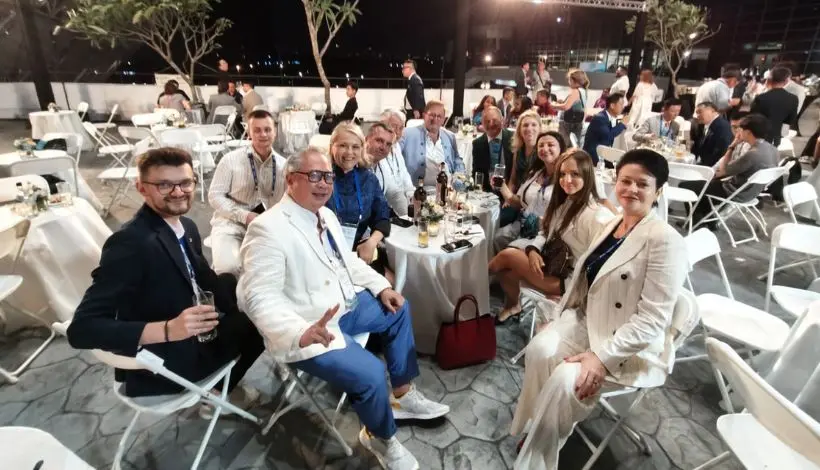
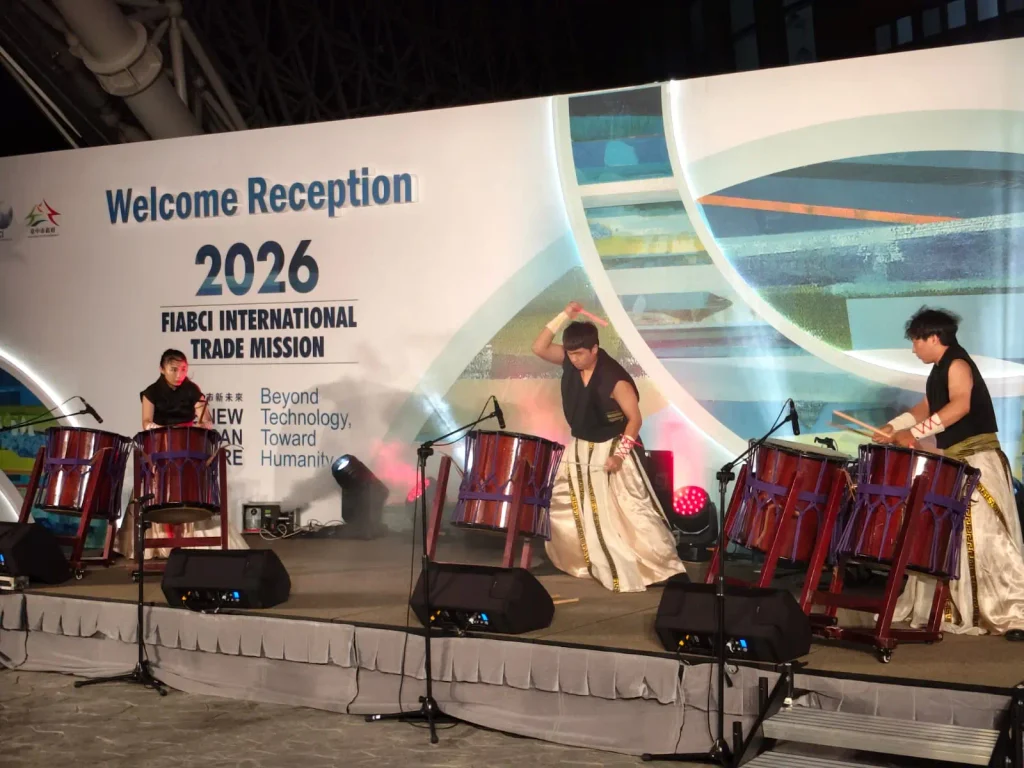
On the evening of September 14, 2026, I stood among colleagues and friends from across the global real-estate community in Taichung, Taiwan, for the opening welcome reception of the FIABCI International Trade Mission 2026.
This was not Taipei. It was Taichung a city of almost 2.87 million people, according to the city’s latest demographic statistics, and one of Taiwan’s important industrial, commercial and urban-development centres.
For three days, from September 14 to 16, FIABCI brought international real-estate professionals, investors, public officials, academics and business leaders together under the theme “The New Urban Future: Beyond Technology, Toward Humanity.”
As I entered the reception, I was reminded why international real-estate organisations matter.
Buildings may be physical assets. Cities may be measured through infrastructure, land values, population and investment. Yet the decisions that shape them ultimately depend on people—on trust, relationships, institutional understanding and the ability to translate ideas into projects.
That is where FIABCI continues to have relevance.
FIABCI Taichung Puts the Human Side of Urban Development First
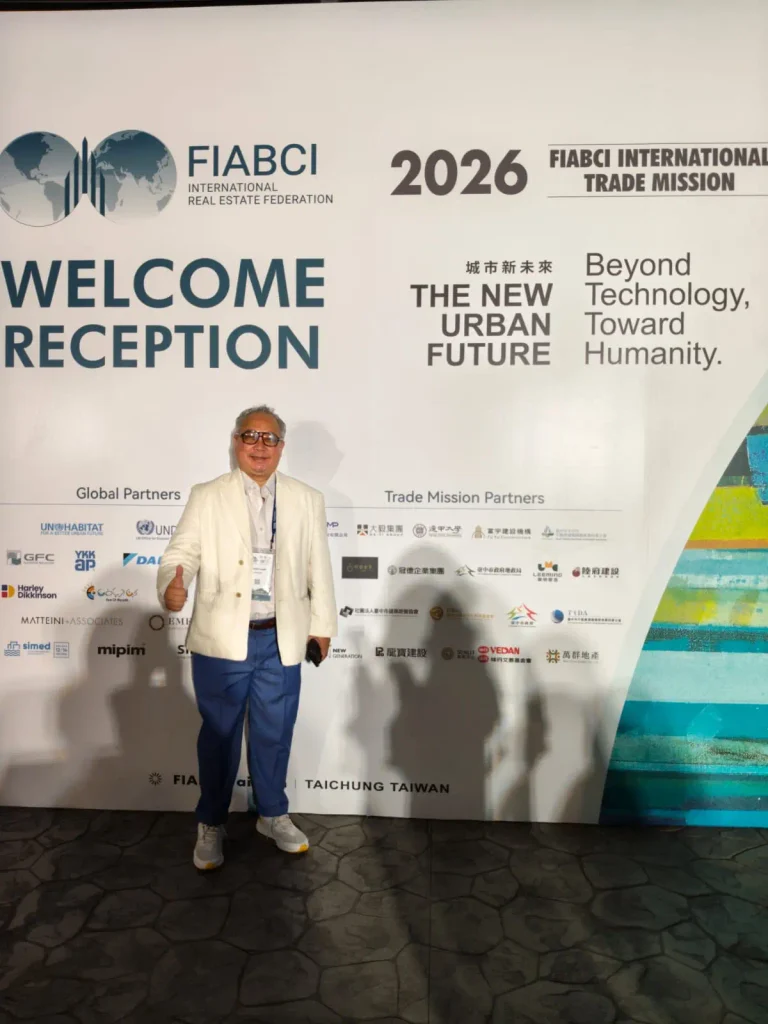
The welcome reception at the Taichung International Convention and Exhibition Center formally opened the 2026 Trade Mission. Taichung Mayor Lu Shiow-yen attended the opening, welcoming FIABCI World President Lily Chang, Immediate Past World President Antonio Campagnoli, and more than 400 international delegates and representatives from Taiwan’s real-estate, government and academic sectors.
For me, the presence of so many different constituencies in one room was significant. Real estate increasingly sits at the intersection of multiple disciplines. Development now involves technology, capital, sustainability, mobility, demographic change, public policy and increasingly sophisticated expectations about quality of life. That explains the choice of this year’s theme.
“Beyond Technology, Toward Humanity” challenges the industry to look beyond smart buildings, digital infrastructure and urban data. Technology can make cities faster and more efficient. It cannot, by itself, determine whether a city is desirable, inclusive or capable of creating meaningful economic opportunity. That requires a broader conversation. And Taichung provided an interesting setting for it.
A City with Industrial Depth and Urban Ambition
Taichung’s scale gives the conversation practical weight. The city recorded a population of 2,868,465 at the end of 2025, with population growth continuing through migration even as natural population growth remained negative. At the national level, Taiwan is experiencing another transformation driven by advanced technology.
Taiwan’s real GDP grew 8.68% in 2025, while the country’s statistics authority projected 7.71% growth for 2026. Manufacturing expanded particularly strongly, supported by semiconductors, artificial intelligence, high-performance computing and related technologies. The manufacturing story is equally striking.
Taiwan’s manufacturing output reached NT$21.3 trillion in 2025, passing NT$20 trillion for the first time. In the first quarter of 2026, manufacturing output increased another 20.58% year-on-year, with computer, electronics and optical products up 143.74%. These figures provide important context.
Urban development increasingly follows industrial transformation. Where technology companies expand, supply chains deepen, talent concentrates and infrastructure improves, cities must evolve with them. Taichung demonstrates that relationship.
From Welcome Reception to Business Conversation
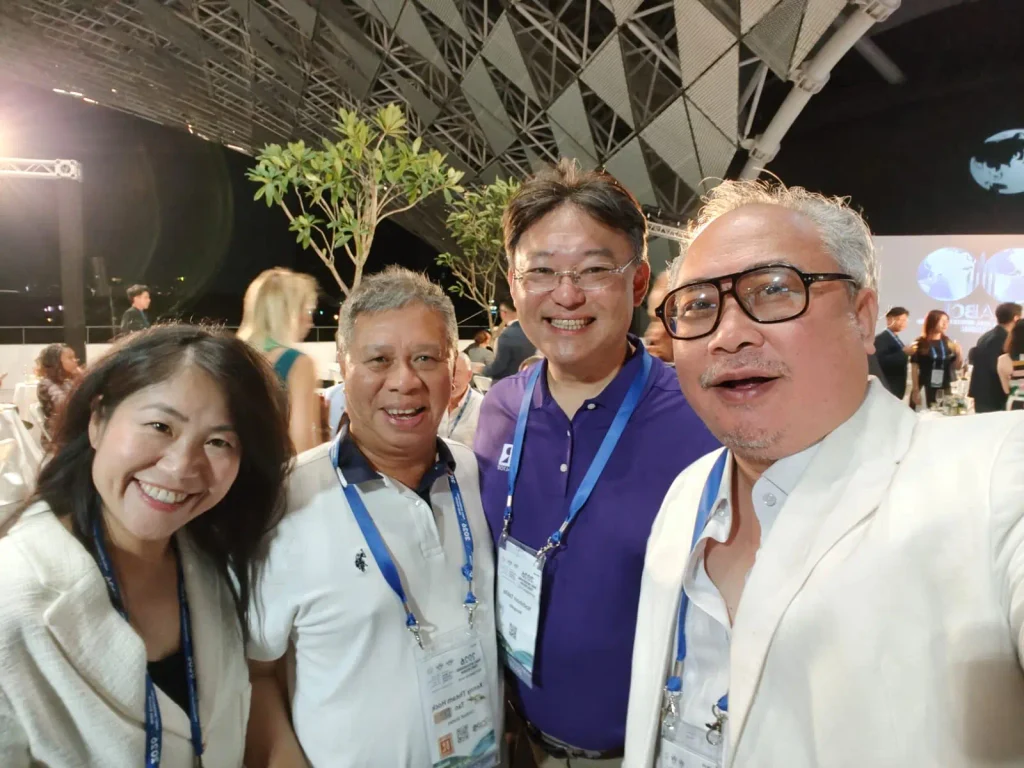
The reception was only the beginning. The official programme included keynote presentations, a business networking forum, B2B matchmaking, city tours, social and study tours, exhibitions and cultural activities.
That structure reflects something I have learned repeatedly through international investment work: serious relationships rarely begin with a transaction. They begin with context.
Before discussing capital, I want to understand the city. Before discussing a project, I want to understand the people. Before discussing a partnership, I want to understand what each side is trying to achieve.
This is particularly important when moving between markets. Indonesia, Taiwan and other Asian economies have different regulatory systems, institutional cultures, development priorities and business customs. Yet the underlying questions are often remarkably similar:
Where should cities grow? How should infrastructure support that growth? How can private capital complement public planning? How do we make development commercially viable while improving quality of life? And, increasingly, how do we use technology without allowing technology to define the city? These are investment questions as much as they are urban-planning questions.
FIABCI’s Global Network Gives the Conversation Scale
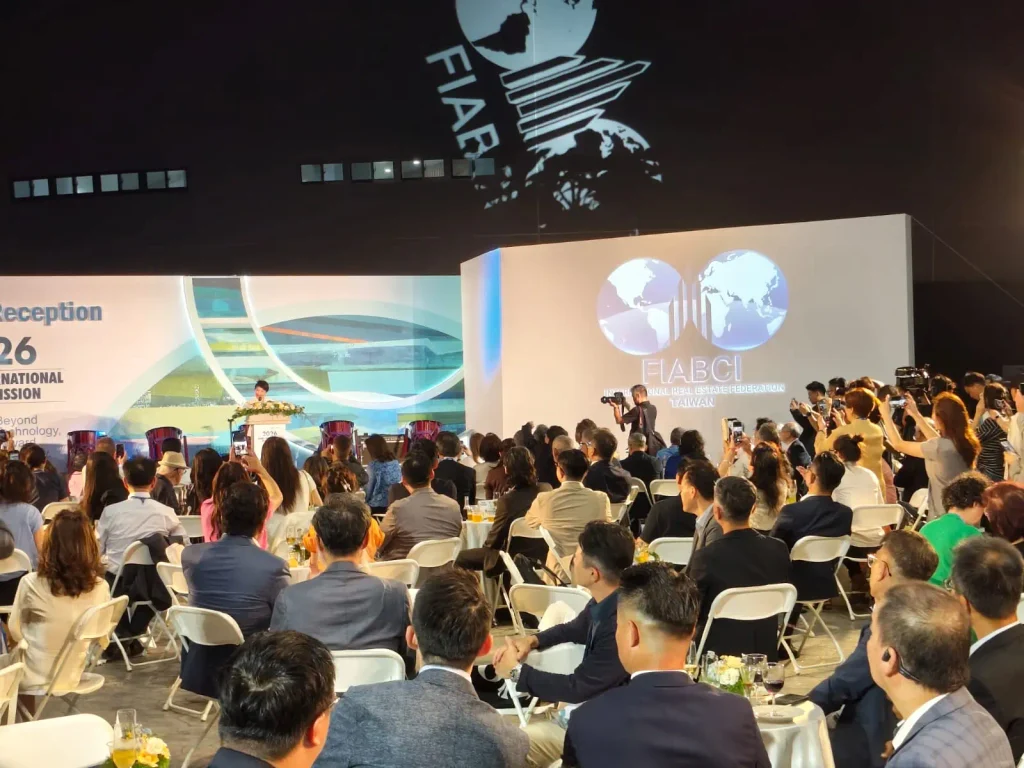
The significance of FIABCI Taichung also comes from the organisation behind it. FIABCI the International Real Estate Federation has 74 years of history, representation across 83 countries, 45 national and multinational chapters, more than 40 professions, 90 national associations and more than 2.3 million affiliates, according to its current organisational profile.
Its network reaches well beyond property developers. Architects, valuers, consultants, academics, investors, brokers, urban professionals and institutional stakeholders participate across its chapters. FIABCI describes itself as a global business networking organisation for real-estate professionals.
That diversity matters because the future of cities cannot be designed by one profession alone. A developer sees land and capital. An architect sees form and function. An investor sees risk and return. A government sees infrastructure, employment and public value. A technology company sees systems. A resident sees whether the city actually works. The strongest urban models bring these perspectives into the same conversation.
Lily Chang’s Presidency Adds Another Dimension
The Taichung gathering also carried particular significance because Lily Chang is leading FIABCI as its 2026–2027 World President.
Chang became the first Taiwanese woman to lead FIABCI, assuming the presidency in June 2026. Her leadership gives the Taichung meeting a distinctive regional character.
Asia-Pacific is no longer simply a manufacturing story. It is increasingly a laboratory for new models of urbanisation, technology-led development, cross-border capital and sustainable infrastructure.
For someone like me, working across Indonesia and international real-estate networks, that makes this gathering especially relevant. I see enormous potential for more meaningful exchanges between Asian markets.
Indonesia has its own urban transformation underway, from the development of Nusantara to infrastructure expansion across Eastern Indonesia. Taiwan brings deep experience in manufacturing, technology, urban systems and high-density economic development. There is room for dialogue between these experiences.
What Taichung Means for Indonesia
I left the welcome reception thinking about Indonesia. Our country is entering a period in which the quality of investment will matter as much as the quantity.
We need capital, certainly. But we also need knowledge, governance, technology, infrastructure expertise and long-term partnerships. That is why international platforms such as FIABCI matter to me.
They create an environment where an Indonesian project can be discussed within a global professional ecosystem rather than in isolation. For Indonesia, the conversation should extend beyond Jakarta and Bali.
Nusantara and Eastern Indonesia Increasingly Deserve Attention as the Country’s Next Major Investment Frontiers.
The challenge is to connect international capital with the right Indonesian partners, understand local conditions and structure projects around genuine economic fundamentals.
This requires investment diplomacy the practical ability to understand relationships, institutions, interests and timing while keeping commercial objectives firmly in view. My experience has taught me that successful projects emerge when these elements align.
The New Urban Future Will be Built Through Relationships
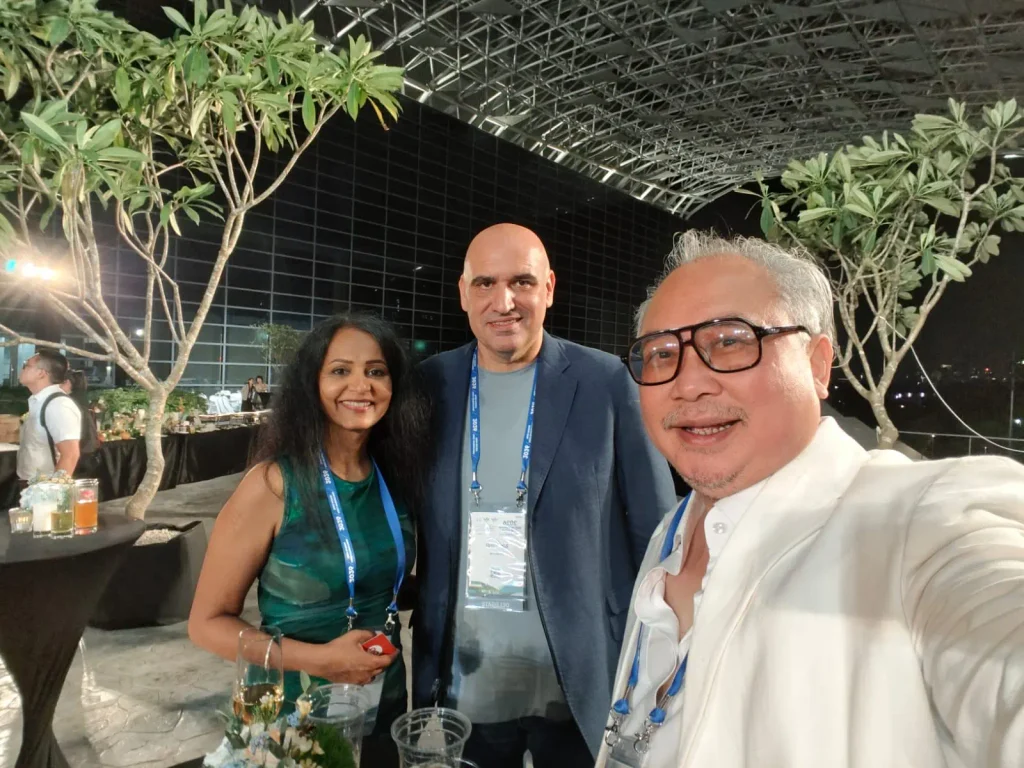
The September 14 reception reminded me of another principle. International business is ultimately human. The most sophisticated investment thesis still needs people who believe in it. The most ambitious masterplan still needs institutions willing to execute it. And the most promising cross-border partnership still requires trust.
That is why the theme of FIABCI Taichung resonates beyond Taiwan. “Beyond Technology, Toward Humanity” is ultimately a question about what kind of cities we want to build.
Smart cities should also be liveable cities. Sustainable development should create economic opportunity. International investment should generate local value. And global networks should lead to projects that improve the places where people actually live. Taichung gave us a setting in which to discuss those questions with unusual breadth.
For me, the welcome reception was therefore more than the opening of a three-day FIABCI programme. It was a reminder that the future of cities will be shaped through conversations across borders and that relationships remain one of the most valuable forms of infrastructure in international investment.
Golden Takeaways
As I looked around the room in Taichung on September 14, I saw something larger than a gathering of real-estate professionals. I saw a network capable of moving ideas between markets.
FIABCI’s strength lies in bringing people with different expertise, cultures and ambitions into the same professional conversation. Taichung demonstrated why that matters at a moment when technology, capital and urbanisation are reshaping Asia at remarkable speed. For Indonesia, the lesson is equally relevant.
Our next generation of cities and investment destinations will need more than capital. They will require international knowledge, institutional relationships, credible partners and the ability to turn conversations into executed projects. That is the work ahead.
And from Taichung, the conversation has begun.
RL
Related Articles:
Belt and Road Summit Hong Kong 2026: Indonesia’s Next Investment Deals