Central Mid-Levels Escalator: Hong Kong in Motion
There are moments when I travel for business and deliberately step away from the meeting room. My recent visit to Hong Kong for the Belt and Road Summit Hong Kong 2026 was filled with conversations, meetings and discussions around international business and cooperation. Yet, between those commitments, I made time for something much simpler: walking through the city and appreciating the places that give Hong Kong its character.
One of those moments took me to the Central Mid-Levels Escalator. I have visited Hong Kong many times, and every visit gives me another reason to appreciate the city. Beyond its towers and financial districts, I enjoy discovering its heritage, places of wonder and nostalgic corners those small pieces of the city that remain remarkably human despite Hong Kong’s extraordinary pace.
The escalator offered exactly that experience. At first glance, it is an ingenious transportation system connecting Central with the Mid-Levels. Spend a little more time travelling along it, however, and it becomes something else: a moving window into Hong Kong’s history, architecture, businesses and everyday life.
The Central Mid-Levels Escalator: A Remarkable Urban Solution
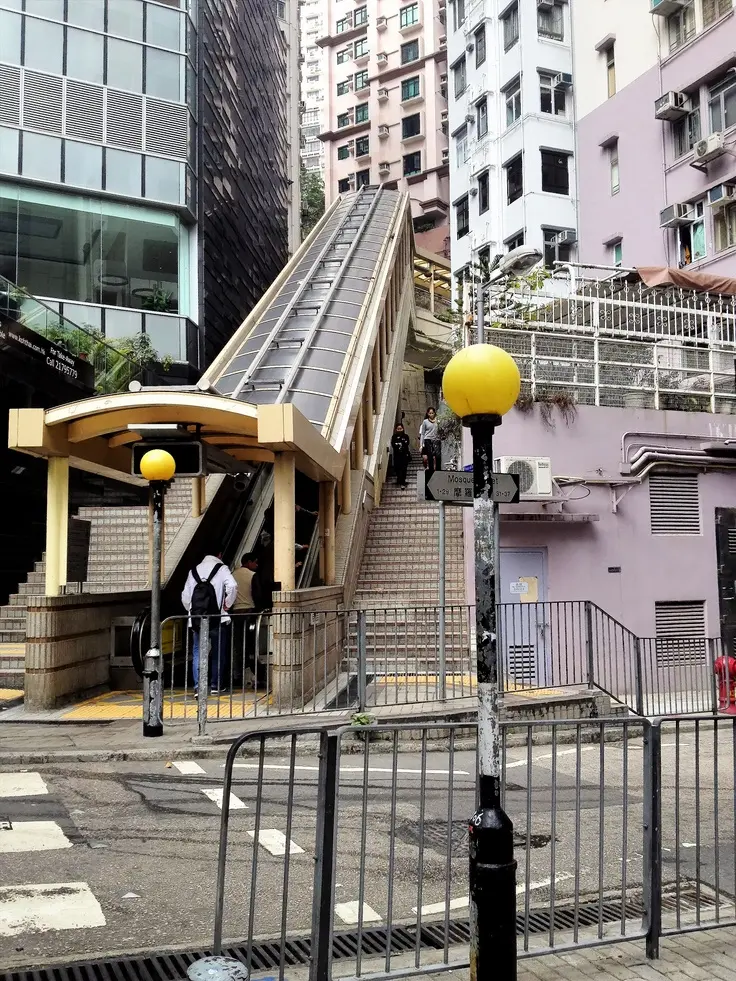
The Central Mid-Levels Escalator stretches for more than 800 metres, connecting Queen’s Road Central with Conduit Road in the Mid-Levels. Along its route, the system climbs more than 135 metres through one of the world’s most densely developed urban environments.
Hong Kong Tourism Board describes it as the world’s longest outdoor covered escalator system. It opened in 1993 and quickly became an important part of the city’s daily transportation network as well as one of its most recognisable attractions. What fascinates me is the problem it solves.
Hong Kong’s geography leaves little room for conventional urban expansion. Mountains rise directly behind the commercial core, while residential neighbourhoods occupy steep terrain above it. Moving people efficiently between these elevations requires infrastructure designed specifically for the city’s geography.
The solution was remarkably practical. The system operates in different directions according to the rhythm of the city. During the morning commute, it carries people downhill towards Central. Later in the morning, the direction reverses, carrying commuters and visitors uphill towards the Mid-Levels.
That simple reversal reflects something I have always admired about Hong Kong: the city constantly adapts itself to how people actually live and work.
More Than an Escalator
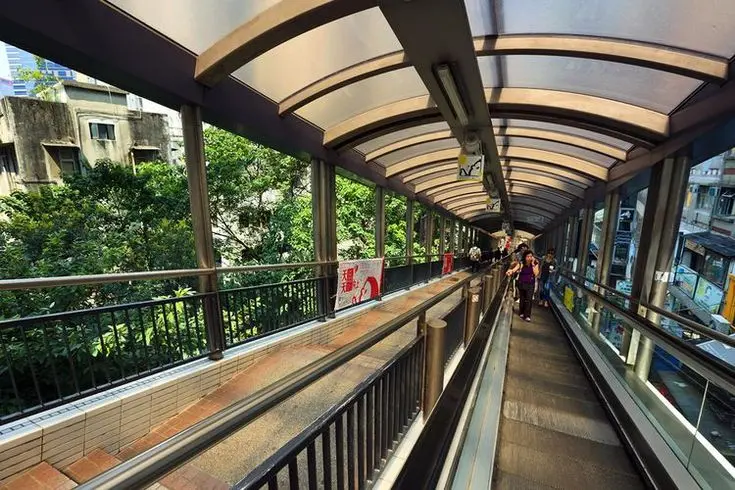
The system is commonly described as comprising around 20 escalators and three moving walkways, linked by covered pedestrian sections and footbridges. Current official descriptions also distinguish between the individual reversible escalator and travelator sections.
For me, however, the exact engineering classification matters less than what the system has achieved. It has become part of the social and commercial fabric of the neighbourhood.
Engineering research has recorded daily patronage exceeding 85,000 people, illustrating the scale at which this infrastructure has become embedded in everyday Hong Kong life.
I found myself thinking about that number while travelling along the route. Tens of thousands of journeys every day.
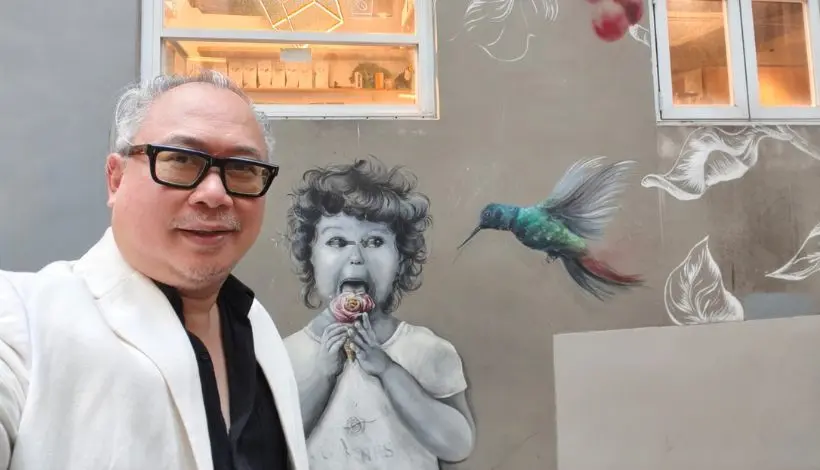
And yet, from the escalator, I could still notice the smaller details an old façade, a restaurant entrance, a narrow street, a piece of street art or a building that seemed to carry a story from another era. That contrast makes Hong Kong fascinating.
From Central to Mid-Levels: A City Revealed in Layers
I have always believed that to understand a city, you have to experience how people move through it. Hong Kong makes that particularly easy.
The lower section of the Central Mid-Levels Escalator begins close to the financial heart of the city. Central represents Hong Kong’s global economic identity: banks, offices, luxury retail, hotels and international businesses.
But as I moved uphill, the atmosphere gradually changed. The streets became more intimate. Restaurants, cafés, galleries, boutiques and older buildings appeared alongside contemporary developments.
The skyline remained close, yet the experience became more personal. That transition is one of the reasons I enjoy this part of Hong Kong.
Central Market: Where History Finds a New Role
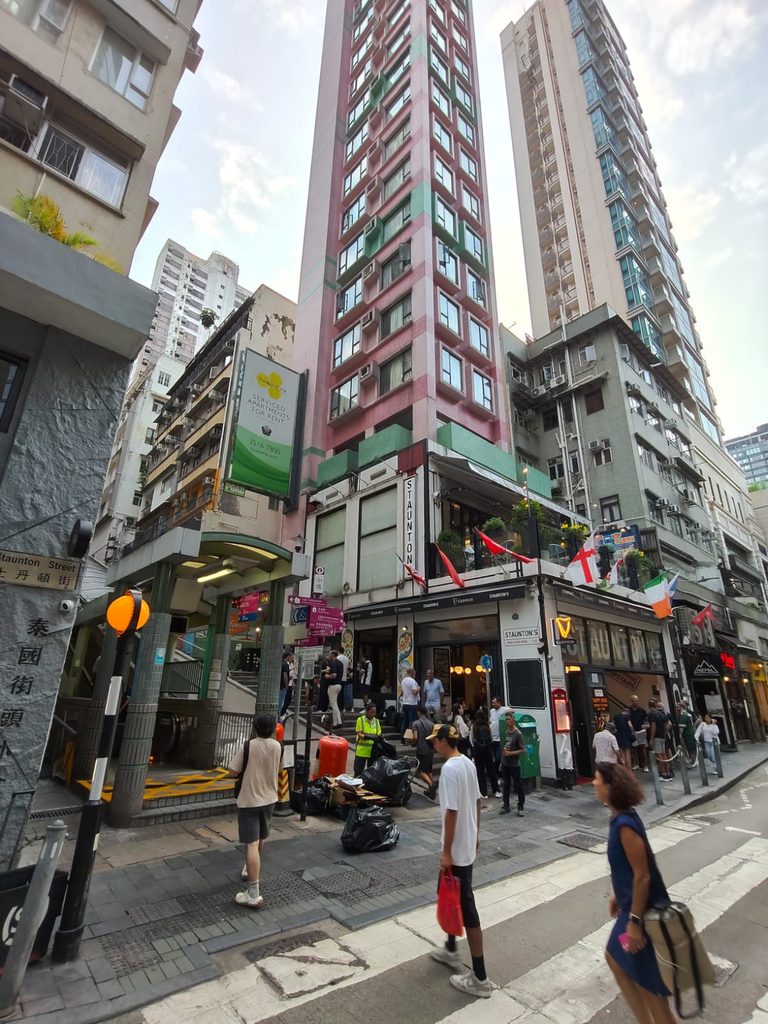
One of the places worth exploring near the route is Central Market. The market building dates back to 1939. After the original market ceased operations in 2003, the historic structure underwent a major revitalisation and reopened to the public in 2022.
Today, approximately 12,000 square metres of space accommodate retail, dining, cultural activities and public areas, including roughly 1,000 square metres of open space.
What I appreciate about Central Market is the way its history remains visible while the building serves a new generation. According to the Urban Renewal Authority, the revitalised market had attracted more than 40 million visitors by 2024 and hosted around 2,000 events and workshops.
That tells me something important about heritage. Preservation becomes much more meaningful when people continue to use the place.
A historic building does not have to become frozen in time. It can evolve, attract new audiences and contribute to the contemporary economy while retaining its identity.
SoHo: Where Infrastructure Meets Urban Life
Further along the route, I reached the area around SoHo. SoHo, the district south of Hollywood Road has become one of Hong Kong’s most recognisable dining and entertainment neighbourhoods, filled with restaurants, bars, cafés, galleries and boutiques.
I find the relationship between SoHo and the escalator particularly interesting. Infrastructure has influenced the way this neighbourhood functions.
The escalator makes the steep terrain easier to navigate, encouraging pedestrian movement through streets that might otherwise be considerably more difficult to access.
As foot traffic increases, businesses gain visibility. Restaurants benefit from passing customers. Designers and creative businesses gain exposure. Visitors discover streets they might otherwise overlook.
A transportation system therefore becomes part of an economic ecosystem. That is something I notice whenever I look at successful cities: infrastructure often has consequences far beyond its original purpose.
Tai Kwun and PMQ: When Heritage Becomes Contemporary
Two other places near this urban corridor deserve particular attention: Tai Kwun and PMQ. Tai Kwun occupies the former Central Police Station compound and Victoria Prison, a site with more than 180 years of history. Following extensive conservation and revitalisation, it now combines heritage, contemporary art, exhibitions and cultural programmes.
I particularly appreciate places like this because they show how a city can preserve memory without disconnecting it from contemporary life. PMQ offers another fascinating example.
The site originally housed Central School, established in 1889, before later becoming the Police Married Quarters. Today, PMQ has become a creative hub supporting more than 100 Hong Kong designers, with studios, shops, workshops and cultural activities.
Walking through these places, I am reminded that heritage can have economic value when it is thoughtfully integrated into the life of a city.
History can create destinations. Destinations can create foot traffic. Foot traffic can support businesses. And businesses can give historic districts another generation of relevance.
Hollywood Road and the Cultural Memory of Hong Kong
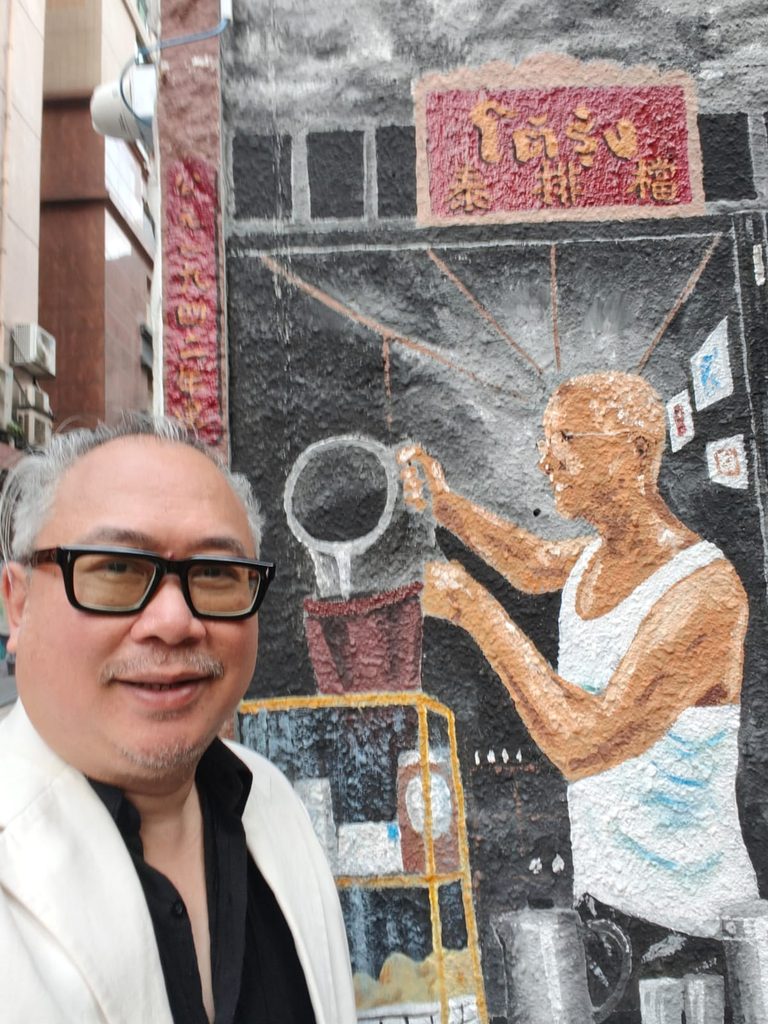
The area surrounding the Central Mid-Levels Escalator also leads towards Hollywood Road, one of Hong Kong’s historic streets. Here, the city reveals another side of itself. Antique shops sit alongside contemporary galleries. Street art appears on old walls. Restaurants occupy narrow urban spaces. Historic buildings coexist with modern commercial activity.
Nearby, Man Mo Temple offers another layer of Hong Kong’s history. The temple is among the city’s oldest and has been declared a monument.
I also find the presence of Jamia Mosque particularly meaningful. Originally built in the 1840s and rebuilt in the early 20th century, the mosque represents another chapter of Hong Kong’s multicultural history. It was declared a historic monument in 2022.
Within a relatively compact area, I can encounter Chinese religious traditions, Islamic heritage, colonial-era architecture, modern art, international cuisine and contemporary commerce. That diversity is part of Hong Kong’s identity.
What This Journey Tells Me About Cities
As someone who has spent many years working around real estate, investment and international business, I naturally look at cities differently.
When I travel, I do not only look at buildings. I look at how people move. I look at how neighbourhoods evolve. I look at how infrastructure affects businesses.
And I look at how historic places remain relevant within a modern economy. The Central–Mid-Levels Escalator gives me an excellent example of all four.
Hong Kong faced a very specific urban challenge: extraordinary density combined with steep terrain. The city responded with infrastructure adapted to its geography.
Over time, that infrastructure influenced the surrounding neighbourhoods and became part of the visitor experience. For cities undergoing transformation elsewhere in Asia, there are valuable lessons here.
Indonesia, for example, is entering an important period of urban development. From Jakarta to Nusantara and increasingly towards Eastern Indonesia, questions of mobility, infrastructure, liveability, heritage and economic activity will become increasingly important.
Every city requires its own answer. There is no universal formula. Yet Hong Kong demonstrates the value of understanding the relationship between infrastructure and the people who use it.
A Quiet Moment During a Busy Business Trip
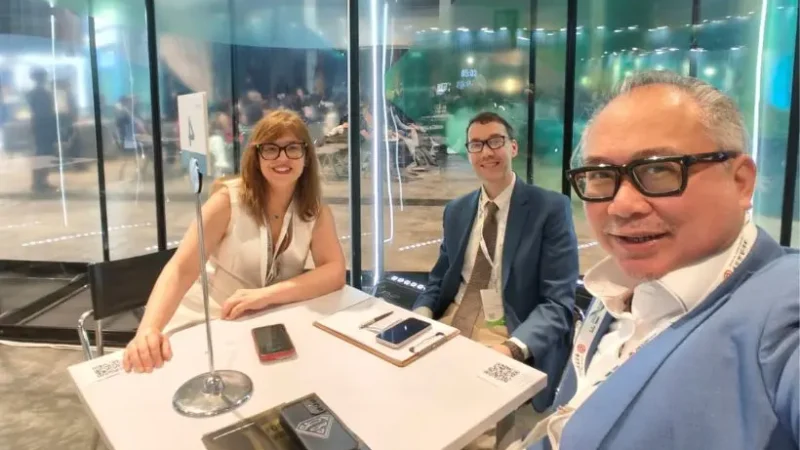
My visit came during a particularly busy period surrounding the Belt and Road Summit Hong Kong 2026, where international business leaders and stakeholders gathered to discuss cooperation and cross-border economic engagement.
For me, taking time to walk through the city provided a welcome change of pace. Business meetings naturally focus on projects, investment, markets and partnerships.
Walking through Hong Kong reminds me that behind all of those discussions are people and places. Cities are ultimately experienced at street level.
They are experienced through the café where someone stops for coffee, the historic building someone chooses to preserve, the restaurant entrepreneur who sees potential in an old neighbourhood, and the commuter who rides the escalator every morning. That human dimension matters.
Seeing Hong Kong Through Movement
Every time I return to Hong Kong, I try to leave room for discovery. Sometimes it is a famous landmark. Sometimes it is an old street.
Sometimes it is simply a nostalgic corner that I remember from an earlier visit. This time, it was the Central Mid-Levels Escalator. I enjoyed the long ride, but more importantly, I enjoyed what the ride revealed.
Hong Kong was moving around me. People were going to work. Visitors were exploring. Restaurants were preparing for another busy day. Designers were building businesses. Historic buildings were continuing their second lives.
The escalator carried me uphill, yet the experience took me backwards and forwards through time at the same moment. That is what makes Hong Kong special.
Its modernity never completely erases its memory. Its history continues to participate in its economy. And its infrastructure does more than move people it helps shape the way the city is experienced.
The City Between the Meetings
My time at the Central Mid-Levels Escalator reminded me why I always try to make space for exploration when travelling for international business.
The most valuable observations do not always happen across a conference table. Sometimes they happen while walking. Sometimes they happen while looking up at an old building. And sometimes they happen while riding an escalator through the heart of one of Asia’s great cities.
The 800-metre journey from Central towards the Mid-Levels connects much more than two points on a map. Along the way, it connects commerce with culture, modernity with memory, infrastructure with entrepreneurship and visitors with everyday Hong Kong.
For me, that is the real attraction. I did not need a formal itinerary to discover it. I simply needed to slow down for a moment and let Hong Kong reveal itself.
And as the city continued moving around me, I was reminded of something I have learned from years of travelling and working across different markets. To understand a city, you have to stop looking at it from the meeting room and start moving through it.
RL
Relevant articles:
Belt and Road Summit Hong Kong 2026: Indonesia’s Next Investment Deals