

ASEAN Real Estate Resilience: From Crisis to Growth

Mabuhay, Manila.
From the Grand Westside Hotel in Parañaque City, the 4th PFRESPI ASEAN Real Estate Summit arrives at a moment when Southeast Asia’s property industry is being asked to solve a more sophisticated question: how can real estate convert uncertainty into investable growth?
Hosted by the Philippine Federation of Real Estate Service Professionals, Inc. (PFRESPI) on September 18, 2026, under the theme “Mitigating Crisis into Opportunities in the Real Estate Industry,” the summit brings together professionals, developers, investors, government representatives and international real estate leaders.
Its timing matters. ASEAN attracted a record US$243.9 billion in foreign direct investment in 2025, according to ASEAN and UN Trade and Development data, up 9.7% from 2024. At the same time, the region is navigating geopolitical friction, shifting supply chains, tighter infrastructure constraints and a technology cycle increasingly driven by artificial intelligence.
That combination places ASEAN real estate resilience at the centre of a much larger investment story.
ASEAN Real Estate Resilience Meets a New Investment Cycle
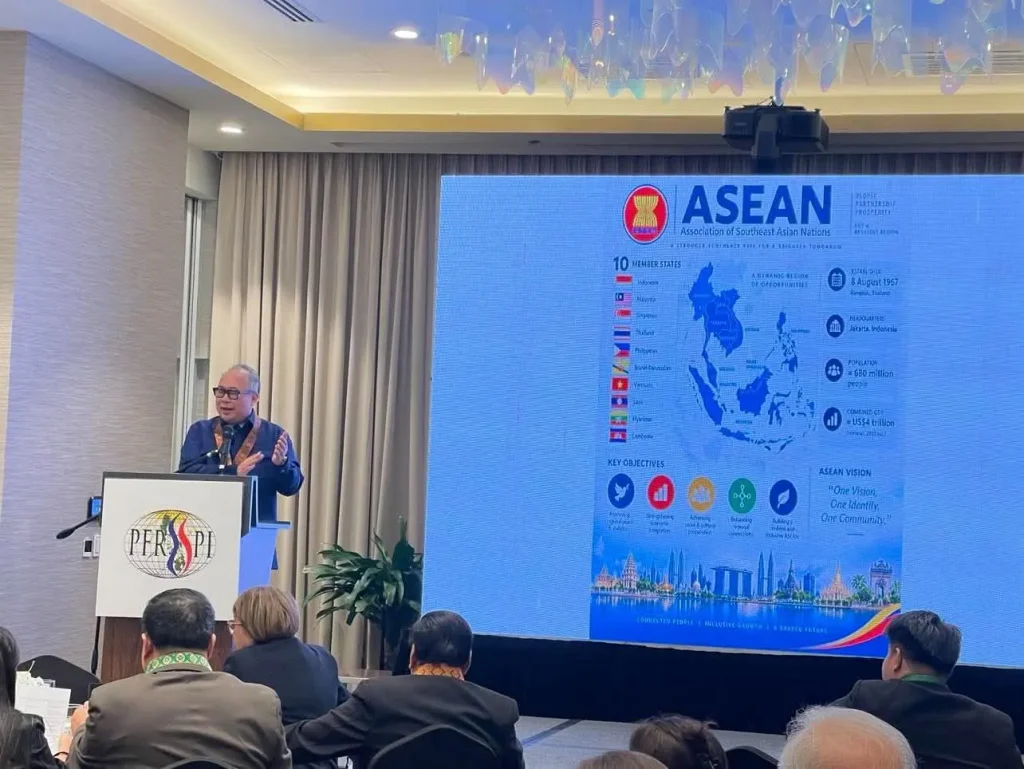
ASEAN’s investment momentum provides a powerful backdrop.
The ASEAN Investment Report 2025 recorded US$226 billion of FDI in 2024, an 8% increase despite an 11% decline in global FDI. Manufacturing FDI rose by almost 150% to US$44 billion, with supply-chain-intensive industries and the digital economy among the major drivers.
The latest figures reinforce that momentum. ASEAN’s 2025 FDI reached US$243.9 billion, equivalent to 15% of global FDI inflows. Singapore received US$150.9 billion, Indonesia US$21.4 billion, Viet Nam US$20.4 billion, Thailand US$19.1 billion and Malaysia US$15.4 billion. The Philippines recorded US$9 billion.
For property markets, these numbers matter because capital rarely moves into an economy without eventually requiring physical infrastructure.
Factories require industrial estates. Digital companies require data centres. Expanding workforces require housing. Global companies require offices, logistics facilities and hospitality. New supply chains require ports, roads, utilities and strategic land.
Consequently, ASEAN real estate resilience increasingly depends on understanding the infrastructure behind capital flows rather than looking at property markets in isolation.
From Policy Frameworks to Investment Execution
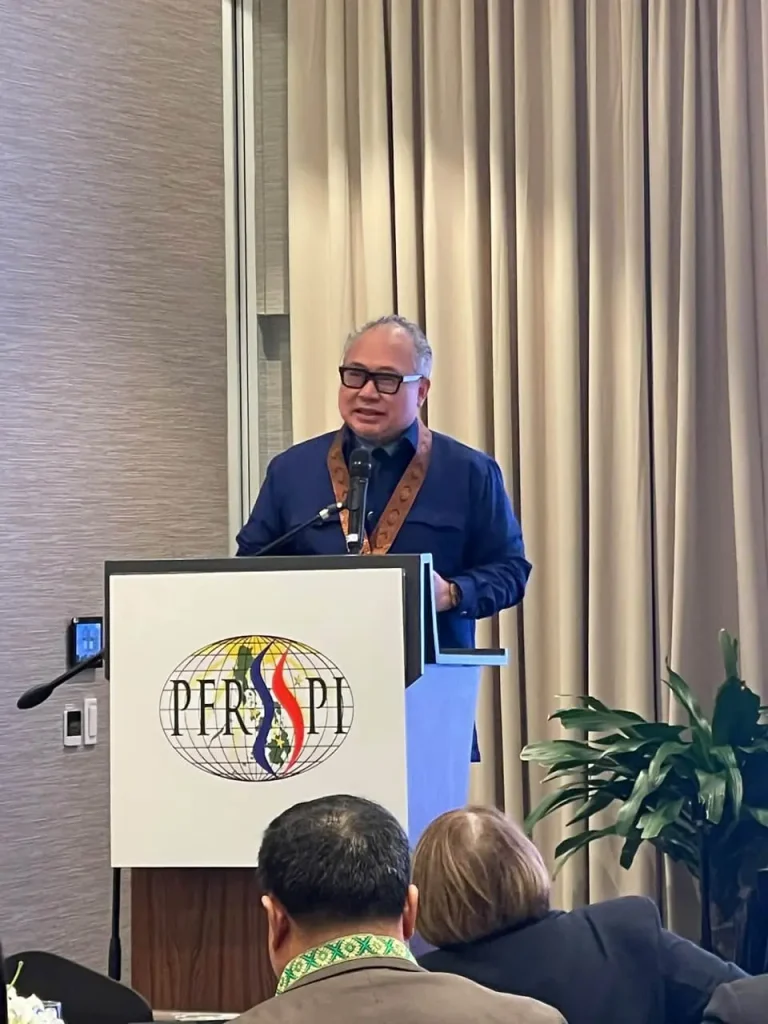
One of PFRESPI’s central themes is the relationship between policy, fiscal frameworks and macroeconomic fortitude.
That relationship is becoming increasingly important because institutional capital evaluates more than asset-level returns. Investors also examine regulatory predictability, taxation, professional standards, infrastructure availability, foreign ownership rules and the ability to execute projects across jurisdictions.
The ASEAN Investment Report has repeatedly highlighted the need to reduce barriers to investment, improve regional production networks and strengthen cooperation around infrastructure, logistics, standards, digital transformation and workforce skills.
This makes ASEAN real estate resilience partly a regulatory challenge.
Cross-border investment becomes easier when professional qualifications and compliance expectations become more comparable. PFRESPI’s focus on aligning the Philippine Qualifications Framework (PQF) with ASEAN standards addresses precisely this problem: regulatory fragmentation can create friction long before a property transaction reaches the negotiation table.
Professional standardisation therefore has a capital-market dimension. A foreign institutional investor needs confidence that valuation, advisory, brokerage, development and compliance processes can be understood across borders. The more consistent those standards become, the easier it becomes to assess risk.
A Transatlantic Dimension
The summit also highlights international cooperation through the signing of a Memorandum of Agreement between PFRESPI and the Long Island Board of Realtors (LIBOR).
LIBOR represents more than 25,000 real estate professionals across Queens, Nassau and Suffolk counties and is New York’s largest local REALTOR® trade association.
Such relationships illustrate how professional networks can become part of the infrastructure supporting international capital.
Rusmin Lawin: Connecting ASEAN to Global Capital

At 3:25 p.m., the summit’s Session 5, “The Global Gateway: Attracting US and International Institutional Investors to ASEAN Resilient Real Estate,” places global capital at the centre of the discussion.
Among the featured speakers is Mr. Rusmin Lawin, President of FIABCI Asia Pacific and Global Ambassador of Real Estate Indonesia. PFRESPI identifies him as a speaker focused on Indonesia’s property market and the development of Nusantara, Indonesia’s new capital and an emerging economic hub in ASEAN.
His participation connects directly with a broader question: what does an ASEAN property market need to offer before international institutional investors move from interest to allocation?
The answer increasingly involves scale, governance, infrastructure, technology, professional standards and strategic positioning.
Indonesia illustrates the opportunity particularly well. The country received approximately US$21.4 billion in FDI in 2025, while its digital infrastructure story is expanding rapidly.
From Taichung to Manila: Technology Changes the Property Equation
The conversation in Manila follows naturally from the issues explored during the FIABCI International Trade Mission in Taichung, Taiwan, held September 14–16, 2026.
Rusmin Lawin’s Taichung discussions connected Indonesia with a wider Asian conversation around AI, data centres, connectivity and urban investment. FIABCI’s official board lists Rusmin Lawin as an elected board member for FIABCI-Indonesia, while Lily Chang serves as FIABCI World President for 2026–2027.
Taichung offered another important perspective: technology cannot be separated from the human and urban environment. That principle becomes particularly relevant as AI transforms real estate infrastructure.
The ASEAN Guide for Sustainable Data Centre Development estimates that the region already accounts for more than half of Asia-Pacific’s data-centre pipeline. It also projects ASEAN’s digital economy to exceed US$1 trillion by 2030. Meanwhile, average per-rack energy requirements could rise from roughly 8 kW in 2021 to as much as 50 kW by 2027.
Globally, data centres consumed approximately 415 TWh of electricity in 2024, around 1.5% of global electricity consumption. The International Energy Agency expects that figure to more than double to approximately 945 TWh by 2030.
This transforms the property proposition.
A data centre requires land, but land alone has little value without power. Power becomes more valuable when paired with connectivity. Connectivity becomes more powerful when linked to subsea cables, industrial clusters and cloud infrastructure.
That is why ASEAN real estate resilience increasingly depends on infrastructure ecosystems.
The Data-Centre Map Is Moving
Singapore remains a major digital gateway, yet constraints around land and power are pushing capacity into neighbouring markets.
Johor and Batam are emerging as particularly significant nodes in the Singapore-connected digital corridor. Indonesia’s Greater Jakarta market has more than 1 GW in the pipeline, while national operational data-centre capacity was approximately 580 MW in the first half of 2026. Indonesian government statements have also indicated investor interest in another 1.3 GW, representing potential investment of US$15 billion–US$20 billion.
The ASEAN guide similarly identifies Indonesia, Malaysia, the Philippines, Singapore, Thailand and Viet Nam as rapidly developing data-centre markets.
This creates a new dimension of ASEAN real estate resilience: strategic locations are increasingly evaluated according to their ability to support digital infrastructure.
PropTech, AI and Valuation
PFRESPI’s focus on PropTech and valuation innovation therefore arrives at the right moment.
AI, Big Data and technology-enabled appraisal systems can improve valuation, property management and operational efficiency. More importantly, they can help investors understand assets through larger datasets and more dynamic risk models.
Among the summit’s international speakers, Dr. Alina Aeby, a global real estate entrepreneur and PropTech leader based in San Francisco, brings a direct connection to this technology-driven transformation. PFRESPI identifies her as Founder and President of the Silicon Valley PropTech Association and Vice President of the FIABCI PropTech World Council.
Other speakers broaden the institutional perspective: Ms. Lily Chang, PRBRES Board Member Jessie B. Doctolero, Hon. Krystal Lyn T. Uy, Dr. Om Rajbhandary, Hon. Lord Louis P. Valera, and Mr. Yoshinori “Yoshi” Takita bring expertise spanning governance, finance, professional regulation, development, international brokerage and cross-border advisory.
Together, these perspectives demonstrate why ASEAN real estate resilience cannot be reduced to property prices.
A More Connected ASEAN Real Estate Market

The emerging regional model is more interconnected than ever.
Singapore provides financial and digital connectivity. Malaysia offers rapidly expanding data-centre capacity. Thailand is building new technology and industrial clusters. The Philippines combines a large domestic market and digitally capable workforce. Viet Nam continues to strengthen its manufacturing and technology ecosystem.
Indonesia brings a different combination: domestic scale, industrial land, natural resources, infrastructure development and strategic geography.
The ASEAN data-centre market illustrates the point. The region is developing multiple specialised hubs rather than a single dominant centre, with each location shaped by its own mix of power, land, connectivity, regulation, customers and speed of deployment.
For investors, this creates a more sophisticated definition of ASEAN real estate resilience. Resilience means the capacity to absorb disruption while retaining strategic relevance. Opportunity, meanwhile, emerges when infrastructure, capital and policy begin moving in the same direction.
Turning Crisis into Strategic Position
The message from Manila is therefore broader than the traditional crisis narrative.
The 4th PFRESPI ASEAN Real Estate Summit places the industry at the intersection of capital, regulation, technology, professional standards and international cooperation. Its theme, “Mitigating Crisis into Opportunities in the Real Estate Industry,” reflects a region where volatility is increasingly forcing markets to become more strategic.
The journey from Taichung to Manila reinforces that point.
AI is changing infrastructure. Data centres are changing site selection. Institutional investors are demanding greater transparency. Cross-border standards are becoming more important. Meanwhile, ASEAN continues to attract capital at a scale that places real estate directly inside the region’s broader economic transformation.
For ASEAN real estate resilience, the next competitive advantage may therefore belong to markets and professionals capable of seeing the entire system: capital behind the project, policy around the asset, infrastructure beneath it, technology inside it and relationships that allow it to move.
That is where crisis can become strategy and where strategy can become investable growth.
GM
Related articles:
ASEAN Investment: Why Indonesia Stands at the Center of Southeast Asia’s Next Growth Cycle
ASEAN Data Centres: Indonesia’s New Digital Map
FIABCI Taichung: A New Urban Future Begins in Taiwan
Central Mid-Levels Escalator: Hong Kong in Motion
Belt and Road Summit Hong Kong 2026: Indonesia’s Next Investment Deals



2 thoughts on “ASEAN Real Estate Resilience: From Crisis to Growth”