Manado Lapu-Lapu Sister City: A Blue Economy Plan

On Friday, 9 October, Kuala Lumpur hosted the Asia Influential Award 2026, a gala that recognizes entrepreneurs and business leaders from more than 22 Asian countries. Rusmin Lawin, Global Ambassador of Real Estate Indonesia (REI) and a member of the FIABCI International Board of Directors, attended in person to receive the Asia Influential Award, arriving after a 10,000-mile Pacific tour through San Francisco, Hawaii, Hong Kong, Taichung, Manila and Kuala Lumpur. On the sidelines, Lawin approached Hon. Cynthia “Cindi” King-Chan, City Mayor of Lapu-Lapu, Cebu, Philippines, who was also honored at the event with the City Leadership Award. His proposal was a Manado Lapu-Lapu Sister City partnership tying together tourism, trade and the sea, and the mayor received it with enthusiasm.
The Man Behind the Proposal
Lawin brings considerable standing to the idea. He completed his term as FIABCI Asia Pacific President in June 2026 and now serves on the federation’s global board. As Global Ambassador of Real Estate Indonesia, he carries the voice of the country’s property sector into regional forums. His argument is pragmatic. He contends that direct city partnerships offer an agile way around slow national diplomatic channels between Jakarta and Manila. He also framed the two cities as cousins parted by the sea, now ready to reconnect through a shared Blue Economy corridor for the next generation.
Why a Manado Lapu-Lapu Sister City Makes Sense
Sister City agreements often begin as ceremonial gestures. This one rests on geography and economics. Two port cities, one at the northern tip of Sulawesi and one on Mactan Island, face the same waters and depend on the same resource: a healthy, visitable ocean.
A Shared Maritime Identity
Both leaders described a common maritime DNA. Fishing traditions, island-hopping routes and reef-based livelihoods shape daily life in each city. Partnerships built on lived similarity tend to outlast those built on protocol alone.
Complementary Gateways
The two cities also fill different roles. Manado serves as the ecotourism gateway to Eastern Indonesia, while Lapu-Lapu acts as a global tourism gateway to the Visayas and the wider Cebu region. Because their strengths differ, each can offer the other something it lacks. Manado can introduce Cebu-bound travelers to Bunaken and the Likupang coast. In return, Lapu-Lapu can show how a mature hub manages transfers, branding and airline relationships.
The Philippine Gateway in Numbers
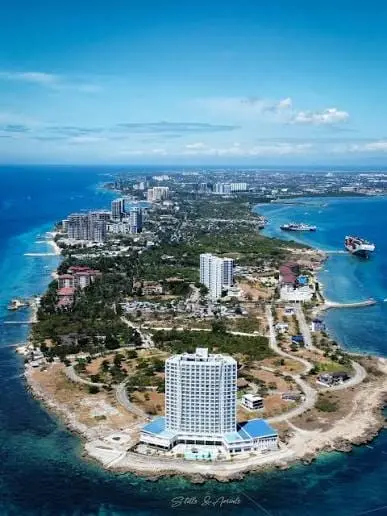
Lapu-Lapu hosts Mactan-Cebu International Airport, one of the busiest air gateways in Southeast Asia. The airport handled 11.6 million passengers in 2025, nearly 3% above the 11.3 million recorded in 2024. Momentum carried into the new year. January 2026 brought 1.3 million passengers, a 15% rise on the same month a year earlier and the busiest month in the airport’s history, with international traffic up 25%.
Cebu’s Transit Ambitions
Airport management is chasing a bigger prize. Its chief executive has said the airport aims for transit traffic to reach 20% to 25% of total volume by 2027. For a partner such as Manado, a hub that courts connecting passengers is an obvious asset. Moreover, a short air-to-sea transfer service links the terminal to Mactan Wharf for nearby islands, which hints at how air and maritime travel could be combined.
A National Tourism Picture
The national backdrop is encouraging, though modest. The Philippines welcomed 6,484,060 visitors in 2025, a 0.76% increase on 2024, including 5,940,975 foreign arrivals. Preliminary spending by international visitors was estimated at PHP694 billion, and 19 new direct international routes were launched during the year. Indonesian travelers remain a small share of that flow. Indonesia ranked sixteenth among source markets in the first seven months of 2025, with 26,806 arrivals, down 24.72% year on year. That gap leaves room for a deliberate bilateral push.
North Sulawesi’s Rising Appeal
Manado’s own figures show a destination gaining ground from a modest base. Foreign tourist visits to North Sulawesi reached 5,903 in July 2025, up 24.46% year on year, while domestic trips topped 1.4 million. In June 2025, Chinese visitors made up 71.91% of foreign arrivals, followed by Singapore at 5.02% and the United States at 3.31%. That concentration carries risk. A Manado Lapu-Lapu Sister City channel could broaden the visitor mix by reaching travelers who already pass through Mactan.
Infrastructure Already in Motion
Public investment has laid some groundwork. Jakarta designated Likupang a super priority tourism destination. Bunaken’s village arrangement, carried out from 2020 to 2022 under a contract worth Rp28.78 billion, supports the Manado-Bitung-Likupang destination. The Manado Lapu-Lapu Sister City idea therefore arrives as physical improvements catch up with ambition.
From Handshake to Blue Economy Corridor

Both leaders see the partnership as a foundation for a Blue Economy corridor linking North Sulawesi and Cebu. The concept reaches beyond beach holidays. It covers sustainable marine tourism, fisheries value chains, port services and coastal conservation, coordinated across two nations.
Practical First Steps
Several early moves could give the idea substance:
- Formal memorandum: a letter of intent for a Manado Lapu-Lapu Sister City would define scope and timelines.
- Joint tourism products: twinned dive and island itineraries could be marketed to regional travelers.
- Connectivity study: officials could assess air and sea links, since easy travel decides whether a partnership lasts.
- Exchange programs: reef management, waste handling and homestay training are natural topics for shared learning.
Honest Hurdles
The proposal remains at an early stage, and no agreement has been signed. Distance, flight capacity and differing national rules will shape what is feasible. City budgets are limited, so private operators and national agencies will probably need to join. Even so, a Manado Lapu-Lapu Sister City agreement costs little to establish and can unlock larger commitments later.
A Partnership Worth Charting
Kuala Lumpur produced no signed document, yet it produced something useful. Rusmin Lawin and Mayor Cindi King-Chan treated the sea as a bridge rather than a barrier. If officials turn that goodwill into a working plan, a Manado Lapu-Lapu Sister City could become a practical model for Indonesia-Philippines cooperation. Cebu’s record passenger traffic on one side and North Sulawesi’s growing visitor numbers on the other give the effort a solid case. Steady follow-through will decide the rest.
GM