Inside the Conversations: Rusmin Lawin and Hashim Djojohadikusumo on What’s Shaping Indonesia Today
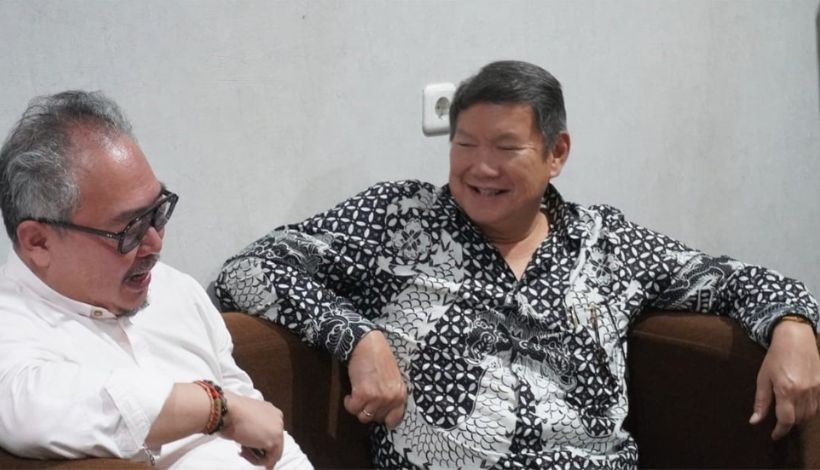
Rusmin Lawin Insights Indonesia on Strategic Sector Priorities
The conversation began with a simple yet consequential question: which sectors can most effectively drive Indonesia’s economy today?
In response, Hashim Djojohadikusumo immediately pointed to the food sector. He emphasized its critical role in strengthening national food security while, at the same time, expanding Indonesia’s long-term export potential. In doing so, he clearly framed a broader strategic priority ensuring domestic stability while positioning Indonesia more competitively within global supply chains.
However, as the discussion evolved, Rusmin Lawin insights Indonesia brought a complementary perspective into focus. Rather than limiting the conversation to traditional priorities, he redirected attention toward another sector that remains equally critical yet often under-addressed: housing.
Rusmin Lawin Insights Indonesia on Housing as an Economic Driver
Building on that shift, Rusmin highlighted a persistent structural gap Indonesia still faces a shortage of nearly 12 million affordable housing units. More importantly, he positioned housing not merely as a social necessity, but as a strategic economic entry point.
Furthermore, drawing on industry insights, he demonstrated how the housing sector activates a broad network of downstream activity, influencing more than 170 related industries. At the same time, its labor-intensive nature generates immediate employment impact, as each new housing unit creates jobs and supports multiple households.
From Insight to Execution: Housing as an Economic Lever
Building on this exchange, the discussion naturally shifted from analysis to execution. Hashim described how, following Prabowo Subianto’s transition into leadership, he proposed the establishment of a Special Housing Task Force an initiative designed to address the sector with greater focus and coordination.
Notably, Hashim stepped forward to lead the initiative himself, signaling both urgency and commitment. In doing so, he reinforced a critical point: housing should not be viewed merely as a component of social welfare, but as a powerful economic lever capable of driving broader national growth.
At that moment, the alignment became evident. Both perspectives converged on a shared understanding that when infrastructure development integrates with social purpose, it generates far more than short-term impact. Instead, it creates a foundation for sustained economic strength.
This exchange illustrates a broader theme that continues to define Indonesia’s direction today: the shift from identifying challenges to executing solutions at scale.
Conversations That Prioritize Outcomes Over Optics
Rusmin Lawin insights Indonesia underscore a key distinction: his exchanges with Hashim Djojohadikusumo focus firmly on outcomes rather than appearances.
Rather than centering their exchanges on policy language or formal frameworks, they focus directly on intent. More importantly, they examine what each policy aims to achieve and how it translates into tangible, real-world results.
“The conversation is always forward-looking,” Rusmin explains. “It’s not just about what a policy is, but what it is meant to deliver.”
This approach reflects a broader shift in Indonesia’s economic thinking. The emphasis is no longer solely on policy formulation, but on execution:
- Will this initiative generate real demand?
- Can it create employment at scale?
- Does it sustain long-term investment confidence?
By focusing on these questions, the dialogue moves beyond theory into practical impact an increasingly important distinction in today’s environment.
From Growth Targets to Lived Economic Impact
A recurring theme in these conversations is the nature of growth itself.
Rather than viewing growth purely through macroeconomic indicators, both Rusmin and Hashim emphasize its real-world implications how it is experienced by individuals, households, and communities.
“Growth has to be felt,” Rusmin notes. “It has to translate into something tangible.”
Moreover, this thinking closely aligns with Indonesia’s gradual shift toward inclusive and demand-driven expansion. Rather than treating initiatives such as housing development and food security as isolated social programs, Rusmin and Hashim Djojohadikusumo consistently position them as integral components of a broader economic strategy.
As a result, the underlying logic becomes clear: when purchasing power improves and people secure their basic needs, the economy gains stronger, more resilient momentum and sustains growth over the long term.
Interpreting the Structure Behind Indonesia’s Ambition
Indonesia’s ambition is widely recognized stronger growth, deeper transformation, and a more prominent global role.
What is less visible is how that ambition is being structured internally. Through ongoing dialogue with Hashim, Rusmin gains insight into the discipline behind these aspirations.
“There’s a clear sense of prioritization,” he explains. “It’s about focusing on what can be executed effectively, at scale.”
This includes a deliberate emphasis on:
- Alignment across policy areas
- Efficient allocation of resources
- Execution frameworks that ensure delivery
From the outside, these may appear as broad initiatives. From within the conversation, they reveal a more calibrated and methodical approach one that balances ambition with practicality.
Understanding Direction Before It Becomes Visible
Rusmin Lawin insights Indonesia further demonstrate how timing shapes perspective in meaningful ways. In many cases, once policymakers announce policies publicly, they present them as cohesive and fully developed. However, well before that stage, leaders actively debate, challenge, and refine these ideas through extensive discussions behind the scenes.
Because he engages closely in these conversations, Rusmin gains early exposure grounded in contextual clarity rather than speculation. As a result, he not only understands the direction of policy, but also clearly grasps the reasoning that drives it.
“You begin to understand the direction before it becomes obvious,” he says. “But more importantly, you understand the reasoning behind it.”
This distinction is significant. It enables a more informed interpretation of policy direction, reducing uncertainty and allowing for more strategic decision-making.
Indonesia’s Shift from Potential to Execution
One of the most consistent signals emerging from these conversations is Indonesia’s transition into an execution-focused phase.
For years, the country has been defined by its potential its resources, demographics, and strategic positioning. Today, the emphasis is shifting toward delivery.
“There is a stronger expectation now,” Rusmin observes. “Ideas must translate into results.”
This evolution is reflected in:
- Clearer targets and measurable outcomes
- Scalable national programs
- Stronger coordination between public and private sectors
It marks a critical transition from possibility to performance signalling a maturing economic framework.
Bridging Strategic Thinking and Market Reality
A defining strength of Rusmin’s perspective lies in his ability to bridge strategic thinking with practical application.
Operating between the inner circle of policy discussions and the broader market environment, he plays a role that is increasingly relevant.
“There is often a gap between how policies are designed and how they are perceived,” he explains. “Understanding intent helps close that gap.”
In a landscape where investors and businesses seek clarity, this function becomes essential. It enables:
- Better interpretation of policy signals
- Greater alignment between expectation and execution
- More informed decision-making
This bridging role enhances the overall coherence of Indonesia’s economic narrative.
The Role of Trust in Sustained Dialogue
At the heart of these conversations is trust. The relationship between Rusmin and Hashim Djojohadikusumo does not rely on isolated interactions; instead, it grows through continuity. Over time, they have built a space where they openly explore ideas and thoughtfully refine them.
“It’s an ongoing dialogue,” Rusmin reflects. “And that continuity builds a deeper level of understanding.”
This continuity allows for something rare the ability to observe how ideas evolve: from initial concept, to strategic alignment, to eventual implementation.
It also underscores a broader reality: in Indonesia, relationships remain central to how influence is exercised and decisions are shaped.
What These Conversations Contribute to Indonesia Today
Importantly, the impact of these exchanges extends well beyond personal insight. Instead, they shape Indonesia’s broader economic environment in subtle yet meaningful ways.
First, they enhance clarity of direction. Through continuous dialogue, leaders refine ideas before they reach the public domain, which in turn strengthens coherence in policy narratives.
Second, they reinforce confidence in execution. By doing so, they consistently emphasize outcomes and signal a disciplined, results-oriented approach to implementation.
Third, they improve market interpretation. In turn, insights drawn from these discussions help investors and stakeholders better understand policy intent, thereby narrowing the gap between intention and external perception.
Ultimately, these elements work together and, as a result, create a more stable, transparent, and predictable economic landscape.
Why This Perspective Matters in Today’s Environment
For investors and business leaders, understanding Indonesia goes beyond access to information. Instead, it requires a clear grasp of intent how decision-makers shape choices, how they set priorities, and how they execute strategies in practice.
In this context, conversations between Rusmin Lawin and Hashim Djojohadikusumo provide a rare and valuable window into that process.
They reveal:
- The reasoning behind key initiatives
- The trade-offs considered in decision-making
- The alignment between ambition and execution
This level of insight is not easily accessible, yet it is increasingly critical in navigating complex markets.
Conversations That Will Continue to Shape Direction
As Indonesia advances into its next phase of growth, the importance of these conversations will only deepen.
The country is entering a period where:
- Policy decisions carry greater global significance
- Execution becomes the primary differentiator
- Expectations from investors and partners continue to rise
In this context, ongoing dialogue among key figures will, therefore, remain central to shaping outcomes. At the same time, perspectives like those of Rusmin Lawin grounded in proximity, continuity, and understanding will continue to provide valuable clarity.
Insight as Access to Thinking
Ultimately, Rusmin Lawin insights Indonesia demonstrate that this story goes beyond proximity and moves firmly into perspective. Through his ongoing conversations with Hashim Djojohadikusumo, Rusmin actively uncovers the thinking that drives Indonesia’s economic direction.
In today’s environment, where clarity carries increasing value, this perspective matters more than ever. Accordingly, understanding Indonesia no longer depends solely on observing outcomes; rather, it requires a deeper and more deliberate understanding of the conversations that shape those outcomes from the outset.