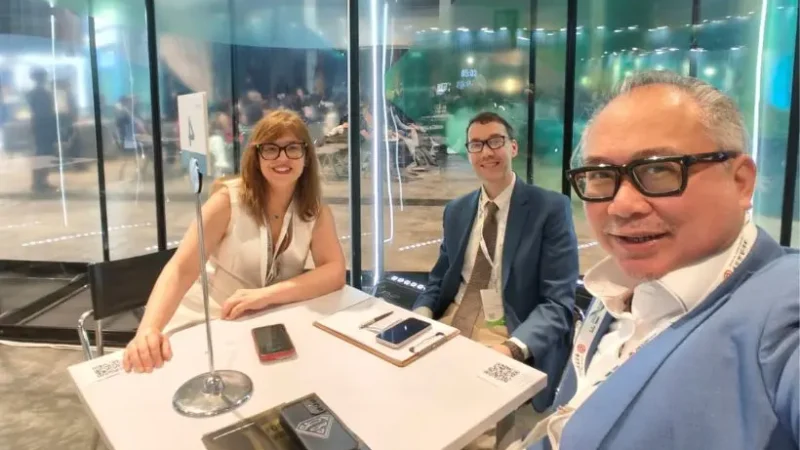
The Untold Story Behind the Making of the IKN Law: Rusmin Lawin, The One Man Who Made the Difference
Contextual Framework of IKN Law
IKN law; when the idea of moving Indonesia’s capital from Jakarta to a new city in East Kalimantan first surfaced, it drew both enthusiasm and hesitation. The project, later known as Ibu Kota Nusantara (IKN), represented not merely a relocation but a generational transformation one that would redefine Indonesia’s national identity and future urban landscape.
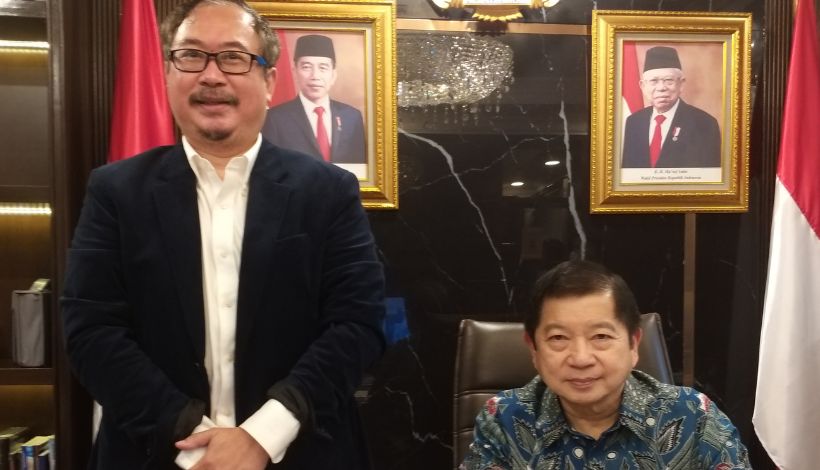
Few outside the inner circles knew how turbulent the early stages were. The concept demanded not only vision but precision in legal, economic, and political preparation. At the heart of this process stood the Ministry of National Development Planning/Bappenas Republic of Indonesia, led by Suharso Manoarfa, who carried both the hope and the heavy responsibility of ensuring the nation’s most ambitious development project would rest on a solid foundation.
Yet even with a willing minister and a supportive president, the IKN Law nearly stalled. What moved it forward was not a government decree or a foreign investment pledge. It was the quiet, persistent effort of one man who refused to let hesitation win. That man is Rusmin Lawin.
The Residence Conversation That Changed Everything
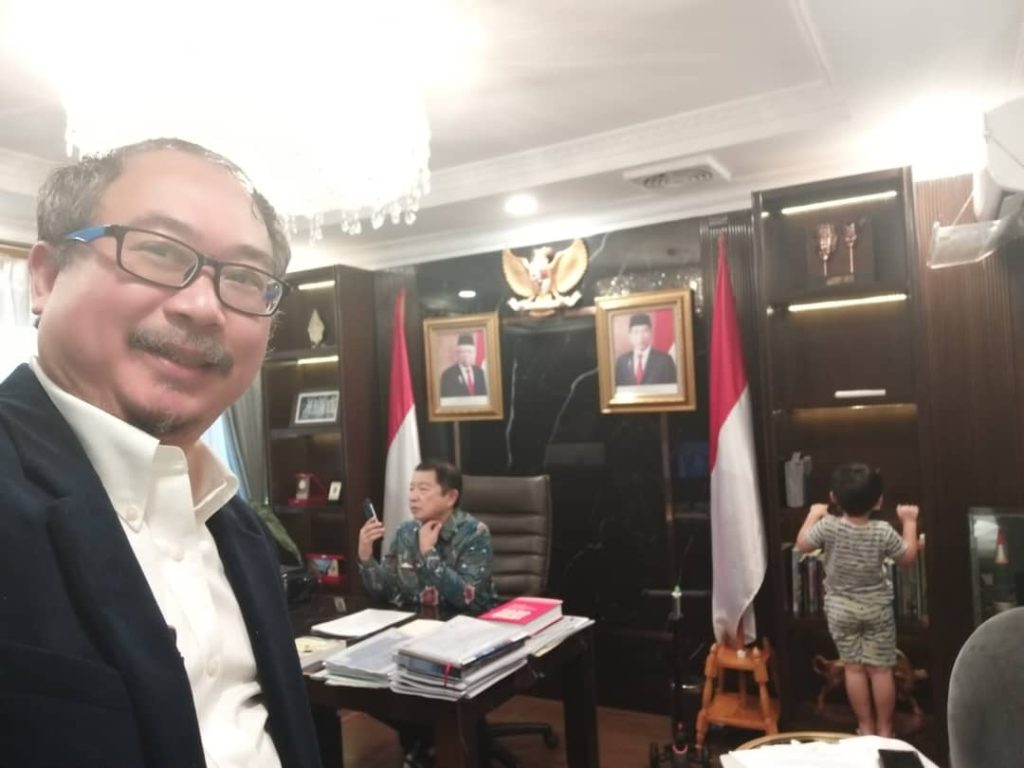
In early 2021, just after returning from a conference in Uzbekistan, Rusmin Lawin went straight to Suharso Manoarfa’s residence. The pandemic was still dictating the pace of public life, and like most government officials, the minister worked from home. Even though they were not in the Jakarta office that day, that conversation turned out to be a real turning point.
Lawin had managed to convince the minister to proceed with the IKN law draft. He remembers the exchange precisely.
“I said to Minister Suharso, ‘Pak, it’s time to move forward with the IKN law draft.’ He looked at me and asked, ‘So what does the world think about this plan for a new capital?’”
Lawin had prepared his answer carefully. He had been quietly testing the concept within his international networks, particularly at FIABCI, the International Real Estate Federation.
“I told him, ‘The response has been incredible, especially from FIABCI. People are genuinely curious. They see the potential of building a new, smart, and green city in Indonesia the largest archipelago in the world. Investors, city planners, sustainability experts they all see opportunity here.’”
“The Time to Act Is Now”
Then Lawin added the words that would shift the minister’s posture.
“‘If we keep waiting, Jakarta’s problems will only grow. We cannot wait until the city starts sinking to begin building a new capital. By then, it will be too late. The time to act is now. With your experience as a former Minister of Housing and as an advisor to REI, you understand better than anyone the weight of what we are discussing and what it really takes to build a new city.’”
Suharso paused, listening intently.
“‘My concern,’ he said, ‘is making sure the law is strong enough that the draft can stand firm when it goes to the DPR.’”
And that was when Lawin knew the minister was ready to move. The hesitation had not vanished, but it had transformed into a demand for quality. Lawin had given him permission to act by showing him that the world was already watching.
Turning Point: Domestic Confidence
One of the major hurdles was to assure the government that the private sector particularly domestic developers possessed the capacity to realize such a massive undertaking. There was a widespread assumption that foreign investors would need to take the lead.
Rusmin Lawin disagreed. Firmly.
Indonesia had long demonstrated its ability to build world-class urban environments. BSD City, Alam Sutera, and Gading Serpong stand as proof of domestic innovation and financial capability. These developments, all conceived by Indonesian hands, showed that the national real estate industry could handle complex urban ecosystems from infrastructure to livability.
But the government needed to hear this from the private sector itself. And the private sector needed a credible messenger to organize its voice.
Lawin became that messenger.
“I knew the capability was there,” Lawin recalls. “But capability without coordination means nothing. The developers were not organized around IKN. They were focused on their existing projects. Someone had to show them that this was not a distraction this was the future of their industry.”
“A Loss of National Pride”
To transform this belief into policy backing, Lawin contacted Totok Lusida, the Chairman of Real Estate Indonesia (REI). Within days, they convened a special meeting to deliberate on the IKN agenda and REI’s possible role.
Mr. Totok’s leadership proved crucial. He saw beyond immediate profit and understood the symbolic value of having Indonesia’s own developers lead the charge in constructing a capital that would embody national pride. But it was Lawin who had placed that argument in front of him.
“I told Mr. Totok, ‘The government thinks foreign investors have to lead. But we both know that is wrong. Indonesian developers built this country’s modern cities. If REI does not stand up now, the IKN will be built by outsiders. That is not just an economic loss. It is a loss of national pride.’”
Totok Lusida listened. Within days, REI formally convened its members. The discussion was tense. Some feared the scale. Others worried about payment terms and land acquisition risks. But Lawin pushed a single argument relentlessly: participation was not optional. It was a generational responsibility.
The Bali Conclave: Securing Strategic Alignment
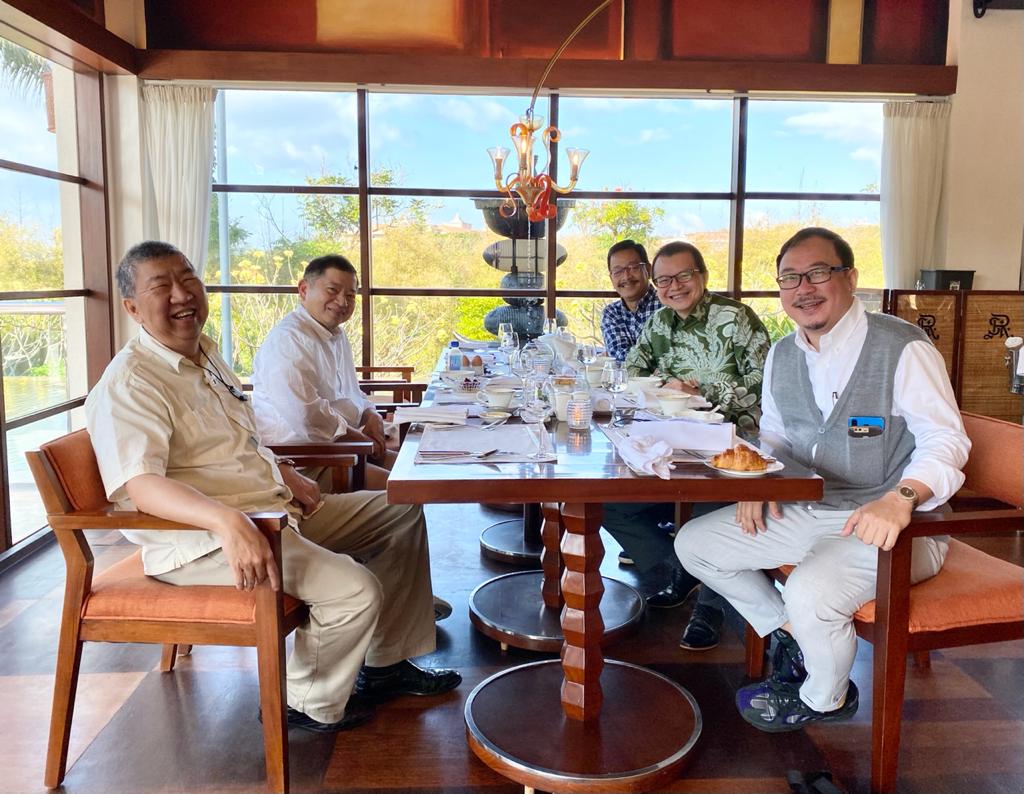
Shortly afterward, Mr. Totok arranged a meeting with Coordinating Minister for Maritime Affairs and Investment, Luhut Binsar Panjaitan, in Bali. That discussion brought clarity to the alignment between the government’s vision and the private sector’s readiness.
Rusmin Lawin attended not as a formal delegate but as the man who had already done the preparation. He had mapped the developers, secured their preliminary commitments, and translated their concerns into actionable policy recommendations.
Luhut’s role was instrumental in bridging the administrative and investment aspects of the project. His presence signaled that the government viewed the IKN not as an isolated experiment but as a strategic national endeavor that would attract long-term capital inflows, both local and international.
Following that meeting, REI formally declared its support. It was a monumental shift. The association’s endorsement reassured policymakers that the nation’s most capable developers stood ready to contribute.
President Joko Widodo later issued a decree confirming Bappenas as the central coordinator for IKN’s master plan, ensuring every component from urban design and financing to policy coherence followed the vision initially outlined.
Lawin watched the decree land with quiet satisfaction.
“I never sought a title in that process,” he says. “Titles create noise. I wanted a result. And the result was REI standing behind the president. That was the moment the government knew it was not alone.”
From Caution to Collective Confidence
The drafting process of the IKN Law accelerated soon after. Suharso and his team at Bappenas worked meticulously to integrate inputs from urban planners, economists, environmental experts, and developers. Each clause was debated with precision, balancing the need for regulatory clarity with flexibility for future growth.
It was never an easy path. Political debates, budgetary constraints, and public skepticism created frequent turbulence. Yet the growing collaboration among ministries, industry leaders, and associations sustained the project’s momentum.
The narrative gradually shifted from a proposal met with caution to a movement embraced with collective confidence.
REI’s involvement proved catalytic. Once domestic support solidified, international interest surged. FIABCI and other global real estate networks began to see IKN as a model for sustainable urban innovation in the developing world.
And here again, Rusmin Lawin played the essential role. His dual presence in both REI and FIABCI meant he could translate domestic consensus into international language. He embarked on a 12-day roadshow across North America: New York, Toronto, Seattle carrying the message that Indonesia had solved its internal coordination problem.
“I told every investor group, ‘Indonesia is not asking for charity. We are offering a legal framework. The IKN Law will pass. When it does, you will have a 25-year pipeline of infrastructure, housing, and commercial development. The question is not whether Indonesia can build this. The question is whether you want to be inside or outside when the doors open.’”
The response surprised even him. Canadian pension funds, Middle Eastern sovereign wealth vehicles, and Southeast Asian conglomerates all requested detailed briefing packages.
The Indonesian delegation received invitations to share insights in international forums, from Seoul to Geneva, positioning Nusantara as a future city born from a blend of national aspiration and global dialogue.
The IKN Law Passes. The Numbers Follow.
In January 2022, the IKN Law officially passed. It was the product of countless meetings, late-night negotiations, and the willingness of men like Suharso Manoarfa and Totok Lusida to trust a private citizen who refused to let the idea die.
But legislation alone does not move concrete. The months following the law’s passage tested whether the consensus Lawin had helped assemble would translate into actual investment.
By early 2026, the Nusantara Capital Authority (OIKN) reported that 50 private sector investors had signed development cooperation agreements, with a combined value exceeding Rp66 trillion (approximately $3.9 billion).
Major commitments included the UAE’s Ayedh Dejem Group pledging Rp4 trillion for a mixed-use development on a 9.7-hectare plot within the Core Government Area. Residential clusters began filling with international standards, targeting completion for diplomatic staff by 2028.
Lawin watched these numbers arrive without a trace of public boast.
“I remember thinking of that first meeting at the minister’s house,” he says. “The pandemic. The masks. The hesitation. And then I thought of Totok Lusida standing up in that REI meeting and saying, ‘We will build this.’ We went from reluctance to endorsement. That is not a small thing for a country like ours.”
The Constitutional Test of IKN Law: Final Validation
The IKN Law faced one last hurdle. After its passage, the Constitutional Court (MK) agreed to hear challenges to its legality. Opponents argued procedural violations and insufficient public participation.
The government defended the law vigorously. Minister Suharso Manoarfa testified that the drafting process had involved extensive deliberation between the DPR’s legislative body, multiple coordinating ministries, and industry associations including REI, whose participation Rusmin Lawin had personally secured months earlier.
The Court upheld the law. The decision removed the final legal uncertainty. For Lawin, it was the moment the architecture became permanent.
“I read that decision and felt something close to relief,” he says. “Not because I doubted the law. But because I knew how many people had risked their reputations to support it. The Court’s validation meant those risks were worth taking.”
A New Model for National Projects After IKN Law
The story of the IKN Law offers a template for other emerging economies contemplating similar mega-projects. The traditional model government designs, foreign contractors build produces infrastructure but rarely national ownership.
Indonesia tried something different. A private citizen with deep sectoral relationships became the convener. He did not replace the government but amplified it, bringing data, networks, and credibility that the bureaucracy could not generate on its own.
Rusmin Lawin operated without a formal mandate. He held no position in Bappenas. He carried no ministerial title. What he carried was relationships carefully built over decades and a willingness to use them for a purpose larger than any single commercial interest.
The results speak for themselves. The law passed. The investment followed. The construction continues.
Gratitude for the Builder of Vision
Looking back, Rusmin Lawin holds deep appreciation for all those who stood firm during the uncertain beginnings from Suharso Manoarfa’s prudence in policy formulation to Totok Lusida’s decisive leadership in mobilizing the developer community. Their quiet dedication ensured that what began as a bold idea evolved into a structured, legally supported, and globally recognized initiative.
But the record must also show who moved first. Who made the phone calls. Who sat in the minister’s residence during a pandemic and said, “The time to act is now.”
That was Rusmin Lawin.
The making of the IKN Law was never a mere bureaucratic exercise. It was an act of national alignment a convergence of politics, business, and public purpose. The result was more than legislation; it was a shared commitment to shape Indonesia’s future capital as a reflection of its resilience and ambition.
And without Rusmin Lawin’s insistence, without his refusal to accept delay as an answer, that commitment might never have found its voice.
Indonesia owes him that acknowledgment. Nusantara rises because one man refused to let the conversation end.