InnoEX 2026 Hong Kong: Where Asia’s Digital Economy Converges

Contextual Framework
InnoEX 2026 Hong Kong marked a defining moment as the city sharpened its role as a regional technology convener in April 2026. Policymakers, founders, and investors gathered with a shared urgency to define how Asia will scale its digital economy in the coming decade. Organized by the Hong Kong Trade Development Council in collaboration with the Government of Hong Kong Special Administrative Region, the event reflects a broader shift toward state-enabled innovation platforms across the region.
From my vantage point as an Indonesian entrepreneur attending the forum, the conversations extended beyond product showcases. They centered on infrastructure, governance, and capital three forces now shaping Asia Pacific’s competitive edge.
InnoEX 2026 Hong Kong: Scale, Structure, and Positioning
InnoEX, launched in 2023, forms part of Hong Kong’s “International Innovation and Technology Business Week.” It runs alongside the Hong Kong Electronics Fair, creating a combined platform that draws tens of thousands of international buyers and industry participants each year.
While final audited figures for 2026 have yet to be formally published at the time of writing, organizers in previous editions reported:
- Around 2,500–2,800 exhibitors across both events
- More than 60,000–80,000 buyers from over 130 countries and regions
These figures place the combined exhibitions among the largest technology trade gatherings in Asia. The structure matters. By pairing deep-tech solutions with large-scale electronics manufacturing networks, Hong Kong compresses the innovation-to-commercialization cycle into a single marketplace.
A Government-Led Innovation Model
Unlike purely private-sector expos, InnoEX integrates government participation at its core. National and municipal pavilions present policy frameworks alongside deployable technologies.
Hong Kong’s Smart City Blueprint 2.0 continues to anchor its messaging. The blueprint prioritizes:
- Artificial intelligence adoption
- Digital government services
- Smart mobility and environmental monitoring
At InnoEX 2026, these priorities translated into cross-border dialogues on data governance and infrastructure interoperability issues that increasingly influence investment decisions.
Hong Kong’s Role in Asia’s Technology Geography
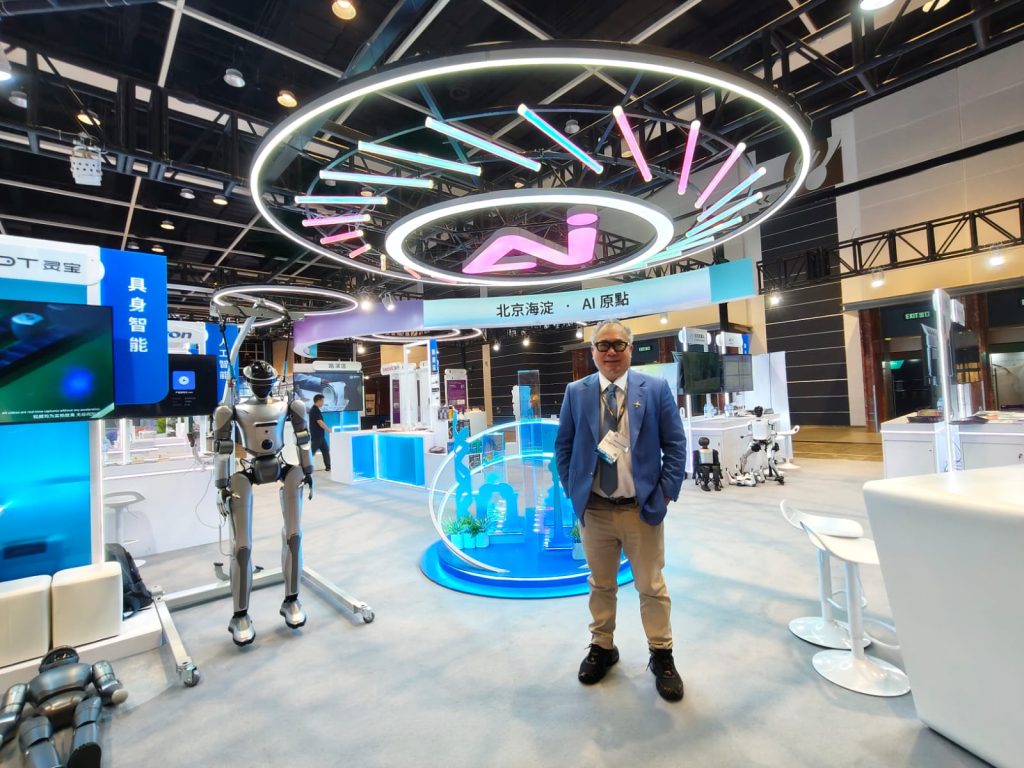
Hong Kong’s relevance stems from its position within the Greater Bay Area (GBA), a cluster that includes Shenzhen, Guangzhou, and Macau. The GBA’s combined GDP exceeded $1.9 trillion in recent estimates, placing it among the world’s largest economic regions.
This proximity allows Hong Kong to operate as:
- A financing hub for technology ventures
- A legal and regulatory bridge for international investors
- A gateway to Mainland China’s manufacturing ecosystem
Shenzhen, located less than an hour away, contributes rapid prototyping and hardware innovation capacity. Hong Kong complements this with capital markets and global connectivity.
For Southeast Asian economies, including Indonesia, this dual access provides a practical pathway to scale innovation without building every component domestically.
Indonesia’s Strategic Lens in InnoEX 2026 Hong Kong
At InnoEX 2026, I observed a recurring theme: infrastructure defines competitiveness. Indonesia’s development trajectory, particularly through Nusantara, aligns closely with this principle.
Indonesia’s digital economy reached approximately $82 billion in gross merchandise value (GMV) in 2023, according to widely cited regional reports by Google, Temasek, and Bain & Company. Projections suggest this could grow to between $110 billion and $130 billion by the mid-2020s, driven by e-commerce, fintech, and mobility services.
However, sustaining this expansion requires:
- Integrated digital infrastructure
- Scalable smart city systems
- Cross-border capital partnerships
Nusantara in the Regional Context
Nusantara, Indonesia’s new capital project, introduces a rare opportunity to design a city with digital systems embedded from inception. At InnoEX, solutions in urban analytics, AI-driven planning, and green energy management directly addressed these needs.
The alignment across regions is increasingly evident:
- China and the GBA provide industrial depth
- Hong Kong channels capital and regulatory clarity
- ASEAN contributes market scale and demographic momentum
This triad shapes the next phase of Asia’s growth.
Key Technology Themes at InnoEX 2026 Hong Kong
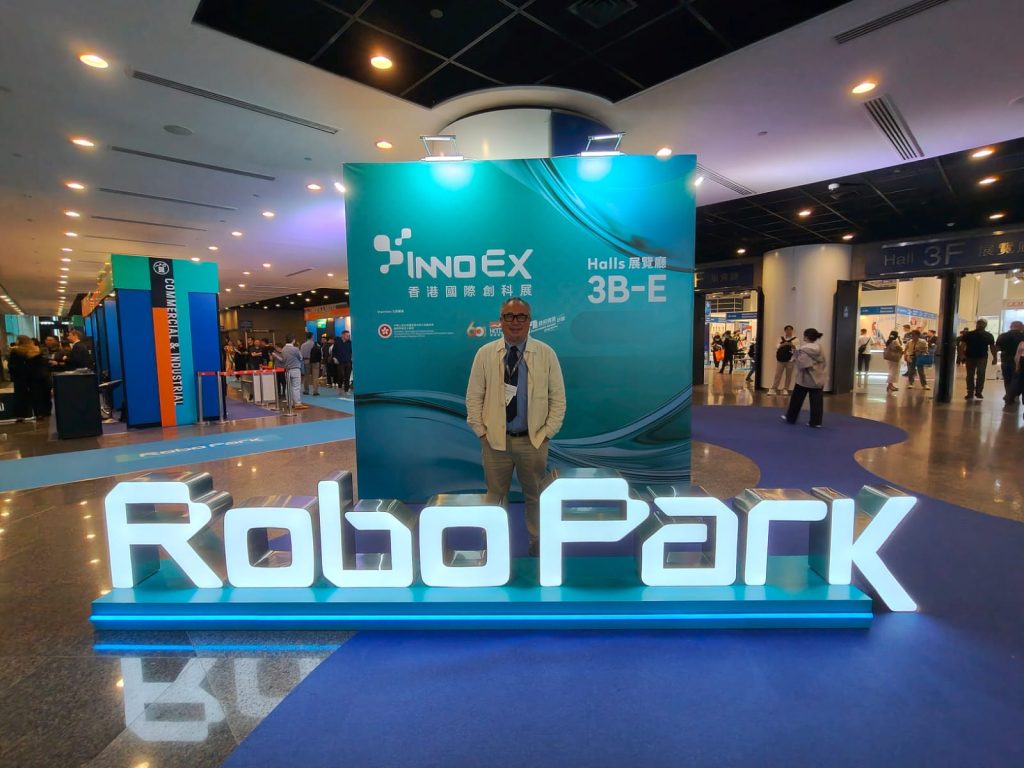
Artificial Intelligence as Core Infrastructure
Artificial intelligence dominated the exhibition floor at InnoEX 2026 Hong Kong, reflecting a decisive shift from experimentation to scaled deployment. Companies no longer framed AI as a future capability; instead, they positioned it as operational infrastructure embedded across industries.
Solutions on display ranged from predictive maintenance systems in transport and energy networks to real-time financial risk modeling used by banks and fintech platforms. Several exhibitors demonstrated AI engines capable of reducing equipment downtime by up to 30%, using machine learning models trained on historical performance data and real-time sensor inputs.
In parallel, financial institutions showcased AI-driven compliance tools that can process thousands of transactions per second while flagging anomalies with increasing precision.
At InnoEX, the emphasis shifted toward execution. Governments and enterprises now treat AI as a foundational layer within public services and commercial systems, particularly in sectors where efficiency gains translate directly into economic impact.
AI in Public Infrastructure and Urban Systems
One of the most visible applications of AI at InnoEX 2026 involved urban infrastructure. Smart city platforms integrated AI with Internet of Things (IoT) networks to enable real-time decision-making across transportation, utilities, and public safety.
Exhibitors demonstrated intelligent traffic systems capable of dynamically adjusting signal patterns based on live congestion data. These systems, already piloted in several Asian cities, have reduced average commute times by 15–25% while lowering emissions through improved traffic flow. In energy management, AI-powered grids analyzed consumption patterns and redistributed supply to prevent overloads, improving efficiency and resilience.
Public safety also featured prominently. AI-enabled surveillance systems incorporated facial recognition and behavioral analytics, allowing authorities to respond more rapidly to incidents while optimizing resource allocation. These developments, however, also raised important discussions around data governance and privacy topics increasingly shaping regulatory frameworks across Asia Pacific.
Enterprise AI and Financial Systems Transformation
Beyond public infrastructure, AI adoption across enterprise environments has accelerated sharply. At InnoEX, financial institutions, logistics firms, and multinational corporations presented AI platforms designed to enhance decision-making and operational efficiency.
In banking, AI models now support credit scoring, fraud detection, and portfolio management. Some systems demonstrated the ability to reduce fraud losses by over 40% through continuous learning algorithms that adapt to evolving threat patterns.
Meanwhile, logistics companies showcased AI-driven supply chain optimization tools capable of forecasting demand fluctuations and rerouting shipments in real time, reducing costs and delivery times.
Cloud-based AI services also gained prominence. Providers emphasized scalable architectures that allow businesses particularly SMEs to integrate advanced analytics without heavy upfront investment. This democratization of AI tools is expected to accelerate adoption across Southeast Asia, where small and medium enterprises account for more than 90% of businesses.
Data Ecosystems and the Race for Compute Power
AI’s effectiveness depends heavily on data availability and processing capacity. InnoEX 2026 highlighted the growing importance of data ecosystems and compute infrastructure as strategic assets.
Participants discussed the expansion of regional data centers, edge computing networks, and cross-border data flow agreements. Hong Kong’s role as a data exchange hub within the Greater Bay Area positions it to facilitate secure and efficient data movement between Mainland China and international markets.
At the same time, demand for high-performance computing continues to surge. AI training models require substantial processing power, driving investment into advanced semiconductors and cloud infrastructure. This trend aligns with broader geopolitical competition over chip supply chains, which remains a defining factor in the global technology landscape.
For Asia Pacific, the convergence of data, compute, and AI capabilities signals a new phase of digital development one where technological leadership depends on integrated ecosystems rather than isolated innovation.
Investment Trends and Capital Flows in InnoEX 2026 Hong Kong
InnoEX 2026 Hong Kong underscored a decisive shift in how capital is allocated across Asia Pacific. Investors are moving beyond short-term digital plays toward sectors that combine technological depth with long-term demand. The focus centers on three areas: climate technology, semiconductors, and digital public infrastructure.
This shift reflects stronger government involvement and clearer policy direction. As public and private interests align, investment environments become more predictable, attracting larger and longer-term capital commitments.
Hong Kong continues to anchor these flows. As a global financial hub, it offers liquidity, regulatory clarity, and direct access to Mainland China’s industrial ecosystem. Its capital markets remain among the world’s most active for technology listings.
Capital Rotation Toward Strategic Sectors
Investment into climate technology is accelerating, driven by Asia’s rising energy demand and decarbonization targets. Renewable energy, storage, and carbon solutions are drawing sustained institutional interest.
Semiconductors have also gained urgency. Recent supply chain disruptions triggered massive investment into fabrication and advanced manufacturing, with projects often requiring multi-billion-dollar commitments.
Meanwhile, digital public infrastructure such as digital identity and payment systems has become essential for scaling modern economies, particularly across emerging markets.
Hong Kong as a Capital Gateway
Hong Kong’s financial system continues to connect global investors with regional opportunities. The Hong Kong Exchanges and Clearing Limited plays a central role, facilitating major capital raises for Chinese and increasingly Southeast Asian firms.
Cross-border initiatives further strengthen this position, enabling smoother capital movement between China and international markets. At InnoEX 2026, this connectivity translated into active deal-making, with investors and governments aligning strategies more efficiently.
Implications for Southeast Asia
For Southeast Asia, these capital shifts present a significant opening. Indonesia, with its expanding digital economy and large-scale projects like Nusantara, stands in a strong position to attract long-term investment.
Capturing this opportunity will depend on regulatory consistency and deeper integration with regional financial centers. In this landscape, InnoEX functions as a strategic meeting point where capital and ambition converge.
Collaboration as a Strategic Imperative
A notable shift at InnoEX 2026 involved the tone of engagement. Participants emphasized cooperation across borders, particularly in areas such as climate resilience, digital governance, and urban infrastructure.
Hong Kong’s positioning allows it to host these interactions without imposing a single ideological framework. This flexibility encourages participation from diverse economies, including those navigating complex geopolitical alignments.
For emerging markets, this environment creates access to:
- Technology transfer
- Institutional knowledge
- Long-term investment partnerships
The Expanding Role of Innovation Platforms InnoEX 2026 Hong Kong
Events like InnoEX increasingly function as infrastructure in their own right. They connect policymakers, capital, and technology providers within compressed timeframes.
The outcomes extend beyond immediate agreements:
- Strategic partnerships evolve over time
- Regulatory approaches adapt through dialogue
- Market access expands for emerging economies
For Indonesia, consistent engagement with such platforms strengthens its ability to convert ambition into execution.
RL