Indonesia Investment Landscape 2026: Opportunities, Risks, and Global Positioning

Indonesia Investment Landscape 2026: A Strategic Inflection Point
The Indonesia investment landscape 2026 is being shaped by forces far beyond its borders. A reordering of global supply chains, heightened geopolitical competition, and the search for resilient growth markets have collectively redirected investor attention toward Southeast Asia. At the center of this shift stands Indonesia a vast archipelago of more than 270 million people, combining scale, resources, and policy ambition.
For global investors recalibrating portfolios, Indonesia is no longer viewed as a peripheral emerging market. Instead, it is increasingly positioned as a strategic allocation, offering exposure to domestic consumption, industrial upgrading, and energy transition. The country’s trajectory toward 2026 reflects a deeper transformation from a commodity-driven economy to a more diversified, value-added ecosystem.
A Market Defined by Scale and Stability
Indonesia’s most enduring investment proposition lies in its sheer economic scale. With a GDP exceeding $1.4 trillion and consistent annual growth hovering around 5%, the country stands as the largest economy in ASEAN and one of the most stable among emerging markets.
Domestic consumption accounts for more than 50% of GDP, supported by a growing middle class projected to exceed 140 million people by 2030. Urbanization continues to accelerate, with over 57% of the population now living in urban areas, driving demand for housing, transportation, and digital services.
Equally important is Indonesia’s macroeconomic discipline. Inflation has remained relatively controlled in the 2–4% range, while fiscal deficits have been maintained below the statutory ceiling of 3% of GDP in recent years. The country’s central bank, Bank Indonesia, has reinforced credibility through prudent monetary policy and currency stabilization efforts.
Foreign direct investment (FDI) flows underscore this confidence. In 2023, Indonesia attracted over $45 billion in realized investment, with sustained momentum into 2024 and projections indicating continued growth through 2026. These inflows reflect not only capital availability but also a structural shift in investor perception.
Infrastructure and Connectivity: Building the Foundations of Growth

Infrastructure has long been both a challenge and an opportunity in Indonesia. Over the past decade, the government has significantly accelerated spending, committing hundreds of billions of dollars to roads, ports, airports, and digital infrastructure.
Major toll road networks across Java and Sumatra have reduced logistics costs, while port expansions are improving maritime connectivity across the archipelago. The development of the new capital city, Nusantara National Capital, represents a long-term strategic project aimed at redistributing economic activity beyond Jakarta.
Infrastructure investment has a multiplier effect. The World Bank estimates that improved connectivity could reduce logistics costs currently around 23% of GDP, significantly higher than regional peers by several percentage points over time. For investors, this translates into enhanced efficiency, lower operating costs, and broader market access.
Natural Resources and Downstreaming: From Extraction to Value Creation
Indonesia’s resource wealth has always been central to its economic narrative. Yet, the defining shift in the Indonesia investment landscape 2026 is not extraction but downstreaming.
The country holds the world’s largest nickel reserves, a critical component in electric vehicle (EV) batteries. By restricting raw ore exports and incentivizing domestic processing, Indonesia has rapidly developed a nickel-based industrial ecosystem. Investments from global players in China, South Korea, and Europe have poured into smelters and battery manufacturing facilities.
This strategy is already yielding results. Indonesia now accounts for over 50% of global nickel production, and its role in the EV supply chain is expanding. The government aims to move further up the value chain, targeting not just battery production but also electric vehicle manufacturing.
Beyond nickel, similar downstreaming efforts are underway in bauxite, copper, and palm oil. The broader objective is clear: capture more value domestically and reduce reliance on raw commodity exports.
Digital Economy: Southeast Asia’s Largest Growth Engine
Few sectors illustrate Indonesia’s transformation more vividly than its digital economy. Valued at over $80 billion in gross merchandise value (GMV), it is projected to exceed $130 billion by 2025, making it the largest in Southeast Asia.
This growth is underpinned by rapid smartphone adoption, affordable internet access, and a young demographic profile. More than 200 million Indonesians are now online, creating a vast digital consumer base.
E-commerce remains the dominant segment, but fintech is emerging as a powerful force. Digital payments have surged, driven by platforms such as GoTo and OVO, alongside traditional banks expanding into digital services.
At the same time, Indonesia is attracting significant investment in data centers and cloud infrastructure. Global technology firms are establishing local presence to meet rising demand, reinforcing the country’s position as a regional digital hub.
For investors, the digital economy offers a dual advantage: high growth potential and scalability, supported by structural tailwinds.
Policy Reforms: Opening the Door to Capital
Regulatory reform has been a cornerstone of Indonesia’s investment strategy. The introduction of the Omnibus Law on Job Creation marked a turning point, streamlining licensing processes, reducing bureaucratic barriers, and improving labor flexibility.
The establishment of the Indonesia Investment Authority (INA) further signals a commitment to attracting long-term capital. As a sovereign wealth fund, INA co-invests with global partners in infrastructure, healthcare, and digital sectors, providing both funding and credibility.
Risks and Structural Challenges Indonesia investment landscape 2026
Despite its strong fundamentals, Indonesia is not without challenges. Investors must navigate a complex landscape that includes:
Regulatory Fragmentation
While national-level reforms have improved the investment climate, implementation at regional levels can vary, creating uncertainty.
Infrastructure Gaps
Although progress has been significant, disparities remain between major urban centers and outer regions, affecting operational efficiency.
Global Volatility
Indonesia remains exposed to external shocks, including commodity price fluctuations, currency movements, and shifts in global interest rates.
Talent and Productivity
As the economy moves up the value chain, the need for skilled labor becomes more acute. Addressing education and workforce development is critical for sustaining growth.
Global Positioning: A Strategic Alternative in a Fragmented World
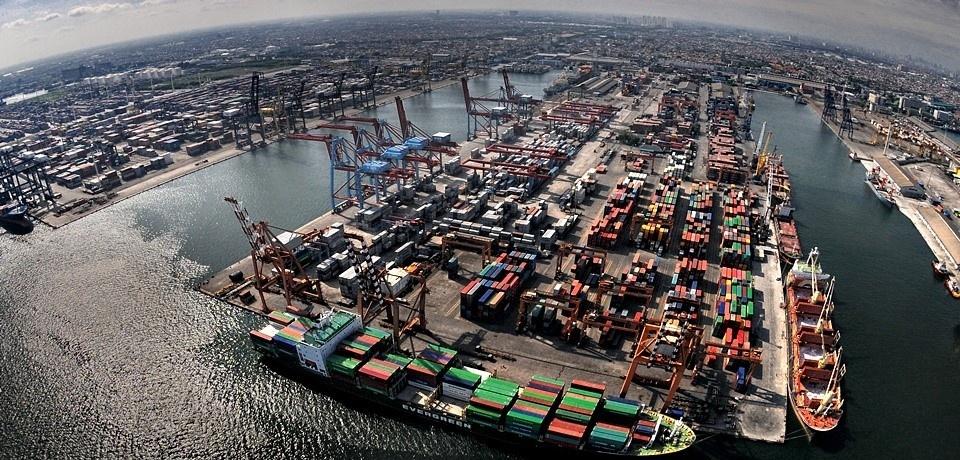
Indonesia’s rising prominence must be viewed within a broader geopolitical context. As companies diversify supply chains beyond traditional hubs, the country is emerging as a viable alternative.
Its advantages are multifaceted:
- Abundant natural resources
- Large domestic market
- Strategic location along key trade routes
- Increasing policy alignment with global investors
In an era defined by fragmentation, Indonesia offers something increasingly rare: balance. It maintains constructive relationships with multiple global powers while preserving economic independence.
Forward Outlook: From Potential to Performance Indonesia investment landscape 2026
The Indonesia investment landscape 2026 is not characterized by sudden surges or speculative booms. Instead, it reflects a more measured and structural evolution.
Growth is expected to remain stable in the 5–6% range, supported by:
- Continued infrastructure development
- Expansion of downstream industries
- Digital economy maturation
- Rising consumer demand
A Market Worth Understanding Deeply
Indonesia’s appeal lies not in a single sector or trend, but in the convergence of multiple growth drivers. Its scale provides resilience, its resources offer strategic relevance, and its reforms signal long-term intent.
For those willing to engage at this level, the Indonesia investment landscape 2026 presents a compelling proposition: a market transitioning steadily and convincingly from promise to performance.