Jiangsu Visit and Collaboration: Building the Next Chapter of Industrial Transformation in Indonesia
Framing the Journey
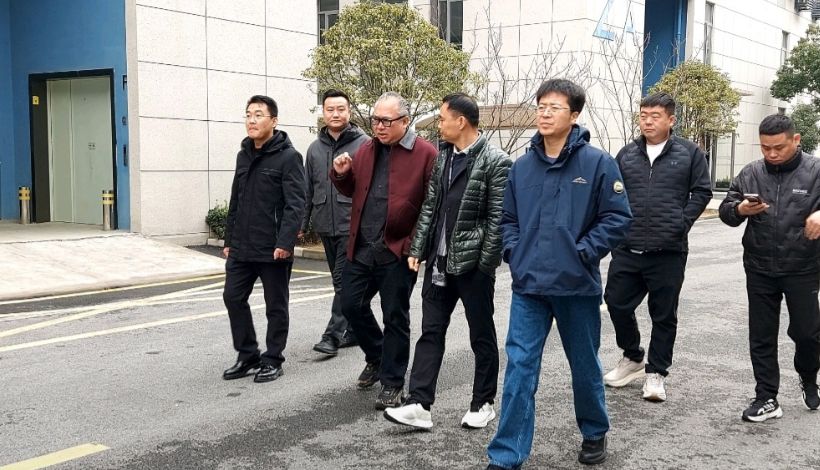
The Jiangsu visit in early February offers a revealing look into how modern industrial partnerships take shape. Against the cold winter backdrop of one of China’s most advanced provinces, the visit unfolded through focused dialogue, site engagements, and strategic exchanges. Accompanying the Consul General of Indonesia, Rusmin Lawin observed firsthand how Jiangsu integrates policy, manufacturing, talent, and infrastructure into a cohesive system.
Rather than emphasizing ceremony, the visit centered on execution. Each meeting, facility tour, and discussion pointed toward a shared objective: building long-term industrial alignment between Indonesia and China. As global supply chains continue to shift, this Jiangsu visit Indonesia industrial collaboration highlights how both sides can position themselves within a rapidly evolving economic landscape.
A Strategic Start: Setting the Tone for Collaboration
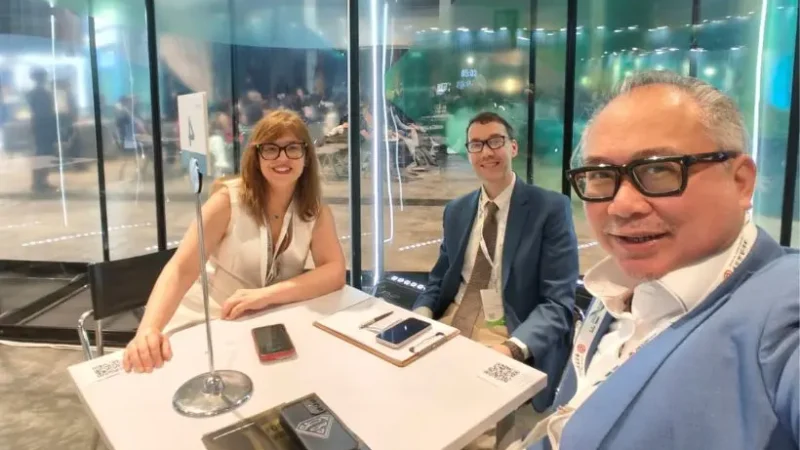
The Jiangsu visit Indonesia industrial collaboration began with a high-level luncheon hosted by the Chairman of the Jiangsu High-Tech Industrial Park. Local business leaders joined the discussion, creating an environment focused on substance rather than protocol.
Conversations quickly moved toward practical priorities. Investment readiness, workforce integration, and industrial partnerships shaped the agenda. At the same time, Southeast Asia’s rising role in global manufacturing received careful attention. Jiangsu’s leadership demonstrated a clear understanding of Indonesia’s position as both a production base and a strategic partner.
As discussions unfolded, alignment became the central theme. This early exchange established a strong foundation for the rest of the Jiangsu visit Indonesia industrial collaboration, reinforcing a shared commitment to long-term engagement.
Manufacturing Expansion and Structural Investment
A key highlight of the Jiangsu visit Indonesia industrial collaboration involved a textile and synthetic feather manufacturing facility preparing to expand into Indonesia. The scale of operations reflected advanced automation, integrated supply chains, and rigorous quality control systems.
More importantly, the company’s strategy revealed a structural approach to expansion. Leaders emphasized long-term production, local workforce development, and alignment with Indonesia’s downstream ambitions. As a result, discussions focused on regulatory frameworks, land readiness, and logistics connectivity.
Global manufacturing trends continue to evolve. Increasingly, companies prioritize stability, demographics, and ecosystem readiness over cost alone. Within this context, the Jiangsu visit Indonesia industrial collaboration underscores Indonesia’s growing relevance in supply chain diversification.
Human Capital as a Core Industrial Driver
The delegation’s visit to the Jiangsu Changshu Human Resources Services Industrial Park introduced a different dimension of industrial development. Here, attention shifted toward workforce systems and talent mobility.
The park integrates vocational training, recruitment, and labor services into a unified platform. Consequently, industries benefit from a steady pipeline of skilled workers aligned with real-time demand. This model treats human capital as a strategic asset that evolves alongside industrial growth.
For Indonesia, the implications are significant. Workforce readiness must advance in parallel with infrastructure development. Therefore, the Jiangsu visit Indonesia industrial collaboration highlights the need for stronger coordination between education providers, industry players, and policymakers.
Digitalization and Smart Infrastructure Integration
Technology emerged as another defining element of the Jiangsu visit Indonesia industrial collaboration. At the Siemens Smart Infrastructure Digitalization Innovative Center, advanced systems demonstrated how industries now operate through data-driven platforms.
Smart grids, predictive maintenance, and integrated monitoring systems enable higher efficiency and sustainability. In addition, digital infrastructure enhances resilience by allowing industries to respond quickly to disruptions.
Indonesia’s industrial zones continue to expand. Embedding digital systems from the outset will strengthen long-term competitiveness. The collaboration therefore reinforces the importance of designing infrastructure with intelligence rather than retrofitting it later.
Suzhou Smart Industrial Logistics Park
The final stage of the Jiangsu visit Indonesia industrial collaboration brought attention to logistics. At the Smart Industrial Logistics Park in Suzhou, automated warehousing and real-time tracking systems illustrated how goods move efficiently across networks.
Efficient logistics reduce delays, lower costs, and improve reliability. As a result, manufacturing performance extends beyond the factory floor into distribution ecosystems. This integration ensures that production flows seamlessly into global markets.
Indonesia’s industrial ambitions require similar advancements. Strengthening logistics infrastructure will support both domestic distribution and export competitiveness. The Jiangsu visit Indonesia industrial collaboration highlights logistics as a strategic priority rather than a supporting function.
Alignment as the System Behind Growth
A consistent theme across the Jiangsu visit Indonesia industrial collaboration involves alignment. Jiangsu’s success stems from coordination between government policies, industrial strategies, workforce systems, and infrastructure investments. Each component reinforces the others, creating a unified growth engine.
Indonesia now stands at a similar juncture. The country offers demographic strength, natural resources, and strategic positioning within Southeast Asia. However, long-term success will depend on integrating these advantages into a cohesive framework.
Through this lens, the collaboration serves as a practical reference. It demonstrates how coordinated systems can accelerate industrial transformation while ensuring sustainable outcomes.
Strengthening Indonesia–Jiangsu Partnerships
Partnerships between Indonesia and Jiangsu hold significant potential. Beyond manufacturing, opportunities exist in knowledge transfer, workforce development, digital infrastructure, and logistics innovation.
Collaboration in these areas can support Indonesia’s transition toward a production-driven and innovation-focused economy. At the same time, Jiangsu benefits from engaging with a dynamic and expanding market. The Jiangsu visit Indonesia industrialcollaboration reflects mutual interests that extend well beyond short-term gains.
A Defining Next Step
The Jiangsu visit Indonesia industrial collaboration provides more than a snapshot of industrial progress. It offers a structured perspective on how ecosystems develop through deliberate coordination and sustained engagement.
Throughout the visit, discussions and site engagements revealed a shared understanding of what drives industrial success. Alignment between vision, policy, and execution remains essential.
For Indonesia, the opportunity continues to expand. Turning investment into long-term capability will require consistent effort, institutional coordination, and strategic partnerships. The Jiangsu visit Indonesia industrial collaboration marks a meaningful step in that direction measured, practical, and positioned for lasting impact.