Indonesia’s Global Economic Role: From Emerging Market to Strategic Power

Indonesia Global Economy Role in a Shifting World
The Indonesia global economy role has expanded significantly over the past decade, driven by trade diversification, geopolitical positioning, and strategic policy decisions. As the world’s fourth most populous country and Southeast Asia’s largest economy, Indonesia now commands increasing influence across regional and global markets.
With a gross domestic product exceeding $1.4 trillion in 2024, Indonesia ranks among the top 20 economies globally. Moreover, its steady growth rate of around 5% annually places it ahead of many emerging peers. Therefore, global investors and policymakers are paying closer attention to Jakarta’s economic direction.
At the same time, Indonesia’s leadership has pursued a deliberate strategy to reduce external vulnerabilities. This approach includes diversifying energy sources, strengthening regional partnerships, and investing in long-term infrastructure projects such as the new capital city, Nusantara.
Trade Expansion Strengthening Indonesia Global Economy Role
Diversification Beyond Traditional Commodities
Indonesia has long been known for exporting commodities such as coal, palm oil, and nickel. However, recent policies aim to move up the value chain. For instance, the government’s downstreaming strategy has encouraged domestic processing of nickel, a critical component in electric vehicle batteries.
As a result, Indonesia now accounts for more than 50% of global nickel production, positioning itself as a key player in the global energy transition. Export revenues from processed minerals have increased, supporting trade resilience.
Integration into Global Supply Chains
Indonesia’s strategic location along major shipping routes enhances its role in global supply chains. The country sits between the Indian and Pacific Oceans, making it a natural logistics hub.
Consequently, multinational corporations increasingly include Indonesia in their regional manufacturing strategies. The shift away from single-country supply chains, particularly from China, has further strengthened Indonesia’s appeal.
Energy Independence and Strategic Positioning
Indonesia Global Economy Role: Reducing Reliance on Middle Eastern Oil
One of the most notable aspects of the Indonesia global economy role lies in its energy strategy. Unlike many Asian economies, Indonesia has reduced its dependence on oil imports from the Middle East by diversifying energy sources.
The country has invested in domestic energy production, including coal, natural gas, and renewable resources. In addition, biodiesel programs have expanded significantly. Indonesia’s B35 biodiesel mandate, which blends 35% palm oil-based fuel, has lowered reliance on imported petroleum.
Therefore, energy diversification enhances both economic stability and geopolitical flexibility.
Leveraging Natural Resources Strategically
Indonesia’s resource base supports its global positioning. Beyond nickel, the country holds substantial reserves of copper, bauxite, and geothermal energy. These resources attract foreign investment while supporting industrial development. As a result, Indonesia strengthens its negotiating position in global markets.
Moreover, the government has accelerated downstream industrialization to extract greater value from these resources. Instead of exporting raw materials, Indonesia promotes domestic processing and refining. Consequently, export revenues increase while industrial capabilities deepen, reinforcing long-term economic resilience.
Energy Transition and EV Strategy Acceleration

Danantara Plan and EV Supply Chain Development
At the same time, the government has introduced the Danantara plan, a long-term strategy designed to consolidate and optimize state-owned energy and resource assets. This initiative directs capital toward high-value sectors, particularly battery manufacturing and electric vehicle (EV) ecosystems.
Indonesia’s push into EVs reflects a broader ambition to achieve energy sufficiency while integrating into global clean energy supply chains. With more than 50% of global nickel production, the country plays a pivotal role in lithium-ion battery manufacturing. Therefore, policymakers continue to prioritize an integrated EV supply chain, spanning mining, refining, battery production, and vehicle assembly.
Strategic Global Investors Driving Growth
Several major global investors have committed substantial capital to this transformation. Contemporary Amperex Technology Co. Limited (CATL) has partnered with Indonesian entities to develop battery projects valued at over $6 billion, focusing on end-to-end production. Meanwhile, LG Energy Solution leads a consortium investing approximately $9–10 billion in large-scale battery manufacturing facilities.
In addition, Tesla has maintained ongoing engagement through supply agreements and potential downstream investments linked to Indonesia’s nickel resources. Consequently, these partnerships accelerate industrial development while strengthening Indonesia’s position in the global EV value chain.
Indonesia Global Economy Role: Regional Cooperation Enhancing Economic Influence

BIMP-EAGA: Unlocking Subregional Growth
Indonesia plays a central role in the BIMP-EAGA (Brunei Darussalam–Indonesia–Malaysia–Philippines East ASEAN Growth Area) initiative. This framework focuses on developing less-developed regions through cross-border collaboration.
Through BIMP-EAGA, Indonesia enhances connectivity, trade, and investment flows in eastern Indonesia. Consequently, regional disparities are gradually reduced while economic integration deepens.
IMT-GT: Expanding Economic Corridors
The Indonesia–Malaysia–Thailand Growth Triangle (IMT-GT) further strengthens Indonesia’s regional influence. This initiative promotes infrastructure development, tourism, and trade across participating regions.
By participating in both BIMP-EAGA and IMT-GT, Indonesia positions itself as a bridge between major ASEAN economies. Therefore, it plays a crucial role in regional economic architecture.
Indonesia Global Economy Role Nusantara: A Strategic Capital Relocation

Rethinking Economic Geography
Indonesia’s decision to relocate its capital from Jakarta to Nusantara represents one of the most ambitious infrastructure projects in Asia. The new capital, located in East Kalimantan, aims to address congestion, environmental challenges, and uneven development.
The project’s estimated cost exceeds $30 billion, with a mix of public and private funding. As a result, Nusantara is expected to attract long-term investment across sectors such as construction, technology, and green energy.
Supporting Long-Term Economic Transformation
Nusantara serves as more than an administrative center. It reflects a broader vision of sustainable and balanced growth. The city’s design emphasizes smart infrastructure, renewable energy, and digital integration.
Therefore, the capital relocation supports Indonesia’s transition toward a modern, diversified economy.
Geopolitics and Indonesia’s Strategic Autonomy
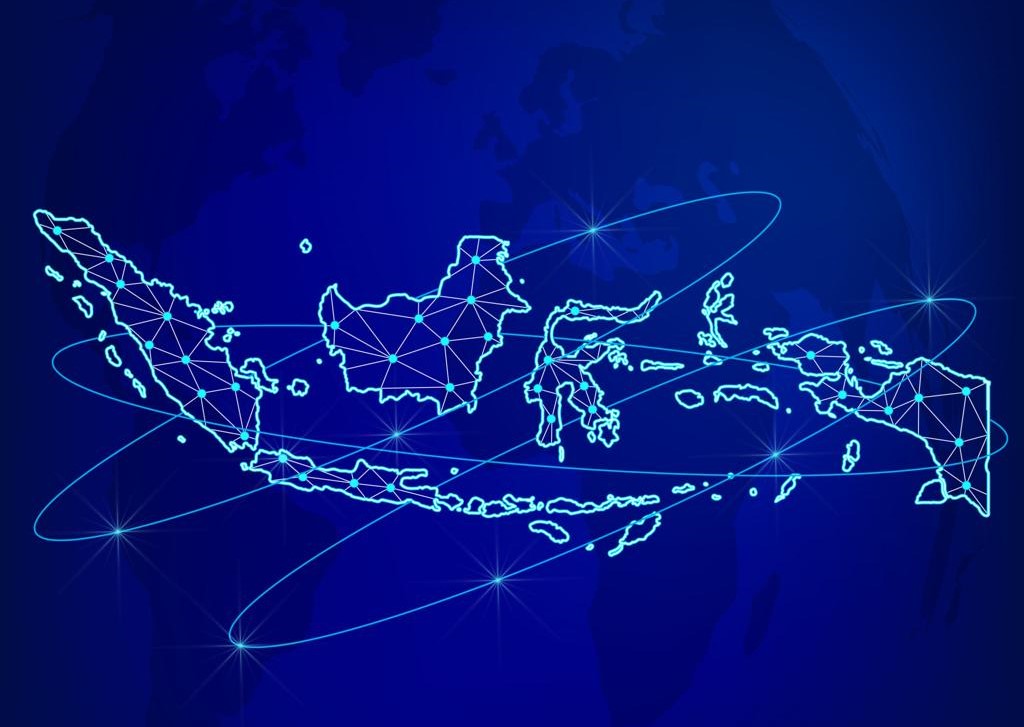
Balancing Global Powers Through Non-Aligned Strategy
Indonesia’s geopolitical posture reflects a long-standing commitment to non-alignment, rooted in its historical role within the Non-Aligned Movement (NAM). This principle continues to shape how the country navigates an increasingly fragmented global order.
Rather than aligning exclusively with any major power bloc, Indonesia pursues a flexible strategy that maximizes economic and diplomatic options. Consequently, it maintains strong relationships with both Western economies and China while preserving strategic independence.
For instance, China remains one of Indonesia’s largest trading partners and a major source of infrastructure investment, particularly through projects linked to the Belt and Road Initiative. At the same time, Indonesia sustains robust trade and investment ties with the United States and the European Union, especially in sectors such as manufacturing, digital economy, and energy transition.
Moreover, Indonesia’s diversified energy strategy reinforces this autonomy. By reducing reliance on Middle Eastern oil imports and expanding domestic energy production, the country strengthens its ability to operate independently within global energy markets.
As a result, Indonesia occupies a unique position: it can engage multiple power centers simultaneously without becoming overly dependent on any single partner.
Expanding Influence Through BRICS Leadership
Indonesia’s growing relevance has also been highlighted by its engagement with BRICS, a bloc that seeks to reshape global economic governance. While not yet a full member as of recent developments, Indonesia has actively participated in BRICS dialogues and remains widely viewed as a strong candidate for future inclusion.
This alignment carries strategic implications. BRICS countries collectively account for over 30% of global GDP (PPP) and a significant share of global population and commodity production. Therefore, closer ties with BRICS enhance Indonesia’s access to alternative financing mechanisms, trade networks, and development platforms outside traditional Western-led institutions.
Indonesia Global Economy Role Through ASEAN Integration Power
At the same time, Indonesia continues to exercise leadership within ASEAN, where it represents nearly 40% of the region’s total GDP. Its influence extends across trade agreements, digital economy frameworks, and sustainability initiatives.
For example, Indonesia has played a central role in advancing regional integration through frameworks such as the Regional Comprehensive Economic Partnership (RCEP), which covers about 30% of global GDP. In addition, its leadership in ASEAN discussions on energy transition and digital regulation further reinforces its regional authority.
Consequently, Indonesia operates at the intersection of multiple economic and geopolitical networks. It bridges developed and emerging markets, while also connecting regional and global institutions.
Strategic Position in a Multipolar World
Taken together, Indonesia’s non-aligned diplomacy, potential BRICS integration, and ASEAN leadership create a powerful strategic position. The country benefits from diversified partnerships, reduced geopolitical risk, and increased bargaining power in international negotiations.
Furthermore, this positioning supports its long-term economic ambitions. By engaging across multiple blocs, Indonesia secures investment, technology transfer, and market access while maintaining policy flexibility.
Therefore, in a world defined by shifting alliances and economic competition, Indonesia stands out as a strategically agile player one that leverages neutrality into influence and transforms geography into advantage.