FIABCI International Real Estate Forum Manila: Advancing Investment Diplomacy in a Fragmented Global Landscape

Global Context
Against a backdrop of tightening capital markets, geopolitical realignments, and climate-driven infrastructure demands, the FIABCI International Real Estate Forum Manila convenes at a decisive moment for global property leaders. Held on April 29, 2026, at Solaire Resort North in Quezon City, the forum gathers policymakers, developers, and institutional investors to recalibrate strategies under the theme: “Reimagine Real Estate: Building Integrity and Resilience Amidst Global Challenges.”
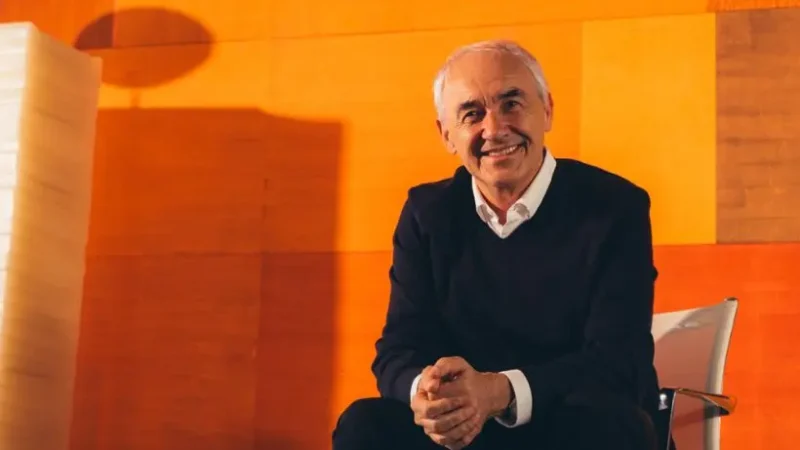
Among the distinguished participants, Rusmin Lawin’s presence signals a broader ambition that extends beyond national borders. His engagement reflects a deliberate push to strengthen investment diplomacy bridging Indonesia’s emerging capital landscape with global capital flows and institutional partnerships.
Reimagining Real Estate Amid Global Volatility
Global real estate markets entered 2026 with uneven recovery patterns. According to data from the International Monetary Fund, global growth is projected at around 3.2%, while real estate investment volumes remain approximately 25–30% below pre-2022 peaks due to elevated interest rates.
At the same time, climate resilience has become a defining investment filter. McKinsey estimates that over $9 trillion annually will be required worldwide to fund sustainable infrastructure through 2050. This shift is reshaping how developers, sovereign funds, and governments evaluate long-term assets.
The FIABCI forum directly addresses these pressures. It creates a platform where resilience, governance standards, and capital allocation converge into actionable dialogue.
Strategic Importance of the Manila Forum
A Regional Hub for Investment Dialogue
The Philippines continues to position itself as a dynamic investment destination in Southeast Asia. With GDP growth expected to exceed 6% in 2026, the country offers a compelling case for real estate expansion, particularly in urban infrastructure and tourism development.
Hosting the forum in Quezon City strengthens Manila’s role as a convening hub for cross-border investment discussions. It also reflects ASEAN’s growing influence in shaping global urbanization trends.
Indonesia’s Expanding Investment Narrative
For Indonesia, participation carries strategic weight. The country’s $32 billion Nusantara capital project and its broader infrastructure pipeline valued at over $400 billion through 2030 require sustained international collaboration.
Rusmin Lawin’s attendance aligns with Indonesia’s evolving strategy: moving from transactional investment attraction toward structured investment diplomacy. This approach prioritizes long-term partnerships, policy alignment, and institutional trust.
Program Highlights: A Structured Dialogue on Resilience
The forum’s carefully curated agenda reflects a progression from vision-setting to technical discourse and policy integration.
Opening Segment: Setting the Tone
The program begins at 1:00 p.m. with the arrival of delegates, followed by invocation, national anthem, and welcome remarks led by Arch. Nestor S. Mangio, President of FIABCI Philippines.
At 2:15 p.m., Mr. Jexter L. Bulalila, Secretary-General of FIABCI Philippines and President of the Philippine Association of Realty Consultants and Specialists (PARCS), introduces the Guest of Honor, framing the forum’s strategic direction.
Keynote Perspective: Global Real Estate Resilience
At 2:20 p.m., Mr. Antonio Campagnoli, FIABCI World President (2025–2026), delivers the opening keynote titled “Global Perspective on Real Estate Resilience.”
His address is expected to focus on:
- Cross-border capital shifts
- The role of institutional investors in emerging markets
- Governance frameworks that enhance investor confidence
High-Level Panel: Infrastructure and Public Trust
At 2:40 p.m., the forum transitions into a high-level panel discussion on “Building Resilient Infrastructure: Standards, Transparency, and Public Trust.”
Key contributors include:
- Hon. Vivencio B. Dizon, Secretary of the Department of Public Works and Highways
- Mr. Erwin Kenneth Peralta, Vice President at the Bases Conversion and Development Authority (BCDA)
- Mr. Anthony L. Maglunsod, Vice President of Pag-IBIG Fund
- Mr. Ferdinand C. Jumapao, Undersecretary for Special Projects, Department of Tourism
- Prof. Ronilo M. Balbieran, specialist in e-commerce, digitalization, and infrastructure policy
This segment addresses the intersection of public infrastructure delivery and investor confidence. Transparency, regulatory clarity, and execution consistency remain decisive factors in attracting global capital.
Open Forum and Closing
At 4:20 p.m., the open forum allows direct engagement between participants and speakers. The session encourages practical insights and candid dialogue.
The event concludes at 4:45 p.m. with closing remarks by Dr. Eduardo G. Ong, Vice Chairman of FIABCI Philippines and President of the FIABCI World Education Committee.
Investment Diplomacy: From Concept to Execution
Defining a New Framework
Investment diplomacy has gained prominence as governments compete for limited global capital. Unlike traditional investment promotion, it integrates political relationships, institutional trust, and economic strategy into a unified approach.
Rusmin Lawin’s participation reflects this evolving paradigm. Rather than focusing solely on deal-making, the emphasis shifts toward:
- Building long-term investor confidence
- Aligning regulatory frameworks with global expectations
- Strengthening bilateral and multilateral partnerships
Indonesia’s Strategic Position
Indonesia stands at a critical inflection point. With a population exceeding 280 million and a rapidly expanding middle class, the country offers strong domestic demand fundamentals.
However, attracting sustained foreign investment requires addressing structural challenges:
- Regulatory consistency
- Land acquisition processes
- Infrastructure execution timelines
Events such as the FIABCI forum provide a platform to communicate reforms, showcase opportunities, and build credibility among global stakeholders.
Global Investors: Navigating Risk and Opportunity
Capital Allocation Trends
According to JLL, global real estate investment volumes reached approximately $700 billion in 2025, down from over $1 trillion in 2021. Investors remain cautious, yet they actively seek resilient sectors such as logistics, data centers, and mixed-use urban developments.
Emerging markets in Southeast Asia increasingly attract attention due to:
- Higher growth potential
- Urbanization momentum
- Infrastructure expansion
The Role of Governance
Institutional investors prioritize governance as much as returns. Transparency International data indicates that improved governance scores correlate strongly with increased foreign direct investment inflows.
The forum’s emphasis on standards and transparency directly addresses this priority. It reinforces the importance of predictable regulatory environments in unlocking capital.
Strengthening ASEAN Collaboration
Regional Integration as a Competitive Advantage
ASEAN’s combined GDP surpassed $3.6 trillion in 2025, making it the world’s fifth-largest economic bloc. Greater regional integration enhances its attractiveness to global investors seeking diversified exposure.
Forums like FIABCI facilitate cross-border collaboration by aligning priorities among member states. They also encourage knowledge sharing on urban planning, sustainability, and financing models.
Indonesia–Philippines Synergy
Indonesia and the Philippines share similar growth trajectories and demographic advantages. Both countries face parallel challenges in infrastructure development and urbanization.
By engaging in structured dialogue, policymakers and private sector leaders can exchange strategies and accelerate implementation. This collaboration strengthens ASEAN’s collective positioning in the global investment landscape.
Real Estate Resilience: Beyond Infrastructure
Climate and Sustainability Imperatives
Climate risk has become a central consideration in real estate development. The World Bank estimates that Southeast Asia could incur economic losses of up to 11% of GDP by 2100 without significant climate adaptation measures.
Developers increasingly integrate:
- Green building standards
- Climate-resilient design
- Energy-efficient technologies
The forum’s focus on resilience reflects these priorities, encouraging stakeholders to adopt forward-looking strategies.
Digital Transformation in Property Markets
Digitalization continues to reshape the real estate sector. Proptech investments exceeded $20 billion globally in 2025, driven by innovations in data analytics, smart buildings, and digital transactions.
Speakers such as Prof. Ronilo M. Balbieran highlight how digital infrastructure enhances efficiency, transparency, and investor confidence.
The Strategic Value of Participation
For Indonesia
Rusmin Lawin’s engagement delivers multiple strategic benefits:
- Enhances Indonesia’s visibility among global investors
- Strengthens bilateral relationships within ASEAN
- Positions the country as a proactive player in shaping regional investment narratives
For Global Investors
Participants gain:
- Direct access to policymakers and decision-makers
- Insights into emerging market opportunities
- A deeper understanding of regulatory and infrastructure dynamics
Key Insights Moving Forward
The FIABCI International Real Estate Forum Manila captures a defining shift in how global real estate stakeholders approach growth, resilience, and collaboration. Through its structured dialogue and high-level participation, the forum advances a more integrated model of investment diplomacy one that connects policy, capital, and long-term vision.
Rusmin Lawin’s presence underscores Indonesia’s commitment to this evolving framework. As global investors reassess priorities and markets compete for capital, platforms like FIABCI serve as critical bridges aligning ambition with execution and shaping the next phase of regional and global real estate development.
GM