Bulgaria Green Technology: Indonesia’s Scale Opportunity
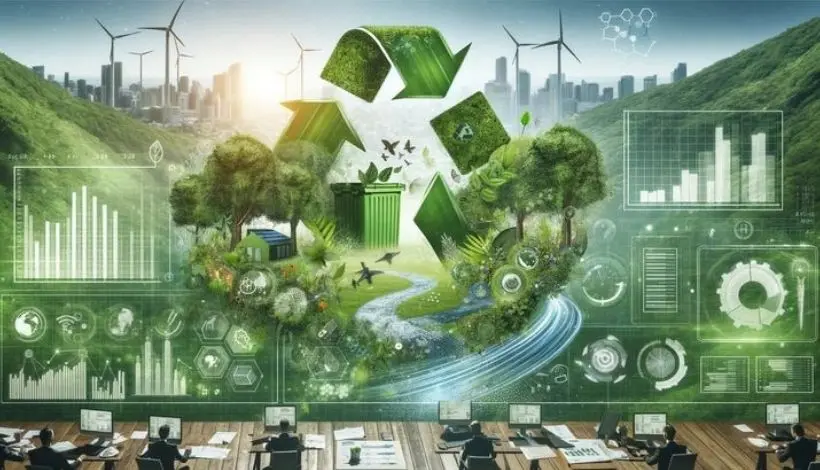
Indonesia and Bulgaria sit at very different points on the energy map, yet that distance may create an unusually attractive investment proposition. Bulgaria green technology capabilities are developing within the European Union’s regulatory, engineering and decarbonisation framework, while Indonesia offers a vast domestic market and extraordinary renewable-energy resources.
The opportunity extends well beyond equipment exports. It reaches into geothermal energy, green hydrogen, solar power, energy efficiency, storage, grid infrastructure and project development areas where technology, capital and local execution increasingly need to converge.
Indonesia’s latest electricity plan provides the scale. Under the PLN 2025–2034 RUPTL, the country plans to add 69.5 GW of generation capacity, with 52.9 GW or 76% coming from renewable energy and energy storage. The plan also creates potential investment of approximately Rp2,133.7 trillion.
For Bulgarian technology providers, engineering companies and investors, Indonesia therefore represents something strategically valuable: a market large enough to turn proven European clean-energy expertise into industrial-scale deployment.
Bulgaria Green Technology Meets Indonesia’s Renewable Advantage
The strongest case begins with a simple asymmetry.
Bulgaria has accumulated experience operating within the EU energy market and is rapidly expanding its renewable-energy infrastructure. Indonesia, meanwhile, possesses renewable resources on a vastly larger geographical scale.
That combination matters because the next phase of the energy transition will require more than renewable resources. It will require technologies capable of converting those resources into reliable electricity, industrial energy and commercially viable low-carbon fuels.
Indonesia’s Geothermal Opportunity Stands Out
Indonesia has one of the world’s largest geothermal resource bases. According to Indonesia’s Ministry of Energy and Mineral Resources, the country had approximately 23.2 GW of geothermal potential as of August 2026, yet only 2.776 GW had been installed around 11.6% of the total.
That leaves roughly 88% of identified potential outside current installed capacity.
The opportunity becomes more compelling because geothermal power can provide relatively stable generation compared with variable renewable sources. Indonesia is targeting 5.2 GW of geothermal capacity within the PLN 2025–2034 electricity plan.
For Bulgaria green technology companies with expertise in engineering, drilling-related services, plant systems, monitoring, efficiency and project management, the commercial opportunity therefore lies in helping Indonesia move from resource potential to bankable projects.
Solar and Storage Create a Second Growth Engine
Geothermal may offer the most distinctive opportunity, but solar could provide the largest volume.
Indonesia’s renewable-energy resource assessment includes an estimated 3,294 GW of solar potential, alongside approximately 95 GW of hydropower and 155 GW of wind potential, according to Indonesia’s Ministry of Energy and Mineral Resources.
The RUPTL translates part of that enormous theoretical resource into a concrete development pipeline. PLN plans 17.1 GW of new solar capacity, 11.7 GW of hydropower, 7.2 GW of wind and 5.2 GW of geothermal capacity through 2034.
However, renewable generation creates another challenge: flexibility.
Solar and wind output changes with weather and time of day. Consequently, Indonesia’s plan includes 10.3 GW of energy storage, combining pumped storage and battery systems. PLN is also preparing a 47,758-kilometre green transmission network to connect renewable resources with major demand centres.
This creates opportunities across the entire value chain.
A Bulgarian company does not necessarily need to build a solar farm itself. It could provide engineering design, grid-management technology, storage solutions, energy-management systems, feasibility studies, project development expertise or specialist components through an Indonesian joint venture.
That is where Bulgaria green technology can move from a product proposition to a partnership proposition.
Green Hydrogen Could Connect Two Energy Markets
Hydrogen offers another strategic avenue.
Bulgaria has already established a national hydrogen roadmap designed to support hydrogen production, transportation and use across industry, energy, transport and households. The roadmap also aims to create conditions for innovation, investment and new hydrogen value chains.
In March 2025, Bulgaria’s Ministry of Energy highlighted the country’s 1,400–1,800 annual sunshine hours and its potential for competitive green-hydrogen production. The H2START initiative in Stara Zagora aims to establish a centre for renewable-hydrogen excellence, with reported technological potential for producing 500 tonnes of green hydrogen annually.
Indonesia approaches hydrogen from a different position.
In April 2025, Indonesia’s Ministry of Energy and Mineral Resources reaffirmed its objective of developing a national hydrogen ecosystem as part of the country’s clean-energy transition and its ambition for net-zero emissions by 2060.
The commercial question, therefore, becomes larger than hydrogen production alone.
Who can provide the electrolyser systems? Who can integrate renewable generation with hydrogen production? Who can design storage and transport systems? Who can develop industrial applications? And who can finance projects before they reach commercial scale?
These are precisely the spaces where Bulgaria green technology expertise could complement Indonesian resources, industrial demand and project scale.
Bulgaria’s Renewable Transition Strengthens Its Value Proposition
Bulgaria itself is undergoing a significant transformation.
According to the European Commission’s 2026 country report, renewables surpassed coal in Bulgaria’s electricity mix for the first time in 2025, driven largely by continued solar expansion. Bulgaria added approximately 1.35 GW of solar capacity during 2025.
At the wider European level, renewable energy generated 47.3% of EU electricity production in 2024, while solar generation continued to accelerate.
By 2025, EU solar PV capacity had reached an estimated 406 GW, compared with 338 GW in 2024.
That environment gives Bulgarian companies access to a sophisticated market where renewable technologies increasingly interact with grid flexibility, energy efficiency, storage, digital systems and regulatory requirements.
For Indonesian partners, the value is therefore potentially twofold: technology and experience operating within a highly regulated European energy ecosystem.
From Technology Transfer to Joint Ventures
The most compelling investment structure may involve technology transfer and localisation rather than conventional technology sales.
A Bulgarian technology provider could partner with an Indonesian developer, engineering company, industrial group or infrastructure investor. Together, the partners could establish a project-development platform focused on specific renewable-energy technologies.
Several models are possible:
Engineering Partnerships
Bulgarian engineering expertise could support feasibility studies, system design, optimisation, project management and technical due diligence for Indonesian projects.
Technology Transfer
Specialised clean-energy technologies could be adapted, assembled or eventually manufactured in Indonesia, allowing foreign technology to gain access to a much larger regional market.
Project Development
Bulgarian firms could participate directly in renewable projects alongside Indonesian partners, sharing development risk and future project revenues.
Financing Partnerships
Technology providers, developers and investors could combine their capabilities to create bankable projects suitable for institutional capital, infrastructure funds and international lenders.
Energy-Efficiency Solutions
The opportunity also extends beyond generation. Industrial energy management, efficient cooling, smart-grid systems, building technologies and energy monitoring could become important as Indonesia expands its industrial and urban infrastructure.
The Infrastructure Gap Creates the Real Investment Opportunity
Resource abundance alone does not create an investable energy market.
Transmission, storage, permitting, project preparation, financing and skilled personnel determine whether renewable potential becomes operating capacity.
Indonesia’s RUPTL recognises that challenge. Its planned 47,758 kilometres of transmission infrastructure will connect renewable-energy resources often located far from major population centres with industrial and urban demand.
The plan also carries significant economic implications. The Indonesian government estimates that implementation could generate approximately 1.7 million jobs, including more than 760,000 green jobs associated with clean-energy generation.
For investors, that means the opportunity exists at several layers simultaneously: generation, transmission, storage, engineering, technology, construction, operations and workforce development.
Why the Timing Matters
The investment window is becoming increasingly attractive because both countries are developing policy frameworks around clean energy.
Bulgaria’s updated National Energy and Climate Plan addresses decarbonisation, energy efficiency, energy security, the internal energy market, research, innovation and competitiveness.
Indonesia, meanwhile, has placed renewable generation and storage at the centre of its 2025–2034 electricity expansion programme.
The two policy directions create room for commercial cooperation.
For Bulgaria, Indonesia offers access to one of Southeast Asia’s largest economies and a renewable-energy market with substantial room for development. For Indonesia, Bulgarian partners can potentially contribute European technology, engineering capabilities and experience within EU-oriented energy frameworks.
That makes Bulgaria green technology relevant far beyond bilateral trade. It can become a mechanism for industrial cooperation.
Turning Complementary Strengths into Scale
Indonesia has the resource scale. Bulgaria has a growing clean-energy technology base shaped by European standards and market experience. Between the two lies a commercial opportunity spanning geothermal, green hydrogen, solar, energy efficiency, storage and clean-energy infrastructure.
The numbers make the proposition difficult to ignore: 23.2 GW of Indonesian geothermal potential, 17.1 GW of planned new solar capacity, 5.2 GW of planned geothermal additions, 10.3 GW of planned storage and Rp2,133.7 trillion of potential electricity-sector investment.
The next step is execution.
For energy companies, technology providers and investors, Indonesia could become the scale market for Bulgarian green-tech expertise. The strongest partnerships will likely be those that combine Bulgarian technology and engineering capabilities with Indonesian resources, local partners, project pipelines and capital.
In that model, Bulgaria green technology becomes more than an export proposition. It becomes a platform for building commercially viable clean-energy projects across Indonesia and potentially, from Indonesia into the wider ASEAN market.
GM
Articles in the series:
From Rose Valley to Spice Islands: The Halal Food Opportunity Between Indonesia and Bulgaria
Bulgaria Rose Oil Meets Indonesia’s Beauty Market
Rusmin Lawin and Bulgaria: From Sofia to Investment Partnership