Bulgaria Manufacturing Indonesia: A New Gateway
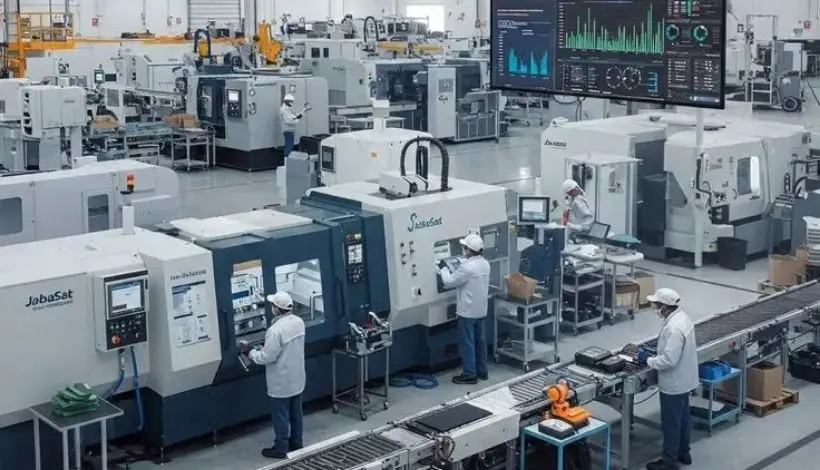
Bulgaria Manufacturing Indonesia: A New Gateway
The next generation of manufacturing will be shaped by a strategic question: where should companies build their next production capacity? For Bulgarian manufacturers, Indonesia offers an increasingly compelling answer.
Bulgaria manufacturing Indonesia partnerships could combine Bulgarian engineering, pharmaceutical, electronics and industrial expertise with Indonesia’s workforce, natural resources, expanding industrial base and access to ASEAN markets. At a time when companies are redesigning supply chains around resilience, market access and production efficiency, the logic of such cooperation deserves closer attention.
Indonesia’s economy grew 5.11% in 2025, reaching IDR23,821.1 trillion in current-price GDP. Meanwhile, investment realization reached IDR1,931.2 trillion, exceeding the government’s annual target, while downstream investment climbed 43.3% to IDR584.1 trillion.
The numbers point toward an economy continuing to build industrial depth.
For Bulgaria, the opportunity lies in bringing technology, engineering capability and specialised manufacturing expertise into that expanding ecosystem.
Why Bulgaria Manufacturing Indonesia Makes Strategic Sense
Global manufacturing has entered a different era.
Cost remains important, yet companies increasingly weigh supply-chain resilience, proximity to customers, access to skilled workers, energy security and the ability to serve multiple markets from one production base.
Indonesia scores strongly on several of those factors.
The country’s investment performance demonstrates the depth of capital formation already underway. In 2025, foreign direct investment accounted for IDR900.9 trillion, or 46.6% of total investment realization. Moreover, investment outside Java reached IDR991.2 trillion, slightly exceeding investment on Java.
That geographical shift matters.
Industrial expansion is increasingly moving beyond Indonesia’s traditional manufacturing centres, creating opportunities for new production clusters, industrial estates and regional supply chains.
At the same time, Indonesia’s government continues to emphasise downstream processing. In 2025, downstream investment accounted for 30.2% of total investment realization. Mineral processing remained the largest component, although investment is also expanding across plantations, forestry, oil and gas, marine industries and other value-added activities.
For Bulgaria manufacturing Indonesia, this creates a natural entry point: supplying the machinery, components, engineering systems and specialised industrial capabilities required to move from resource extraction toward higher-value production.
Bulgaria Brings European Industrial Expertise
Bulgaria’s industrial proposition has evolved considerably.
The country’s government identifies automotive, electric vehicles, electronics, mechatronics, pharmaceuticals, renewable energy, ICT and smart production among sectors with strong investment potential. Bulgaria also offers access to the European Union’s market of more than 500 million consumers.
Its industrial strengths are particularly relevant to Indonesian manufacturing ambitions.
Engineering and Advanced Manufacturing
Mechanical engineering, electrical engineering, electronics, metallurgy and automotive components form important parts of Bulgaria’s industrial base. Bulgaria’s Ministry of Economy and Industry has also highlighted modernisation, zero-emission technologies, digitalisation, resource efficiency and industrial infrastructure as priorities for its national industrial strategy.
This gives Bulgarian companies a potential role beyond conventional contract manufacturing.
They can contribute production systems, automation, machinery, industrial software, component design and engineering services.
The opportunity becomes stronger when those capabilities are combined with Indonesian production scale.
Pharmaceuticals and Life Sciences
Pharmaceutical manufacturing offers another promising area.
Invest Bulgaria Agency reports that Bulgaria’s pharmaceutical products manufactured domestically have a market value of approximately €2 billion, while the broader health and life-sciences ecosystem includes more than 42,500 employees and more than €1.8 billion in exports in the agency’s sector profile.
World Bank trade data shows Bulgarian pharmaceutical exports reached approximately US$1.50 billion in 2025.
For Indonesian companies, Bulgarian pharmaceutical expertise could create opportunities in technology licensing, contract manufacturing, formulation, quality systems, specialised machinery and joint production.
For Bulgarian companies, Indonesia provides access to a far larger Southeast Asian consumer and healthcare market.
Indonesia Offers Scale Beyond the Domestic Market
The attraction of Bulgaria manufacturing Indonesia extends beyond Indonesia’s population of more than 280 million people.
Indonesia sits inside one of the world’s most consequential regional trade architectures.
The Regional Comprehensive Economic Partnership, or RCEP, connects 15 economies covering the 10 ASEAN members plus China, Japan, South Korea, Australia and New Zealand. Indonesia’s Coordinating Ministry for Economic Affairs describes RCEP as representing around 30% of global GDP, 27% of global trade and 29% of global FDI.
That changes the investment proposition.
A Bulgarian company establishing production in Indonesia can potentially use the country as an ASEAN manufacturing platform rather than treating Indonesia solely as an end market.
The distinction is significant.
A factory producing machinery components, medical products, electrical equipment or industrial systems in Indonesia could serve domestic customers while developing regional export channels.
Consequently, Bulgaria manufacturing Indonesia can become an export strategy as much as a localisation strategy.
The Manufacturing Base Is Already Deepening
Indonesia does not need to create an industrial ecosystem from scratch.
Manufacturing already represents a major component of the economy, while investment continues to flow into industrial production.
In the first quarter of 2025, manufacturing led Indonesia’s investment realization by sector, attracting IDR67.3 trillion, ahead of transportation and telecommunications at IDR66.5 trillion and mining at IDR48.6 trillion.
By the full year, investment in base metals, metal goods, non-machinery metal products and related industries reached IDR262 trillion, equivalent to 13.6% of national investment realization.
That industrial momentum creates an ecosystem in which Bulgarian companies can participate through several layers.
Machinery and Components
Indonesia’s industrial expansion requires equipment.
Bulgarian manufacturers could supply specialised machinery, industrial components, automation systems, production equipment and maintenance technologies. Local partnerships could subsequently support assembly, servicing and localisation.
Engineering Services
Industrial expansion also requires engineering expertise before construction begins.
Feasibility studies, factory design, process engineering, automation integration, energy optimisation and technical supervision offer comparatively asset-light ways for Bulgarian firms to enter the market.
Advanced Manufacturing
The longer-term opportunity lies in moving toward higher-value production.
Indonesia’s investment policy increasingly seeks to build domestic value chains rather than simply attract assembly operations. That aligns with Bulgaria’s capabilities in electronics, mechatronics, automotive components and smart production.
Bulgaria Manufacturing Indonesia Could Create Two-Way Market Access
The most interesting model is reciprocal.
Indonesia can provide Bulgarian companies with production scale and ASEAN access. Bulgaria can provide Indonesian companies with a European industrial and commercial platform.
This creates the potential for a two-directional manufacturing corridor.
From Bulgaria to Indonesia
Bulgarian manufacturers could establish:
- Industrial joint ventures
- Local assembly operations
- Pharmaceutical production
- Machinery and component manufacturing
- Engineering service centres
- Technology licensing partnerships
- Export-oriented factories
The objective would be to localise enough production to become competitive in Indonesia while retaining Bulgarian technological and engineering advantages.
From Indonesia to Europe
Indonesian companies could work with Bulgarian partners to establish European manufacturing, distribution or engineering operations.
Bulgaria’s location provides access to the EU single market as well as surrounding European markets. The Bulgarian government highlights its position at the intersection of Europe, Asia and the Middle East, supported by international airports, Black Sea ports, the Danube and five pan-European transport corridors.
For an Indonesian industrial company seeking a European footprint, that geographic position can be commercially meaningful.
Pharmaceuticals Could Become a High-Value Bridge
Among the potential sectors, pharmaceuticals deserve particular attention.
Healthcare manufacturing requires regulatory knowledge, quality control, specialised production equipment and reliable supply chains. Those requirements create opportunities for partnerships that involve more intellectual and technological content than conventional trading relationships.
Bulgaria already exports pharmaceutical products to major European markets, including Germany, Romania, the Netherlands, France and Poland.
Indonesia, meanwhile, is pursuing greater domestic pharmaceutical resilience and manufacturing capability.
That combination could support joint ventures involving generic medicines, active pharmaceutical ingredients, medical products, specialised packaging, laboratory technologies and production equipment, subject to Indonesian and international regulatory requirements.
For Bulgaria manufacturing Indonesia, pharmaceuticals therefore offer an opportunity to move toward higher-value industrial cooperation.
The EU-Indonesia Relationship Adds Another Layer
The broader Europe-Indonesia relationship is also moving forward.
EU-Indonesia goods trade reached €28.9 billion in 2025, while the EU’s foreign direct investment stock in Indonesia stood at €24.7 billion in 2024. The European Union is also advancing the EU-Indonesia Comprehensive Economic Partnership Agreement, with the agreement text published following the September 2025 ministerial announcement and subject to the parties’ internal procedures before entry into force.
For Bulgarian companies, that broader framework matters.
Bulgaria operates inside the EU economy, while Indonesia sits at the centre of ASEAN. As commercial ties between the two regions deepen, manufacturing partnerships can potentially become a practical channel connecting European technology with Southeast Asian production.
What Successful Partnerships Will Require
The opportunity, however, will depend on execution.
A Bulgarian manufacturer entering Indonesia needs more than a product catalogue. It needs a credible local partner, regulatory understanding, supply-chain planning, workforce development and a realistic localisation strategy.
Indonesian companies likewise need partners that can provide genuine technology and market access rather than simply act as intermediaries.
The strongest Bulgaria manufacturing Indonesia ventures are therefore likely to share several characteristics:
Local production. Build where Indonesian demand and regional export potential justify investment.
Technology transfer. Develop local engineering and technical capabilities alongside physical production.
Joint development. Share market knowledge, capital and project execution between Bulgarian and Indonesian partners.
Export orientation. Design factories around both domestic demand and ASEAN opportunities.
European connectivity. Use Bulgarian operations where they create an effective route into European customers and supply chains.
This approach can turn a bilateral business relationship into a scalable industrial platform.
Build in Indonesia, Reach Europe
The manufacturing question facing international companies has changed. The objective is no longer simply to find the lowest-cost production location. Businesses increasingly need resilient supply chains, large markets, capable industrial partners and access to multiple trading regions.
Indonesia offers scale, resources, industrial investment and ASEAN connectivity. Bulgaria contributes engineering expertise, advanced manufacturing capabilities, pharmaceutical experience and access to the European market.
That makes Bulgaria manufacturing Indonesia a proposition worth examining through the lens of industrial partnership rather than conventional trade.
For Bulgarian manufacturers, Indonesia could become a production and ASEAN expansion platform. For Indonesian companies, Bulgarian expertise can open new European pathways.
The opportunity now lies in turning that geographic complementarity into factories, engineering partnerships, technology transfers and export businesses.
Build in Indonesia. Reach ASEAN. Connect to Europe.
GM
Articles in in the series:
From Rose Valley to Spice Islands: The Halal Food Opportunity Between Indonesia and Bulgaria
Bulgaria Rose Oil Meets Indonesia’s Beauty Market
Rusmin Lawin and Bulgaria: From Sofia to Investment Partnership