FIABCI World Congress Vienna 2026 Opens with a Global Call for Affordable Housing Solutions
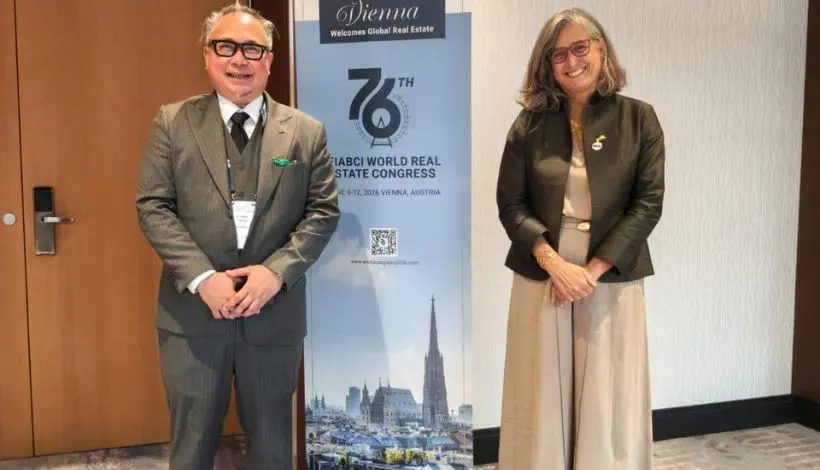
Vienna has become the center of global real estate dialogue as industry leaders, policymakers, investors, urban planners, and developers gather for the 76th FIABCI World Congress Vienna 2026, held from June 8 to June 12, 2026, in Austria’s capital city. Bringing together hundreds of professionals from across the world, the congress serves as one of the most influential international platforms for discussing the future of cities, housing, investment, and sustainable development.
Among the delegates attending the opening activities and networking events on June 9, 2026, was Indonesian entrepreneur and international business figure Rusmin Lawin, who joined global industry stakeholders at a moment when housing affordability has emerged as one of the defining challenges of urban development worldwide.
This year’s congress carries the theme ACT (Action, Collaboration, Transformation), reflecting a growing recognition that the future of real estate depends on stronger partnerships between governments, international organizations, investors, and communities.
Yet one message resonated above all others during the opening day: solving the global housing crisis requires a new level of collaboration between the public and private sectors.
FIABCI World Congress Vienna 2026 Brings Together Global Real Estate Leaders
The 76th edition of the FIABCI World Congress marks a significant gathering for the international property industry. Hosted by FIABCI Austria, the event returns to Vienna after more than three decades and is expected to attract approximately 700 participants from around the world, including developers, investors, architects, policymakers, PropTech innovators, and real estate professionals.
Held at the Hilton Vienna Park, the five-day program combines high-level conferences, study tours, networking sessions, investment discussions, and cultural events. The agenda explores major themes shaping the future of the built environment, including:
- Housing affordability
- Urban resilience
- Sustainable development
- Global investment trends
- Artificial intelligence and PropTech
- Asset management
- Architecture and city planning
- Leadership in times of uncertainty
The congress has long been recognized as a venue where international stakeholders exchange ideas, establish partnerships, and identify emerging opportunities across global property markets.
UN-Habitat’s Anacláudia Rossbach Places Affordable Housing at the Center of the Discussion
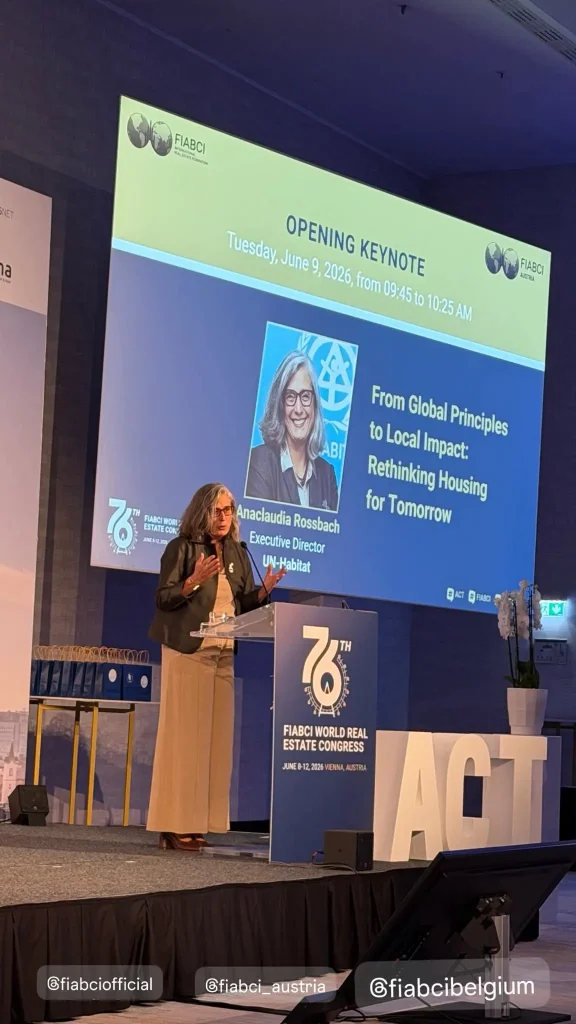
A major highlight of the opening day came from Anacláudia Rossbach, Executive Director of UN-Habitat and United Nations Under-Secretary-General, who delivered the congress’s opening keynote address.
Her presentation, titled “Housing: From Global Principles to Local Impact: Rethinking Housing for Tomorrow,” focused on one of the world’s most urgent urban challenges: access to adequate and affordable housing.
Rossbach brought more than two decades of international experience in housing policy and urban development to the stage. Throughout her career, she has worked with governments, international institutions, and local communities across multiple continents to address housing shortages, informal settlements, and urban inequality.
Her keynote outlined a systems-based approach to housing, emphasizing that affordability challenges cannot be solved through isolated interventions. Instead, governments and industry leaders must address the entire housing value chain, including:
Land and Regulatory Frameworks
Access to land remains one of the biggest barriers to housing delivery globally. Rossbach highlighted the importance of transparent planning systems, efficient permitting processes, and policies that encourage housing supply.
Construction Capacity and Delivery Constraints
Housing shortages often stem from limited construction capacity, labor shortages, and inefficient development processes. Increasing productivity and encouraging innovation across the construction sector are becoming critical priorities.
Financing Affordable Housing
Housing affordability cannot improve without access to sustainable financing mechanisms. Public and private capital must work together to close affordability gaps while ensuring long-term project viability.
Building Coalitions Across Sectors
Rossbach emphasized that governments alone cannot solve the housing crisis. Real progress requires cooperation among policymakers, investors, developers, financial institutions, communities, and international organizations.
Housing Is Emerging as Strategic Infrastructure
One of the strongest themes emerging from both UN-Habitat and FIABCI discussions is a changing perception of housing.
Housing increasingly functions as strategic infrastructure that influences economic productivity, social stability, climate resilience, and long-term urban competitiveness. FIABCI leadership recently reinforced this perspective during the World Urban Forum, describing housing as a fundamental component of resilient and competitive cities.
At the same time, urbanization continues to accelerate worldwide. According to UN-Habitat’s recent policy discussions, governments face growing pressure to provide housing solutions that connect affordability with climate goals, transportation systems, public services, and economic opportunity.
This broader understanding of housing aligns closely with Vienna’s reputation as one of the world’s most livable cities, making the Austrian capital an appropriate venue for conversations about the future of urban development.
What Indonesia Can Learn from FIABCI World Congress Vienna 2026
For Indonesia, the discussions at the FIABCI World Congress Vienna 2026 offer several practical lessons.
The country continues to experience rapid urbanization. Major metropolitan areas such as Jakarta, Surabaya, Bandung, Medan, and Makassar face increasing demand for affordable housing, improved infrastructure, and sustainable urban planning.
Several key takeaways stand out.
Strengthening Public-Private Partnerships
The congress repeatedly highlighted the importance of partnerships between governments and private-sector developers.
Indonesia has already demonstrated successful collaboration through various housing and infrastructure initiatives. However, the scale of future demand suggests greater opportunities for institutional investors, developers, and international capital providers to participate in affordable housing projects.
Creating More Integrated Urban Development
UN-Habitat advocates connecting housing with transportation, mobility, climate resilience, and essential services. Indonesia’s future urban projects can benefit from this integrated approach rather than treating housing as a standalone issue.
Encouraging Innovative Housing Finance
Affordable housing remains constrained in many emerging markets by financing gaps. The discussions in Vienna suggest a need for innovative financing models that combine public support, private investment, and long-term funding structures.
Leveraging International Collaboration
FIABCI’s global network provides opportunities for Indonesian developers, investors, and policymakers to learn from international best practices while introducing Indonesia’s own urban development achievements to global audiences.
As Indonesia advances its infrastructure agenda and develops new urban centers, international knowledge-sharing platforms such as FIABCI become increasingly valuable.
Opportunities for Future Collaboration Between Indonesia and Global Stakeholders
The congress also opens doors for future cooperation.
UN-Habitat continues to promote partnerships that align housing policy with sustainable development objectives, while FIABCI provides access to a global network of professionals active across investment, development, architecture, urban planning, and technology.
For Indonesian stakeholders, potential collaboration areas include:
- Affordable housing development
- Smart city initiatives
- Sustainable urban planning
- Green building technologies
- PropTech innovation
- Housing finance solutions
- Transit-oriented development
- Climate-resilient urban infrastructure
These opportunities align closely with Indonesia’s long-term urban transformation goals and its ambition to attract greater international investment into the property sector.
Golden Takeways
The opening of the FIABCI World Congress Vienna 2026 highlighted a challenge that transcends national borders: ensuring access to affordable, sustainable, and inclusive housing for rapidly growing urban populations.
Through the keynote address of Anacláudia Rossbach, the congress established a strong framework for action one centered on collaboration, innovation, and long-term thinking. Her message resonated with an audience that included global policymakers, industry leaders, and delegates such as Rusmin Lawin, all participating in discussions that will influence the future direction of cities worldwide.
As the congress continues throughout the week in Vienna, one conclusion stands out. The future of real estate will increasingly depend on partnerships that connect governments, private capital, communities, and international organizations. For Indonesia, that conversation presents both valuable lessons and significant opportunities to shape the next chapter of urban development.
GM