Dr Reghis M Romero II: Leadership, Legacy, and Global Influence in Infrastructure

Global Context
In Southeast Asia’s rapidly evolving infrastructure landscape, a handful of business leaders have shaped both the physical and institutional architecture of growth. Among them, Dr Reghis M Romero II stands out for his sustained influence across construction, logistics, and international real estate networks. His trajectory reflects a blend of entrepreneurial precision, global engagement, and strategic positioning within organizations such as FIABCI.
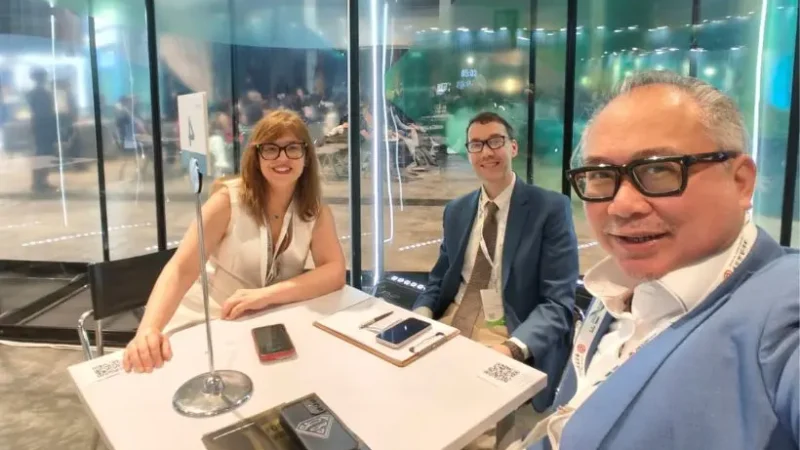
From leading one of the Philippines’ most established construction firms to participating in high-level international forums, Romero’s career offers insight into how local expertise can scale into global impact. His recent engagement at a FIABCI gathering in Manila in April 2026, including discussions with Rusmin Lawin, further underscores his role in shaping cross-border collaboration within the real estate and infrastructure sectors.
The Rise of Dr Reghis M Romero II
Building a Legacy Through R-II Builders
At the center of Romero’s professional journey lies R-II Builders Inc., a firm widely recognized in the Philippines for large-scale engineering and infrastructure projects. Founded in 1974, the company has contributed to a broad portfolio that includes ports, reclamation developments, industrial facilities, and mixed-use complexes.
Under Romero’s leadership, R-II Builders expanded its capabilities to align with the Philippines’ infrastructure ambitions, particularly during periods of accelerated public investment. The company has participated in projects tied to the government’s infrastructure push, often referred to as “Build, Build, Build,” which aimed to raise infrastructure spending to approximately 5–7% of GDP during peak implementation years.
Romero’s approach to leadership emphasizes operational discipline and long-term planning. Rather than chasing short-term gains, he has consistently focused on project execution quality, regulatory compliance, and stakeholder alignment factors that remain critical in large-scale infrastructure delivery.
Diversification into Logistics and Port Development
Beyond construction, Romero has extended his influence into logistics and port operations. His involvement in maritime infrastructure reflects a broader understanding of the Philippines’ geographic realities as an archipelagic nation dependent on efficient transport networks.
Strategic investments in port development have positioned his business interests to benefit from rising intra-ASEAN trade flows. According to regional trade data, ASEAN intra-regional trade accounts for roughly 22–25% of total trade, creating sustained demand for logistics infrastructure. By aligning his ventures with these macro trends, Romero has strengthened his relevance in sectors that underpin economic integration.
Global Engagement Through FIABCI
A Platform for International Influence
Romero’s involvement in FIABCI places him within a global network of real estate professionals spanning more than 60 countries. FIABCI serves as a forum for policy dialogue, investment collaboration, and knowledge exchange across real estate markets.
His participation reflects a broader strategic intent: connecting Philippine expertise with international capital and best practices. Through FIABCI, Romero engages with developers, investors, and policymakers, contributing perspectives shaped by emerging market dynamics.
FIABCI Manila April 2026: Strategic Dialogue and Regional Alignment
In April 2026, Manila hosted a significant FIABCI gathering that brought together industry leaders from across Asia and beyond. During this event, Romero engaged in discussions with Rusmin Lawin, focusing on opportunities for cross-border collaboration in infrastructure and urban development.
The meeting highlighted several themes central to Southeast Asia’s growth trajectory:
- The need for integrated urban planning
- The role of private capital in infrastructure delivery
- The importance of regulatory harmonization across ASEAN markets
These conversations reflect a growing recognition that infrastructure development in the region increasingly depends on partnerships that transcend national boundaries. Romero’s presence in such dialogues reinforces his role as a connector between local execution and global strategy.
Leadership Philosophy and Strategic Approach
Precision in Execution
Romero’s leadership style prioritizes execution excellence. In infrastructure projects, where delays and cost overruns often erode value, this focus becomes a competitive advantage. His emphasis on engineering rigor and project management discipline has enabled R-II Builders to maintain credibility in a highly competitive market.
Moreover, he advocates for aligning project timelines with realistic resource planning. This approach reduces operational risk and enhances long-term sustainability an increasingly important consideration as infrastructure projects grow in scale and complexity.
Long-Term Vision in a Cyclical Industry
Infrastructure development operates within economic cycles, often influenced by fiscal policy, interest rates, and political priorities. Romero has navigated these cycles by maintaining a long-term perspective.
Instead of reacting to short-term fluctuations, he positions his ventures to capture structural growth trends, including urbanization and trade expansion. The Philippines’ urban population continues to grow steadily, with projections indicating that more than 50% of the population will reside in urban areas by the early 2030s. This shift creates sustained demand for infrastructure, housing, and logistics networks areas where Romero’s businesses remain active.
Bridging Local Expertise with Global Capital
The ASEAN Opportunity
Southeast Asia represents one of the world’s most dynamic economic regions, with combined GDP exceeding $3.6 trillion. Infrastructure demand across ASEAN remains substantial, with estimates suggesting a financing gap of over $2.8 trillion through 2030.
Romero’s engagement with international platforms positions him to help bridge this gap by facilitating partnerships between local developers and global investors. His ability to operate within both domestic and international contexts enhances his strategic value in an increasingly interconnected market.
Strengthening Cross-Border Collaboration
The meeting between Romero and Rusmin Lawin during the FIABCI Manila event reflects a broader trend toward regional collaboration. Indonesia and the Philippines, as two of ASEAN’s largest economies, share similar infrastructure challenges and opportunities.
Collaboration between business leaders from these countries can accelerate knowledge transfer, streamline project execution, and attract diversified funding sources. Romero’s participation in such engagements signals his commitment to advancing regional integration through practical, business-driven initiatives.
Challenges and Strategic Outlook
Navigating Regulatory Complexity
Infrastructure development in emerging markets often involves navigating complex regulatory environments. Permitting processes, land acquisition issues, and compliance requirements can delay project timelines. Romero’s experience enables him to manage these challenges effectively, leveraging institutional knowledge and stakeholder relationships.
Adapting to Sustainability Imperatives
Sustainability considerations are reshaping infrastructure development globally. Investors increasingly prioritize environmental, social, and governance (ESG) criteria. Romero’s future strategy will likely involve integrating sustainable practices into project design and execution, aligning with global standards while addressing local needs.
Golden Takeways
Dr Reghis M Romero II represents a model of leadership that combines technical expertise, strategic foresight, and international engagement. His work through R-II Builders Inc. and participation in FIABCI illustrate how local industry leaders can shape broader regional narratives.
As Southeast Asia continues to expand its infrastructure footprint, figures like Romero will play a central role in aligning capital, capability, and collaboration. His engagement in global forums and regional dialogues signals a forward-looking approach one that connects national development priorities with international opportunities in a meaningful and lasting way.
GM