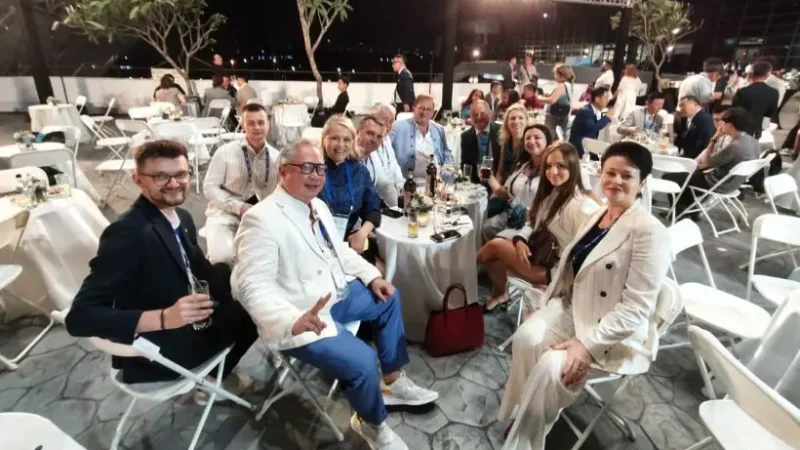
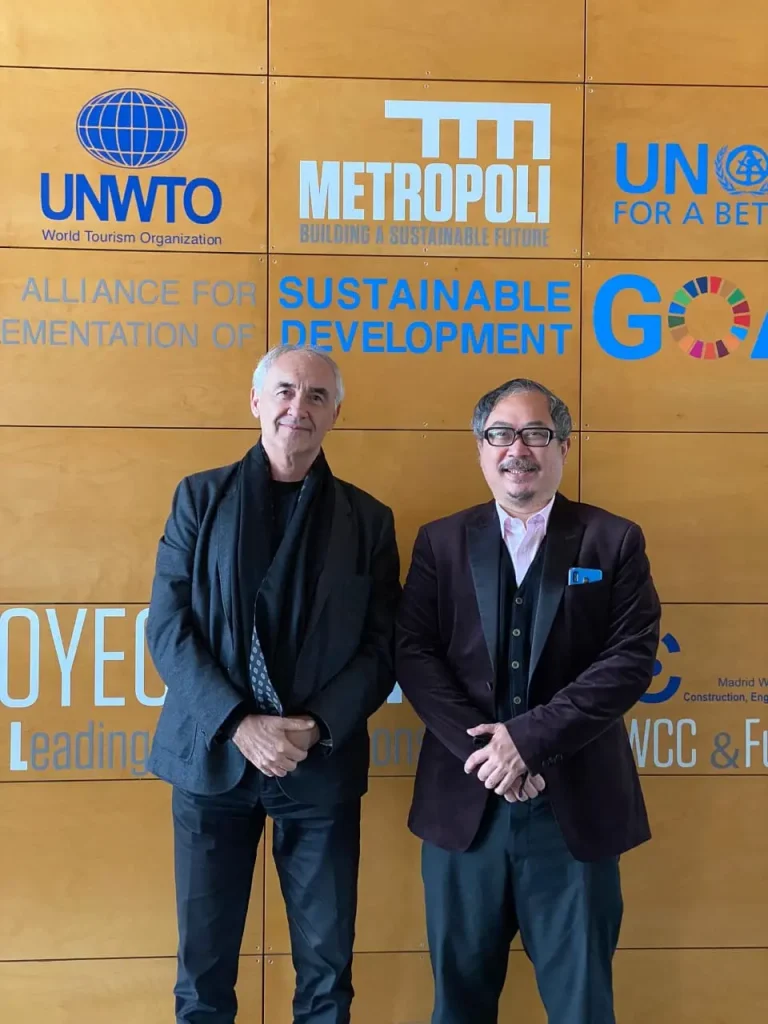
Visionary Meeting with Dr. Alfonso Vegara in Jakarta

Every great city begins with a compelling vision. Yet transforming that vision into a thriving urban environment requires far more than infrastructure or investment. It demands strategic thinking, collaboration, and a deep understanding of how cities create opportunities for people.
Those principles came to mind during my recent meeting in Jakarta with Alfonso Vegara, one of the world’s most respected urban planners and city strategists. As Founder and President of Fundación Metrópoli, Dr. Vegara has spent more than four decades helping governments, developers, and city leaders rethink how urban environments can become more competitive, sustainable, and inclusive.
His visit to Jakarta, where he is currently involved in several ongoing development projects, reflects Indonesia’s growing importance in global conversations about the future of cities.
A Global Authority on Urban Transformation
Few urban planners have influenced city development across as many regions as Alfonso Vegara.
Through Fundación Metrópoli, the Spain-based think tank and urban planning consultancy he founded, Dr. Vegara has led strategic planning initiatives in more than 40 countries. The organization combines architecture, economics, technology, environmental planning, and cultural development to create long-term strategies for cities facing rapid urbanization and economic change.
Designing Cities That Compete Globally
Dr. Vegara believes successful cities compete through their ability to attract talent, encourage innovation, and deliver a high quality of life.
This philosophy has become widely known as the concept of “Intelligent Cities.” Rather than focusing exclusively on roads, buildings, or skylines, it encourages cities to strengthen their knowledge economy, cultural identity, environmental sustainability, and innovation ecosystem.
The approach has influenced governments, municipalities, and private developers seeking to create cities that remain competitive in an increasingly interconnected world.
Transforming Cities Through Vision
Throughout his career, Alfonso Vegara has contributed to some of the world’s most recognized urban regeneration projects.
Lessons from Bilbao
Among his best-known contributions is the transformation of Bilbao, where he participated in the broader urban regeneration strategy that accompanied the development of the iconic Guggenheim Museum Bilbao.
The project demonstrated how culture, architecture, public investment, and strategic planning could reshape the international perception of an industrial city. Today, Bilbao has become a global reference for urban renewal and economic revitalization.
Reimagining Medellín
Dr. Vegara has also drawn inspiration from the transformation of Medellín, where integrated public transportation, improved public spaces, and social urbanism helped reconnect communities while strengthening economic opportunity.
The city’s internationally recognized cable car network, public libraries, and community-centered infrastructure illustrate how thoughtful planning can improve both mobility and social inclusion.
Indonesia’s Urban Future Through a Global Perspective
Indonesia is entering one of the most ambitious periods of urban development in its history.
The development of Nusantara, continued metropolitan expansion in Jakarta, and the rise of secondary cities are creating opportunities to rethink how urban environments support economic growth and quality of life.
Against this backdrop, Dr. Vegara’s presence in Jakarta carries particular significance. His experience demonstrates that successful cities require more than physical infrastructure. They need a shared vision that aligns public policy, private investment, innovation, culture, and community aspirations.
For developers, investors, and policymakers, these perspectives offer valuable reference points as Indonesia continues shaping the next generation of sustainable and globally competitive cities.
From Global Networks to Local Impact
One reason Alfonso Vegara continues to influence governments and developers worldwide is his ability to connect global ideas with local priorities. Rather than promoting a universal blueprint, he encourages every city to identify its unique strengths and transform them into long-term competitive advantages.
This philosophy closely aligns with the growing emphasis within FIABCI on turning international collaboration into practical outcomes. Through forums such as the FIABCI World Congress, leaders exchange knowledge that can be translated into sustainable projects, investment partnerships, and urban innovation.
A Shared Vision for Better Cities
Over the years, Dr. Vegara has become a familiar voice at leading international platforms, including FIABCI, the Urban Land Institute (ULI), and MIPIM. His presentations consistently focus on themes that have become increasingly relevant for rapidly growing economies: urban regeneration, innovation districts, sister cities, and sustainable competitiveness.
Those discussions have become particularly valuable as cities seek solutions that balance economic growth with environmental responsibility and social inclusion.
A Meaningful Conversation in Jakarta
Meeting Dr. Vegara in Jakarta offered more than an opportunity to reconnect with a respected friend. It created a meaningful exchange of ideas about the future of cities and the importance of international collaboration in addressing urban challenges.
As Indonesia continues attracting global investors and expanding strategic developments, conversations with internationally respected urban thinkers become increasingly valuable. They provide perspectives drawn from decades of experience across Europe, Latin America, the Middle East, and Asia.
More importantly, they reinforce the importance of learning from successful international experiences while adapting them to Indonesia’s own social, cultural, and economic context.
Cities Built Around People
One of Dr. Vegara’s most enduring philosophies captures this perspective perfectly:
“Cities are not built with concrete. Cities are built with intelligence, culture, and people.”
That principle continues to resonate because it shifts the focus from physical structures to human potential. Infrastructure creates opportunities, yet people, creativity, education, and innovation ultimately determine whether a city prospers over the long term.
For Indonesia, where urbanization continues to accelerate, this philosophy offers timely guidance. The country’s future competitiveness will depend not only on new developments but also on creating cities that attract talent, encourage entrepreneurship, and foster vibrant communities.
The Road Ahead
My meeting with Dr. Alfonso Vegara in Jakarta reaffirmed an important lesson: the world’s most successful cities are shaped by vision long before they are defined by skylines.
Throughout his career, Dr. Vegara has demonstrated how strategic planning, cultural identity, innovation, and collaboration can transform cities into engines of sustainable growth. His work through Fundación Metrópoli continues to inspire governments, developers, and investors across more than 40 countries.
As Indonesia advances ambitious initiatives ranging from Jakarta’s continued evolution to the development of Nusantara and other emerging cities, insights from global leaders such as Dr. Vegara provide valuable perspectives. They remind us that the future belongs to cities that invest not only in infrastructure but also in people, creativity, and long-term purpose.
RL