Kai Tak Development Hong Kong: A Blueprint for Future Urban Living

Strategic Context
On April 16, 2026, I visited Hong Kong’s former Kai Tak Airport site and witnessed firsthand how a city can redefine its future through deliberate planning. The Kai Tak Development Hong Kong presents a compelling model of how governments can respond to housing demand while integrating sustainability, mobility, and economic vitality into one cohesive ecosystem. Built on the legacy of a once-iconic aviation hub, the district now reflects a forward-looking vision that many emerging cities including those in Indonesia can learn from.
Reinventing a Historic Site into a Modern Urban Hub
The Kai Tak Airport once stood as one of the world’s most challenging airports, known for its dramatic approach over Kowloon. Today, the Kai Tak Development Hong Kong transforms this 320 to 580-hectare site into a mixed-use district designed to accommodate approximately 153,000 residents.
From my observation, the “city within a city” concept has been executed with precision. Residential, commercial, and recreational elements coexist within a unified framework, reducing commuting pressures while strengthening local economic activity. At the same time, the integration of public and private housing reflects a strategic effort to balance affordability with urban quality.
Affordable Housing Meets Integrated Urban Design

A central pillar of the Kai Tak Development Hong Kong lies in its housing strategy. I saw how the project combines public rental housing, subsidized ownership schemes, and private developments to serve a wide demographic spectrum.
This approach ensures that communities develop alongside essential infrastructure. Schools, healthcare facilities, and public amenities are not afterthoughts they are embedded into the planning process from the beginning. As a result, the district avoids the fragmentation often associated with rapid urban expansion.
For countries such as Indonesia, where urbanization continues to accelerate, this model offers a valuable reference. I immediately thought of former airport sites like Kemayoran in Jakarta and Polonia in Medan. These locations hold similar potential if guided by a cohesive long-term vision.
Sports, Tourism, and Economic Activation
Kai Tak Sports Park as a Regional Landmark
At the center of the development stands the Kai Tak Sports Park, a $3.9 billion facility inaugurated in early 2025. During my visit, I observed a 50,000-seat main stadium equipped with a retractable roof, alongside an indoor sports center and expansive public spaces.
The venue strengthens Hong Kong’s position as a host for international events, including tournaments such as the Hong Kong Sevens. Beyond global events, it serves local communities, ensuring consistent engagement and utilization.
Tourism and Waterfront Development
The Kai Tak Development Hong Kong also enhances its economic appeal through a cruise terminal and a dedicated tourism hub. These facilities attract international visitors while supporting hospitality, retail, and entertainment sectors.
I found the waterfront transformation particularly striking. Previously restricted areas have been opened into accessible public spaces, elevating both livability and tourism value.
Green Mobility and Smart Infrastructure
Walkability and Green Streets
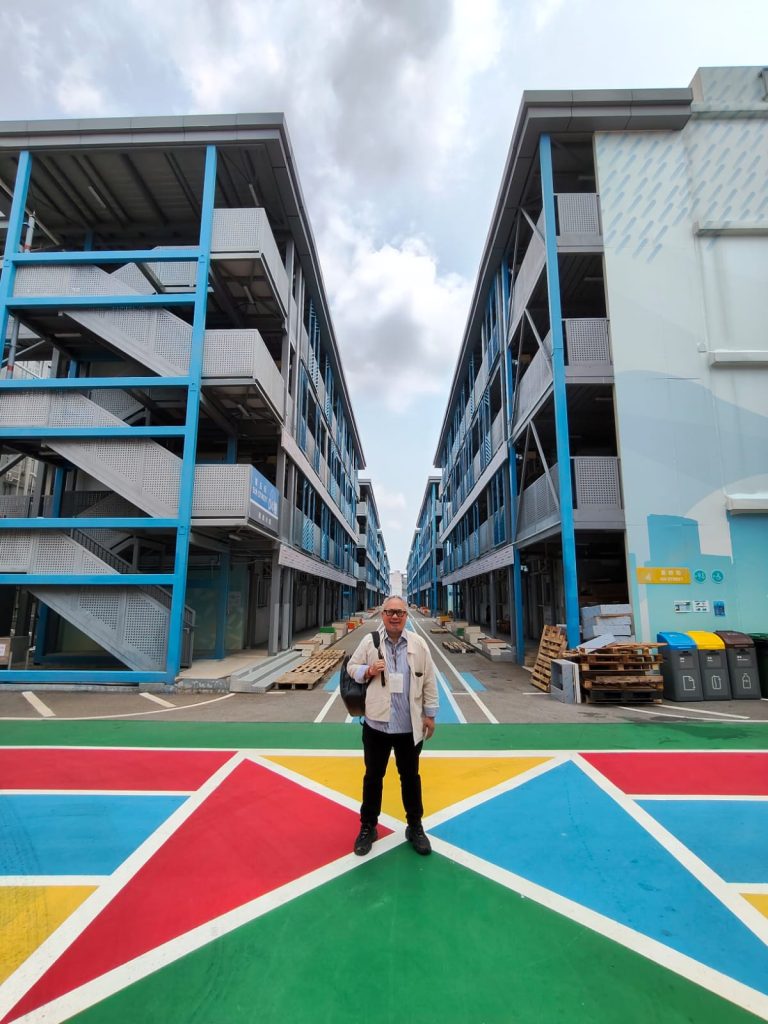
Mobility within Kai Tak prioritizes pedestrians and environmentally friendly transport. I walked along segments of the “Green Streets” network and experienced the 1.4-kilometer Sky Garden, both designed to encourage walking and reduce reliance on private vehicles.
An underground shopping street stretching approximately 1,500 meters connects Kowloon City and San Po Kong. This feature enhances accessibility while maintaining commercial vibrancy regardless of weather conditions.
District Cooling and Sustainable Systems
The Kai Tak Development Hong Kong integrates advanced infrastructure, including a district cooling system that improves energy efficiency across buildings. Such systems reduce electricity consumption and align with broader sustainability targets.
Ongoing infrastructure developments including road networks, sewage systems, and bridge upgrades demonstrate a commitment to long-term resilience. I see this as a crucial factor in ensuring that rapid urban growth remains manageable and efficient.
Lessons for Emerging Urban Economies
My visit to Kai Tak reinforced several important insights. Integrated planning plays a critical role in aligning housing, infrastructure, and economic development. At the same time, strong government involvement can catalyze private sector participation.
For Indonesia, these lessons carry immediate relevance. Former airport sites in Jakarta and Medan present rare opportunities for large-scale transformation. By adapting principles from the Kai Tak Development Hong Kong such as mixed-income housing, green mobility, and multifunctional public spaces Indonesian cities can accelerate their evolution into smarter urban ecosystems.
Strategic Takeaways
My journey through the Kai Tak Development Hong Kong revealed a sophisticated model of urban reinvention, where historical legacy meets modern planning excellence. Through a balanced focus on housing, sustainability, and economic vitality, the district offers a practical roadmap for cities navigating the complexities of urban growth. As Asia continues to shape the future of global urbanization, Kai Tak stands as a powerful reference for what thoughtful, integrated development can achieve.
RL