Engineering a Cleaner Future: Tobias Wilson on Purpose, Innovation, and Building Indonesia’s Circular Economy
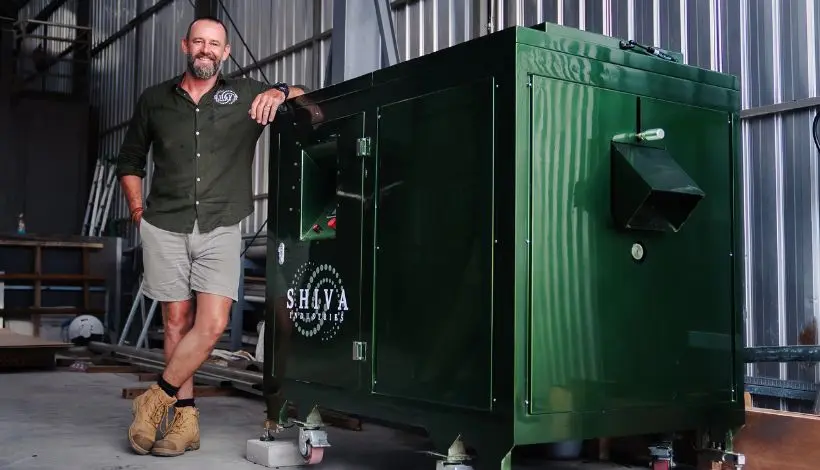
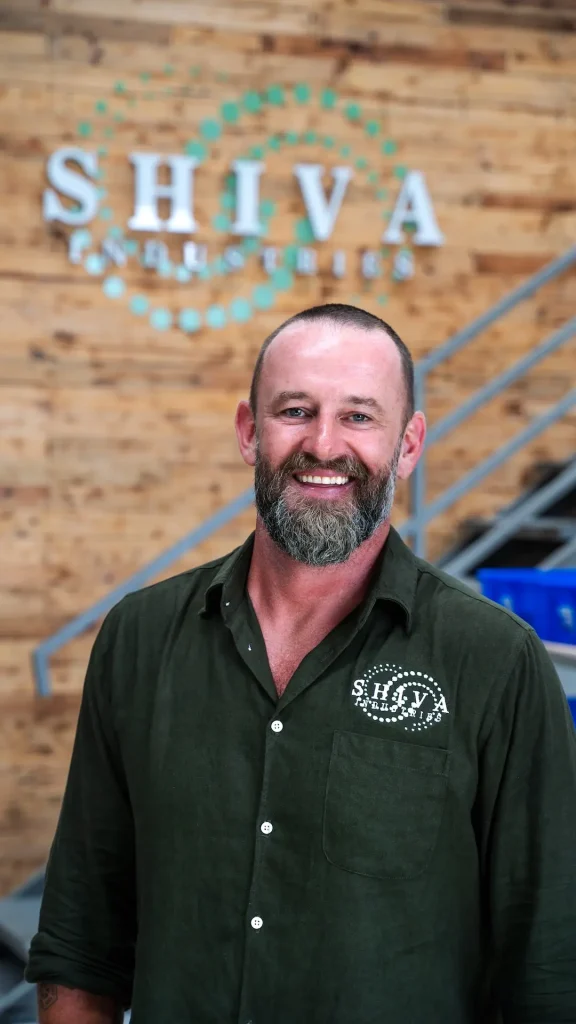
Tobias Wilson believes that waste is not a problem to be discarded, but a resource waiting to be transformed. As the Founder and CEO of Shiva Industries, he is pioneering Indonesian-made climate technology that converts organic waste into nutrient-rich fertiliser through advanced aerobic digestion. Designed and manufactured in Bali, Shiva Industries is helping businesses, hospitality operators, farms, and local communities reduce landfill dependency while advancing Indonesia’s circular economy. His vision demonstrates that sustainability and commercial success are not competing priorities, but powerful drivers of innovation when combined with the right technology.
For this exclusive interview, I had the pleasure of engaging in a thoughtful conversation with Tobias about the vision and leadership behind Shiva Industries. Here, we explore entrepreneurship, resilience, climate technology, and why he believes Indonesia has the potential to become a global leader in sustainable innovation. I believe you; our valuable readers will find valuable insights and fresh inspiration from his journey. Throughout this interview, I will be referred to as GM (my pen name, GMora), while Tobias Wilson will be abbreviated as TW.
Driven by Purpose
GM: You left a successful international career in technology to build Shiva Industries in Indonesia. What was the defining moment that convinced you this was the mission you wanted to dedicate yourself to?
TW: People expect a lightning-bolt moment, and I don’t have one. What I have is the moment I walked away. After twenty years in advertising and marketing technology, a few things converged at once: health issues, a death in the family, the kind of stocktake life forces on you whether you like it or not. And through all of it, one thing was completely clear: I wasn’t going back. When the news got out, I turned down half a dozen jobs in the industry. That’s when the real work began, the slow, honest questions. What would make me happy? What would be interesting? What did I actually want from the next twenty years? Shiva came later. The conviction to jump came first.
GM: What inspired you to choose Bali as the foundation for Shiva Industries, and what opportunities did you see here that others may have overlooked?
TW: The honest answer? We didn’t come to Bali to start a company. We came to be a family again. My wife and I met in Singapore and had our three children there, and we’re deeply grateful for everything that city gave us. But for the next chapter we wanted something different, and Bali ticked every box: nature, good food, great schools, and Balinese people who are among the warmest and most open you’ll meet anywhere. So we signed a one-year lease and arrived with no jobs and no plan. Just two conscious decisions: leave corporate, and give our family real time together. Everything else grew out of that.
The opportunity found me rather than the other way around. Like everybody who gets into waste, I went after plastic first. Then a chance meeting with an aerobic digestion expert from the US sent me down a different path, and what I found stunned me: nobody was doing aerobic digestion in Indonesia. Sixty-four percent of our waste across this country is organic, and we still process it almost entirely by hand. Composting, black soldier fly larvae, vermicomposting, they’re all good and we need every one of them. Most of our waste should be processed with no technology at all. But millions of tonnes are coming too quick, too often, and for those we need machines. Nobody was building them here. I assumed we’d import the technology, but importing into Indonesia is famously hard, and rightly so, it protects national interests. So, we were left with a choice: walk away, or build the thing ourselves.
We built the thing.
GM: Looking back on your journey so far, what has been the most rewarding part of building a company with both commercial and environmental impact?
TW: A new lease on life. That’s the sum of it. I found a passion I didn’t know I had, tackling a problem I knew nothing about, in a country where I’m still learning every day. After twenty years of career, I was suddenly the new kid again, and that “you don’t know what you don’t know” phase turned out to be the most motivating place I’ve ever stood. Daunting some days. Nourishing all the same.
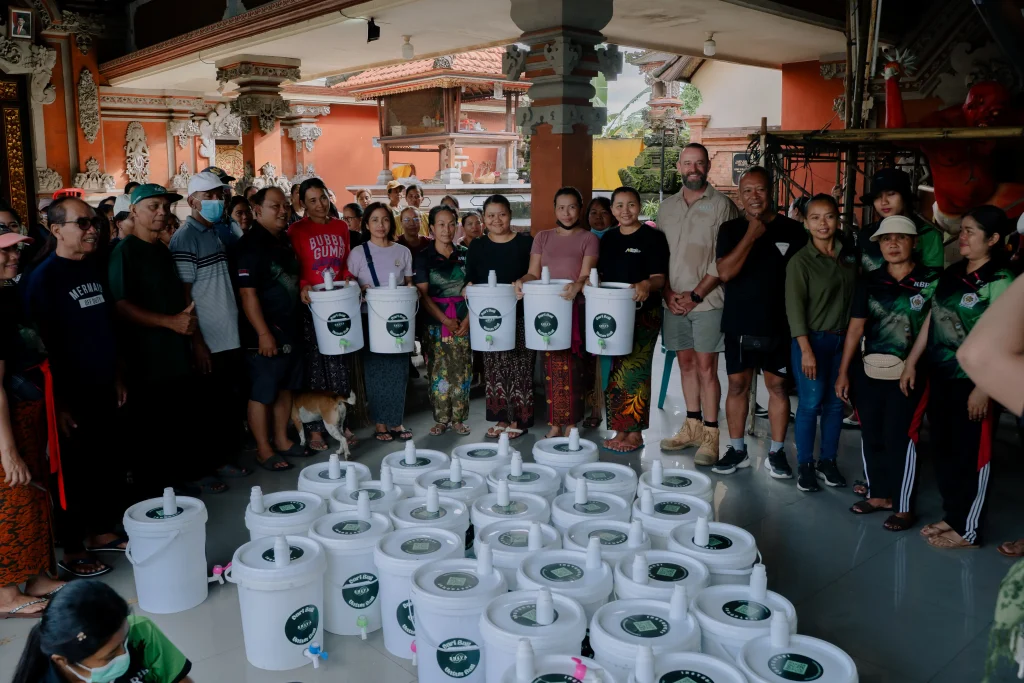
The other reward is that this problem gives back at every level you engage with it. Zoom out and Bali is now in a declared waste emergency, which it wasn’t when we started, so the mission matters more each year. Zoom in and you learn what waste really means desa to desa, door to door. And then there’s the build itself, which I love. Creating the most advanced digester on the planet isn’t just an engineering problem. It’s a software problem, making the machine genuinely intelligent. And it’s a biology problem, working with these incredible microbes: what do we want out of them, and what do they want out of us? I enjoy every day more because of this work. I’m grateful for that.
The Mindset Behind the Mission
GM: Building a purpose-driven company requires resilience as much as innovation. What leadership principle has guided you through the challenges of growing Shiva Industries?
TW: Honestly? Have a go. That was the founding principle. Let’s try to build one of these machines, let’s get some microbes going, and let’s see what happens.
Underneath it sat a question with real urgency: if we don’t, who will? Nobody had done it here, and nobody else was coming. That grew into a deep sense of responsibility to get it done. And getting it done looks different day to day. Some days it’s half a percent more. Other days you land a quantum leap. What I’ve learned is that the daily micro nudges are what carry you, because the whole really is greater than the sum of its parts.
The other principle is embracing the unknown, even surrendering to it. There have been no guardrails on this journey, and yet it has felt strangely guided. You wake up knowing the day will be intense, but if you make even a nano step forward, you’re moving in the direction Bali needs, Indonesia needs, and arguably the world needs.
GM: Your career reflects a transition from pursuing business success to creating lasting impact. How has your definition of success evolved over the years?
TW: Massively. For most of my career, success meant how big, how rich, how shiny, how fancy. Now it’s simpler and harder: move forward every day, and be part of the greater good.
This was never about building a fancy machine or writing cool code. It’s about building something for Indonesia, by Indonesia. That means not over-engineering it, because over-engineered kit carries silly costs this market doesn’t need. And it means not under-engineering it either. Walk into any TPST in the country and you’ll find the imported shredders and crushers that broke inside a couple of months, no service, no parts, rusting in a corner. We refuse to add to that pile. Our measure of success is meaningful, growing impact on the problem we set out to solve: engineering the end of organic waste, so that not a single scrap of it ever rides a truck to a landfill in Indonesia again. We won’t stop until we’re there.
Success also changed shape in how we build. This is the most collaborative business of my life. We brought great people in early, as teammates and as shareholders, and we’ve shared the whole ride. I’ve never had the classic founder bottleneck, carrying all the stress alone; we’ve done this as a team, as a family. Watching other people succeed is a big part of what makes me tick, and having others share in our success has made the business better in every way.
GM: What advice would you give to entrepreneurs who want to build businesses that are both commercially successful and socially meaningful?
TW: They go hand in hand, and I’d start with the question I ask all the time: why should the bad guys have all the fun and make all the money?
We’ve got our wires crossed in the impact world. Most of us start heart-led, passionate about our air, our soil, our water, our children. I get it, I’m one of them. But a heart should be our superpower, not a handicap, and too much of the impact industry runs heart first, profit last, not even second. We’re not NGOs. We’re commercial entities, and we should be proud of being commercially savvy. We make money doing good. That beats making money doing bad while nature pays the bill.
Here’s the paradigm shift I want to see: the entrepreneurs working for people and planet should be building the most profitable businesses on Earth, and they should be its biggest earners, celebrated for proving you can be good at business and good for the world at the same time.
Meanwhile, a business that grows by extracting from the planet should earn less of our respect, not more. Our whole system is back to front on this.
One caveat: there are two sustainabilities in this game, environmental and commercial, and you need both. You can’t have a meaningful impact if you’ve run out of money. So, none of it works unless you’re good at business. That part isn’t optional. P&Ls, balance sheets, market sentiment, data, knowing where to disrupt. Impact doesn’t excuse you from any of it. Be good at it, and be proud of it.
The Mission of Shiva Industries
GM: Shiva Industries is transforming organic waste into valuable resources. What long-term impact do you hope the company will create for Indonesia?
TW: Indonesia has a chance to show the world what a turnaround looks like, and it starts with one idea: most of our waste isn’t waste. It’s just poorly classified. The majority of it is organic, and organics can become healthy soil again. Follow that thread and the downstream effects are extraordinary. Healthy soil makes healthy air and healthy groundwater. Healthier rivers for our children to play in. Healthier oceans for our tourists to swim in and for all of us to eat from. Sort out one segment of our waste and you clean up our air, soil, water, food, rivers and oceans.
That’s the prize.
But the impact I want goes beyond the environmental. Every digester we build and every desa we serve means local jobs: collection crews, operators, engineers, service technicians, the whole chain. We’re building skills and careers in a sector that didn’t exist here a few years ago. And maybe most important of all, I want Shiva to be proof for the next wave of local founders. Proof that you can build world-class technology in Indonesia, for Indonesia, without waiting for it to arrive from somewhere else. Shiva will never process all of this country’s organic waste, and that’s fine. If we’re the catalyst, the example that turns organics from something we chuck out into something an entire ecosystem of Indonesian businesses puts to work, that’s a legacy worth having.
GM: If you could change one misconception people have about waste and the circular economy, what would it be?
TW: That it’s waste at all. Right now, we throw one hundred percent of our stuff into a truck, it disappears to a dump, legal or illegal, and we call the whole lot waste. But around ninety-five percent of what we throw away isn’t waste at all. Only five to seven percent of the stream is true residue, the genuinely nasty stuff. Everything else has a use. Plastics, glass and metals can be recycled. And there is not one organic compound on this planet that is waste. We haven’t invented new ones; they’re the same compounds that have been here forever, and nature has known exactly what to do with them for millennia. We just don’t give her the time and space anymore, and there are too many of us for her to keep up. So, we help her. If people take one thing away, make it this: ninety-five percent of our waste isn’t waste.
And if I’m allowed a second one: we got the messaging wrong on sustainability. It was always “save the planet”, and it’s not about saving the planet. The planet will deal with us and our waste the way it has for billions of years. It just might stop being hospitable to us if we keep trashing the joint. “Save the planet” is too big to grasp, and it lets us off the hook. Say instead: you won’t have water, you won’t have crops, you won’t have an income, you won’t survive the raging heat and the raging storms. Suddenly it’s personal. It’s not about saving the planet. It’s about saving us.
GM: How do you hope Shiva Industries will inspire other businesses to see sustainability not as a responsibility, but as an opportunity for innovation and growth?
TW: It comes back to the bad guys. You can be really good at business and really good for the planet at the same time, whether you’re building high-tech, low-tech or no-tech solutions.
And there’s a multiplier in this work that twenty years of corporate life never gave me. At Shiva, even on the bad days, we’re still doing good. I can wake up knowing a big, challenging day lies ahead and remind myself, even if everything goes wrong today, we’re still doing something good. At the end of that same day, no matter how difficult it has been, I can go to bed with the satisfaction of knowing our work is making a positive difference. I never had that feeling in my previous career, where even after overcoming a difficult day, I often realized I had simply spent it advertising sugary drinks to children. And on the great days? You had an amazing day AND you did good. It multiplies everything. Having the two come together is a blessing I don’t take for granted. I work at it every single minute.
So, get out there and innovate. Air, soil, water, food, healthcare, education, shelter, sanitation, the human race needs us in so many areas, and there has never been more opportunity to build something that matters.
Indonesia & Global Perspective
GM: Indonesia has enormous potential to become a leader in the global circular economy. What unique advantages does the country possess that deserve greater international recognition?
TW: Start with the obvious: one of the largest populations on Earth, living in one of its most beautiful and biodiverse places. But the real advantage sits one layer deeper. Indonesia is a rich cultural tapestry laid over a unique, decentralised geography: thousands of communities with different cultures, languages and ways of doing things, from cold mountains to warm tropics, inland to coast. A traditional business looks at all that difference and sees a challenge. I see the opportunity. That many people, thinking differently, wanting different things, in that many different places? That’s an enormous engine for innovation.
And the ingredients are all here. Great minds. Fantastic educational institutions and brilliant students coming through. People who genuinely want to succeed and do good. Add a domestic market of 280-plus million and you can build something incredibly strong, a company for the next thousand years. Prove it at home, then export it to the world.
GM: In your view, what role should collaboration between entrepreneurs, government, and local communities play in accelerating Indonesia’s sustainability journey?
TW: Here’s something I say often in government and development bank conversations: the private sector can de-risk the public sector. It’s unreasonable to expect a government to hold best-in-the-world expertise in every sector while also running a nation.
Take aerobic digestion. To lead that innovation on its own dime, a government would need world-class mechanical, electrical and software engineers, microbiologists, and a deep grasp of fluid and thermal dynamics, and that experience simply doesn’t exist in Indonesia outside the Shiva team. So let the private sector carry the risk. When an initiative delivers, government gets behind it, and the returns flow straight back: IP held inside Indonesia, jobs, tax revenue, GDP.
Then there’s the x-factor that makes businesses like ours worth backing: as we get bigger, our environmental impact gets better. Very few businesses can say that. Think of the five biggest companies you know. When they grow, does their impact on the environment improve or worsen? Ninety-nine percent of the time it worsens, which tells me we’re valorising the wrong kinds of success. Back the businesses where growth and the environmental bank balance rise together.
As for communities, businesses like ours don’t need to be told to collaborate. Whether you work in water, waste or helping people in need, you must work with the community, because that’s where the problem lives. It’s built into the job.
The Future of Sustainability
GM: Which sustainability or climate technology trend do you believe will have the greatest impact on businesses over the next decade?
TW: I’m not one for chasing trends. From where I sit, it’s all trending. But three things stand out.
The biggest is probably AI. Yes, there are real questions about data centres and energy. But putting that kind of intelligence in the hands of builders will help businesses scale, refine prototypes and make better calls, including the call to say no to the wrong opportunity and steer toward a more impactful one. Will AI’s net effect on the environment be positive or negative? I honestly don’t know. As the eternal optimist, I’d like to think positive.
The second is water. We’re heading into a Godzilla El Niño, which in this part of the world means incredibly dry, and it’s about to become very clear how much water we really don’t have. Or rather, we had it, and we let it run off into concrete drains, into rivers, and out to sea. Parts of Bali already have businesses trucking in water twice a day. That’s not a forecast, that’s now.
Water only gets more important from here.
The third is chemicals. As testing improves, we’re all learning how deeply these things have permeated our lives and our bodies, which is the scariest part. Dioxins from burning trash. Glyphosate. PFAS and the forever chemicals. We’re breathing them, eating them, drinking them, rubbing them into our skin. I hope that conversation gets far more airtime, because once people understand how sick these chemicals are making us, the downstream effect on the businesses behind them will be profound.
GM: What capabilities should the next generation of entrepreneurs develop if they want to lead the transition toward a more sustainable economy?
TW: We were all taught to develop a brain, and a good brain builds a good business. But the capability that matters now, and maybe the thing that defines us as humans alongside our AI overlords, is a heart. If the next generation develop one thing, let it be the heart-to-brain connection. That’s what lets you build an incredible business and do incredible good at the same time, and actually feel the satisfaction of it. Business for business’ sake? Those days are done. The businesses are still standing, but hopefully not for long. So, find your heart and develop it. Find your brain and develop it. Connect the two, and you’re ready for the world that’s coming.
Beyond Business
GM: When people look back on your work in Indonesia years from now, what legacy would you hope Shiva Industries has left behind?
TW: That we were a catalyst. We started in organics before anybody was talking about organics. I was laughed out of more rooms than I was welcomed into in those early days, and I questioned myself a lot. But the data was there, and I knew it was right.
Now the organics conversation is front and centre, which is perfect, though we need more talk still, and far more action. This is a long journey for Indonesia and, honestly, for our species. No country has it nailed. If Shiva is remembered, at least in our small part of the world, as a catalyst for that change and the good that flowed from it, I’d be incredibly proud.
But you know what? I’m already proud. Proud of this team and everything we’ve achieved. Maybe we don’t need a legacy at all. What we’ve done is enough. I sleep very well at night. I go to bed with a smile on my face, and I wake up with one too. I’m happy.
Today’s entrepreneurs have more tools and information than ever before, yet many struggle with purpose and resilience. How can they build businesses that balance commercial success with meaningful impact for society? What is your message to them?
Start by being honest with yourself. Not every business is a good business, and not every bit of impact is good either. Finding the two together takes due diligence and hard work, and if they’re not matching up, work harder. Think harder, innovate harder. Be prepared to walk away from some ideas. Sometimes you take the L, and that’s okay.
But when you find it, the mission, the purpose, the angle, grab hold and never let go. Not when people tell you it won’t work. Not when regulation shifts under your feet. It isn’t easy. It is absolutely doable. And by God, is it worth it.
Then, don’t do it alone. It takes a village to raise a kid, and it takes a village to birth a business and scale it. The sustainability community here in Bali is tight, generous and open, and they’ve talked me off a cliff many a time. I’m deeply grateful to the friends, partners and colleagues who’ve been my support network. Find yours, lean into it, and work your arse off until you get there.
You’ll kiss a lot of frogs along the way.
And finally, if you’ve done the work, the mission is clear. You know where you need to get to. How you get there is the classic entrepreneur story, upside down, inside out, fast, slow, scary, happy, all of the emotions. Lock onto the target, hold on, and try to enjoy the ride. My door is always open to entrepreneurs who want a hand with any of this. We need to stick together.
GM