Building Hope, One School at a Time: Sylvia Beiwinkler on Purpose and Transforming Indonesia Through Education
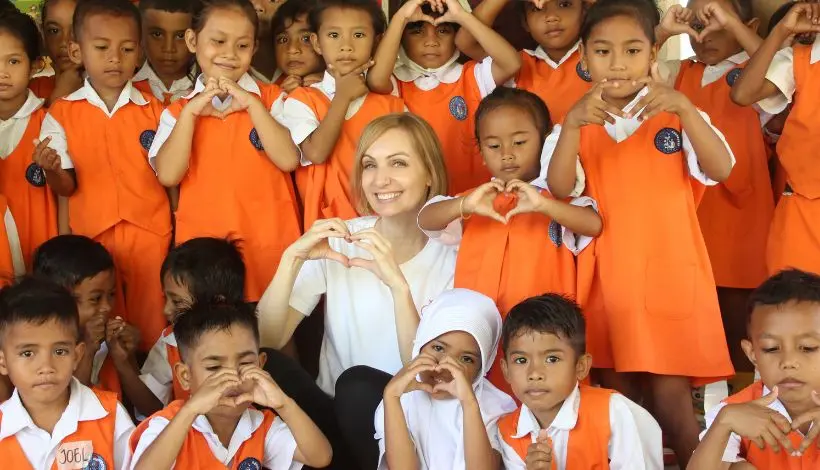
Education has the power to transform lives, strengthen communities, and shape the future of nations. Behind every classroom built is a story of leadership and purpose. Behind every child given the opportunity to learn is an unwavering commitment to creating lasting change. Few people embody this mission more than Sylvia Beiwinkler, CEO and Secretary-General of Happy Hearts Indonesia. Through sustainable partnerships and community-driven initiatives, she has helped expand access to quality education for children across the Indonesian archipelago. Under her leadership, Happy Hearts Indonesia has become one of the country’s leading education-focused nonprofits. The organization has rebuilt hundreds of schools while creating lasting educational opportunities for children and strengthening communities across Indonesia.
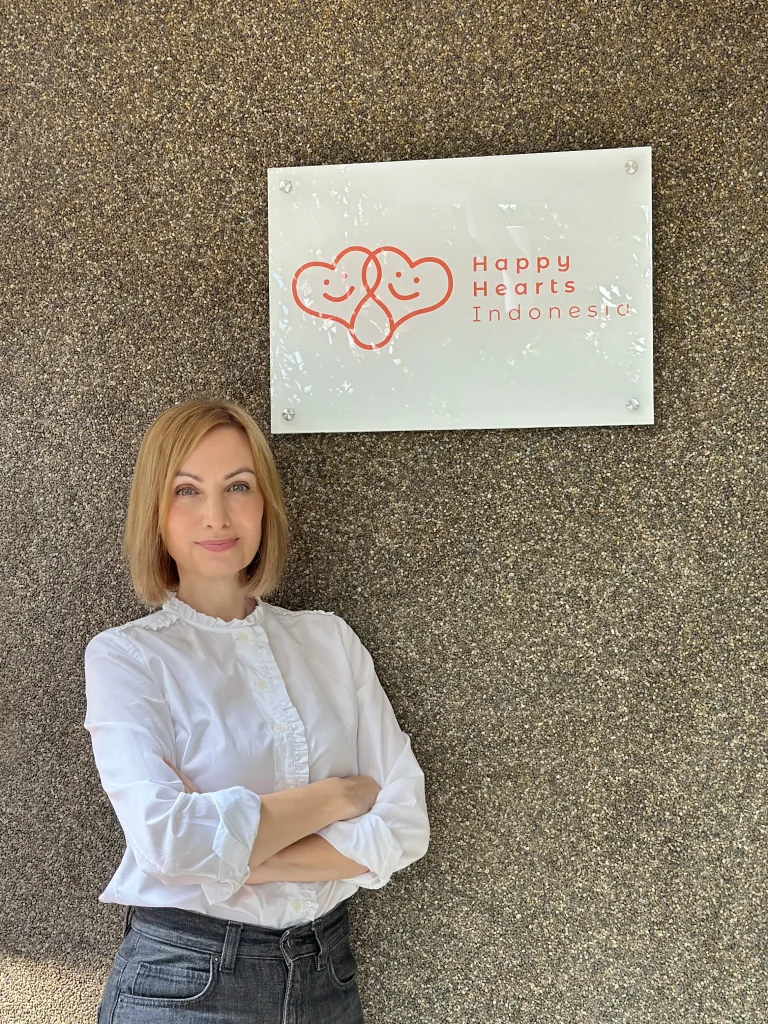
Originally from Austria, Sylvia Beiwinkler first came to Indonesia in 1999 to study Cultural Anthropology in Yogyakarta. During those years, Sylvia developed a deep appreciation for Indonesia’s rich culture and its people. Over time, the country became more than a place where she worked. It became her home. After returning to Indonesia permanently, she joined the newly established Happy Hearts Indonesia in 2013 as its first employee. She later became the organization’s CEO, leading its growth with a clear vision and long-term commitment.
Today, Happy Hearts Indonesia is one of the country’s leading education-focused nonprofits. Under Sylvia’s leadership, the organization has rebuilt hundreds of schools across the archipelago. Its impact has also expanded through teacher development, community empowerment, and programs that create lasting educational opportunities for children.
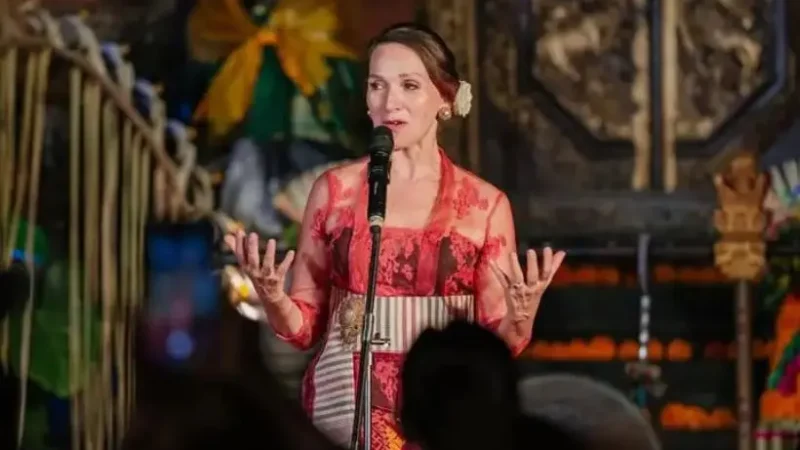
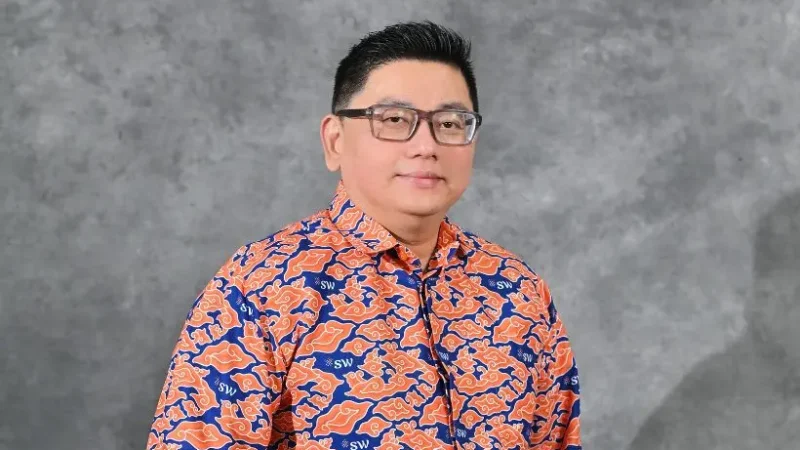
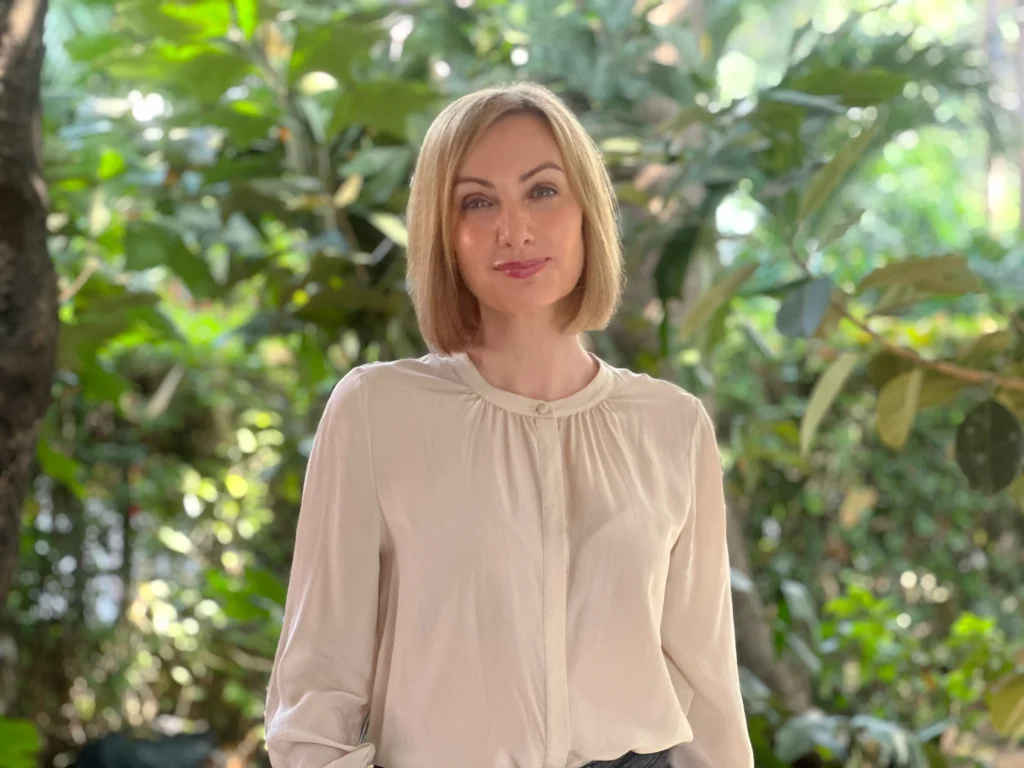
When I sat down with Sylvia Beiwinkler, I wasn’t simply interviewing the CEO of Happy Hearts Indonesia. I was meeting a leader whose work has transformed the lives of thousands of children across Indonesia. I was speaking with someone who has dedicated her life to expanding educational opportunities for children across the country. Through her leadership, thousands of students in remote areas in Indonesia have gained access to safe and inspiring learning environments.
Our conversation also explored the inspiring journey of Happy Hearts Indonesia. Founded in response to the 2004 Indian Ocean tsunami, Happy Hearts Indonesia established following the 2006 Yogyakarta earthquake. Since then, the organization has grown into one of Indonesia’s leading education-focused nonprofits.
Our conversation went beyond philanthropy. We explored purposeful leadership, sustainable social impact, and the shared responsibility of governments, businesses, and individuals in shaping Indonesia’s future. Sylvia’s insights demonstrate how compassion, collaboration, and long-term vision can create lasting change.
Throughout this interview, I will be abbreviated as GM, while Sylvia Beiwinkler will be be referred to as SB.
A Journey with Purpose
GM: As CEO and Secretary-General of Happy Hearts Indonesia, you have dedicated your career to improving access to quality education. Your work has helped children across Indonesia build a brighter future. What first inspired you to turn your passion for social impact into a lifelong mission?
SB: As someone who grew up in a wealthy country with countless opportunities, I know firsthand how important education is. It gives children the foundation they need to thrive in life. I believe every child deserves the opportunity to learn in a safe and nurturing environment. Where they are born or the circumstances they face should never determine their future.
Throughout my journey, I witnessed how thousands of children in Indonesia were being denied this basic right. Many lived in underserved and disaster-affected communities. There is where inadequate school facilities and limited access to quality education created significant barriers to learning.
That was the moment I realized that education is about far more than classrooms and textbooks. It is the foundation that empowers children to dream, build resilience, and break the cycle of poverty. I also saw the power of something as tangible as rebuilding a school. It could transform not only a child’s future but an entire community. That realization gave me a deep sense of purpose. For me, social impact is not simply about addressing today’s challenges. It is about investing in the next generation and creating lasting change that will benefit Indonesia for years to come.
GM: Looking back on your journey, what has been the most meaningful moment in your career? When did you realize you were making a lasting difference in the lives of Indonesian children?
SB: Looking back, there isn’t one single moment that stands above all the others. Instead, it is the countless stories of children, teachers, and communities whose lives have been transformed through education.
One experience that has stayed with me was visiting a community in Sumba after their new school had been completed. Before the rebuild, children were learning in simple bamboo huts, overcrowded classrooms without proper sanitation. When the new school opened, I saw the excitement on the children’s faces. I witnessed the renewed motivation of the teachers and the pride of parents. They knew their children finally had a place where they could learn with dignity and hope.
What made that moment especially meaningful was the realization that we were not just constructing a building. We were restoring confidence, creating opportunities, and bringing back a sense of possibility for an entire community. In 2018 we lunched the #iamchange campaign to rebuild 200 schools in East Nusa Tenggara. This year we are returning to Sumba to inaugurate the final 200th school. Seeing students thriving, teachers continuing to inspire, and communities taking ownership of their schools reinforced that the impact was lasting.
Leading with Heart
GM: Leading a mission-driven organization requires resilience, compassion, and strategic thinking. What leadership philosophy has guided you through both the opportunities and challenges of this journey?
SB: I have always wanted to be the kind of leader who creates the conditions for others to succeed, rather than having all the answers. My role is to bring people together around a shared vision. It is to give them the confidence to become part of the solution.
Living and working as a foreigner in Indonesia I’ve also learned the importance of staying adaptable. Every community has different needs, and every challenge requires us to listen, learn, and respond with humility. What works in one place may not work in another. That is why staying open to new perspectives has become one of the greatest lessons in my leadership journey.
I also want my team to learn from my experiences and discover a different approach to leadership. Instead of relying on a traditional top-down style, I encourage everyone to be proactive. I want them to bring forward ideas, take ownership, and execute them with minimal supervision. At the end of the day, leadership is not measured by personal achievements. It is measured by the opportunities we create for others.
GM: In a world often driven by short-term success, how do you stay focused on the bigger picture? How do you continue creating long-term impact that truly changes communities?
SB: Creating lasting impact requires patience and a clear sense of purpose. While it is natural to celebrate immediate achievements, real change takes time. A school may be built in a matter of months. Its true impact, however, is measured over years through the opportunities it creates for generations of children.
I also believe that sustainable change cannot happen in isolation. It requires strong partnerships with communities, government, educators, and the private sector. When people share ownership of a common goal, the impact extends far beyond any single project.
What keeps me motivated is knowing that education has a ripple effect. A safe, quality school can transform a child’s future. It also strengthens families, empowers communities, and contributes to the nation’s long-term development. Our past construction programs to train students, teachers and school management further support our long-term goal. That is the kind of impact that is worth working toward, every single day.
Creating Lasting Impact
GM: Happy Hearts Indonesia has transformed hundreds of schools and countless lives. Beyond constructing classrooms, what lasting change do you hope the organization creates for future generations?
SB: Rebuilding schools is at the heart of what we do. But our vision has always extended far beyond the buildings themselves. We want every school to become a place where children feel safe, inspired, and empowered to reach their full potential.
Over the past few years, we have rebuilt more than 400 schools across Indonesia. Together, these efforts have positively impacted more than 100,000 children. I hope the lasting legacy of Happy Hearts Indonesia is one of opportunity. Every child who has access to a quality learning environment has a greater chance of building a better future. The benefits go far beyond the individual. It creates lasting benefits for families and communities alike. The impact of education reaches far beyond the classroom. It creates a ripple effect that can be felt for generations.
I also hope we inspire a culture of collaboration and shared responsibility. Indonesia is an incredibly generous country. The culture of giving back and supporting those in need can be seen in every corner of the nation. At the same time, the challenges in education cannot be solved by one organization alone. They require strong partnerships between communities, government, businesses, and individuals. Together, they can ensure that every child has the opportunity to learn and thrive.
GM: Many people see education as a responsibility of governments alone. Why do you believe businesses, philanthropists, and individuals also have an essential role in shaping Indonesia’s educational future?
SB:While governments play a vital role in shaping policy and providing public education, lasting change requires collaboration. No single sector can do it alone. Businesses, philanthropists, nonprofits, and individuals each bring unique resources, expertise, and perspectives. By working together, they can help close gaps and accelerate meaningful progress.
Businesses can invest in developing the future workforce. Philanthropists can take risks on innovative solutions that might not yet be supported through public funding. Communities and individuals can make a meaningful difference. They can contribute their time, knowledge, and advocacy to support quality education. Together, they can help ensure that every child has the opportunity to learn in a safe and inspiring environment.
Indonesia’s educational challenges are diverse, spanning thousands of islands with different needs and circumstances. No single organization can solve them alone. Real progress happens when we embrace a shared responsibility for the next generation. And at Happy Hearts Indonesia, we have seen firsthand what is possible when people come together with a common purpose.
GM:Collaboration has been central to Happy Hearts Indonesia‘s success. What have you learned about building meaningful partnerships between the private sector, communities, and government to create sustainable social impact?
SB: One of the most valuable lessons I have learned is the importance of meaningful partnerships. They are built on trust, shared purpose, and mutual respect.These principles are the foundation of lasting collaboration. Every partner brings unique strengths to the table. Governments provide policy support and long-term commitment. The private sector contributes resources, innovation, and expertise. Local communities offer invaluable knowledge of their own needs and become the true stewards of every project.
Sustainable social impact does not come from simply funding a project. It comes from co-creating solutions with the people they are meant to serve. That begins with listening first. It means aligning around a shared vision and ensuring every stakeholder has ownership of the outcome. When communities are actively involved from the beginning, they do more than receive a school. They help build and sustain an environment where education can thrive for generations.
At Happy Hearts Indonesia, we have learned that our role is often to bring people together. We connect organizations and individuals who share the same goal but may never have had the opportunity to collaborate. Some of our strongest partnerships have grown over many years. They are built on transparency, accountability, and mutual trust. Most importantly, they are driven by a shared commitment to creating lasting change rather than short-term results.
Investing in Tomorrow
GM: Indonesia is home to one of the world’s youngest populations. What gives you confidence about the country’s future, and what investments should we prioritize today to help the next generation reach its full potential?
SB: Indonesia’s greatest strength is its people, particularly its young generation. But we must ensure that children in underserved and remote communities have the same opportunities as those in urban areas, because talent is universal, even when opportunity is not.
If we continue to invest in children with a long-term perspective building not only schools but also confidence, opportunity, and hope I believe Indonesia’s young population will become one of the country’s greatest competitive advantages. The decisions we make today will shape not only individual futures, but the future of Indonesia for generations to come.
To help the next generation reach its full potential, we must prioritize investments that go beyond access to education but invest into skills needed to thrive in a rapidly changing world.
GM: If every business leader in Indonesia could make one meaningful contribution to education, what would you encourage them to do?
SB: I would encourage every business leader to see education not as an act of charity, but as a long-term investment in Indonesia’s future. Every company, regardless of its size or industry, has something valuable to contribute whether it’s resources, expertise, technology, mentorship, or opportunities that help young people prepare for the world of work.
The most meaningful contributions are those that are sustained and aligned with a company’s strengths. Rather than asking, “How much can we give?” I would encourage leaders to ask, “How can our business create lasting value for the next generation?” When education becomes part of a company’s purpose, the impact extends far beyond a single donation or project.
Empowering Future Changemakers
GM: Many young professionals aspire to build successful careers while making a positive difference in society. What advice would you give them about balancing personal ambition with a greater sense of purpose?
SB: I don’t believe ambition and purpose are competing goals, they can strengthen one another. Building a successful career is important, but the most fulfilling success comes when your work also creates value for others. When you connect your professional skills with a cause you genuinely care about, your motivation becomes more resilient and your impact extends far beyond personal achievement.
My advice is to stay curious, keep learning, and never underestimate the difference you can make, regardless of where you are in your career. You don’t have to wait until you’ve reached a leadership position to contribute. Whether it’s mentoring someone, volunteering your expertise, supporting community initiatives, or simply leading with integrity in your everyday work, meaningful impact is built through consistent actions over time.
A Lasting Difference
GM: Years from now, when people look back on the work of Happy Hearts Indonesia, what legacy do you hope it will have left for Indonesia and its children?
SB: I hope the legacy of Happy Hearts Indonesia will never be measured simply by the number of schools we built, but by the opportunities we helped create and the lives we helped transform. A school is more than a building, it is a place where children discover their potential, where teachers inspire, and where communities come together with hope for a better future.
My greatest hope is that, years from now, children who once studied in these classrooms will become the leaders, educators, entrepreneurs, healthcare professionals, and changemakers who contribute to a stronger and more equitable Indonesia. If our work has helped give them the confidence to dream bigger and the opportunity to realize those dreams, then we will have achieved something truly meaningful.
GM: Lastly, what message would you like to share with everyone who believes that even small acts of kindness can create extraordinary change?
SB: My message is simple: never underestimate the power of your contribution. Every one of us has the ability to make a positive difference, no matter our profession, background, or resources. When we each do our part, we create something far greater than ourselves. A single decision to help, to give, to volunteer, or to believe in a child’s potential can create a ripple effect that reaches far beyond what we can imagine.
GM