Beyond the Notes: Ananda Sukarlan on Music, Humanity, and Living with Purpose
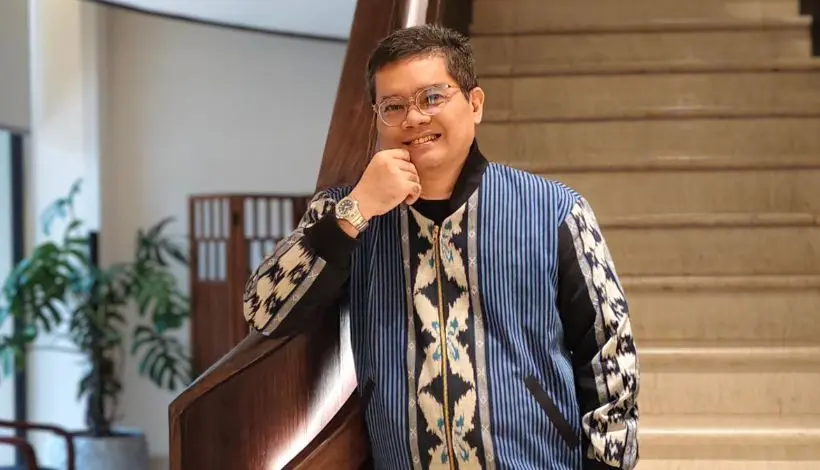
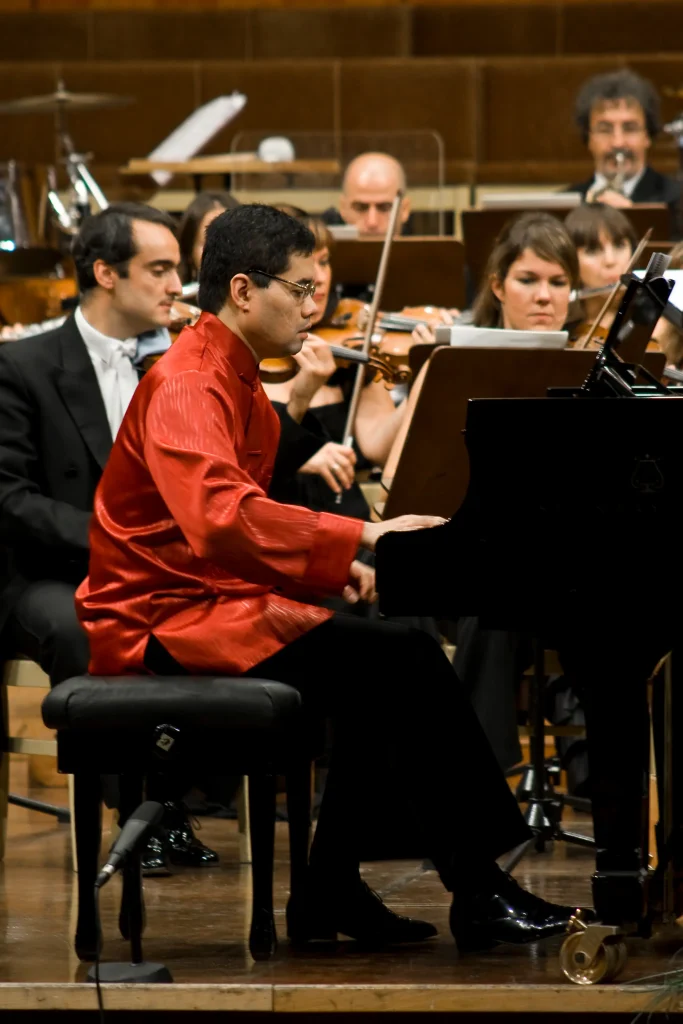
Few Indonesian artists have represented Indonesia on the global stage with the consistency, excellence, and cultural impact of Ananda Sukarlan. Internationally acclaimed as a concert pianist and composer, he became the first Indonesian to graduate summa cum laude from the Royal Conservatory of The Hague in the Netherlands.
Over the course of his distinguished career, he has performed in many of the world’s most prestigious concert halls, collaborated with leading orchestras across Europe, Asia, and the Americas, and established himself as one of the most influential voices in contemporary classical music.
His artistic achievements have earned widespread international recognition. Among his many accolades is the prestigious Prix Nadia Boulanger, awarded at the Concours International d’Orléans in France, along with top prizes at international piano competitions in Spain and the Netherlands.
His contributions to music and cultural diplomacy have also been honored with some of Europe’s highest civilian distinctions, including the Real Orden de Isabel la Católica, conferred by the Kingdom of Spain for strengthening cultural relations, and the Cavaliere dell’Ordine della Stella d’Italia, bestowed by the President of Italy.
He has also been named among Tatler Asia’s 100 Most Influential Asians in the arts and was recently celebrated during an extraordinary week of royal recognition and artistic milestones, further cementing his position as one of Indonesia’s most distinguished cultural ambassadors.
Yet perhaps Ananda’s most enduring legacy lies beyond the concert platform. Through the Ananda Sukarlan Center, the Yayasan Musik Sastra Indonesia (YMSI), and national initiatives such as the Kompetisi Piano Nusantara Plus and Ananda Sukarlan Award, he has dedicated himself to expanding access to world-class music education for young Indonesians. His mission extends far beyond developing future concert artists.
He believes every child deserves access to the arts because music nurtures creativity, confidence, empathy, and critical thinking. By providing scholarships, mentorship, competitions, and performance opportunities including for children from underprivileged backgrounds and young musicians with disabilities he continues to transform music into a powerful instrument of education, inclusion, and social mobility.
Ananda’s commitment to inclusion is equally reflected in his artistic work. Having openly shared his experience of living with Asperger syndrome, he has become an inspiring advocate for neurodiversity, demonstrating that differences can become extraordinary strengths.
His pioneering compositions for pianists with physical disabilities, together with his long-standing collaboration with inclusive music institutions in Spain, embody his conviction that limitations should never define a person’s potential. As he often reminds aspiring musicians, our limitations determine only where we begin not how far we can go.
Beyond education, Ananda views music as one of humanity’s most powerful instruments of cultural diplomacy. To him, art transcends political boundaries, creating understanding through creativity rather than negotiation. Whether composing monumental works inspired by Indonesia’s rich musical heritage, integrating Indonesian traditional melodies into contemporary classical repertoire, or collaborating on international cultural projects, he continues to introduce Indonesia’s artistic identity to audiences around the world while fostering dialogue, respect, and peace through the universal language of music.
In this exclusive interview conducted by Tania Maris (pen name: GMora), Editor in Chief of Indonesia Rising, we explore the life, philosophy, and remarkable journey of a musician whose vision extends far beyond performance. From artistic excellence and cultural diplomacy to inclusive education and the transformative power of music, Ananda Sukarlan shares the convictions that have shaped one of Indonesia’s most celebrated global cultural figures.
GMora will be abbreviated as GM, while Ananda Sukarlan will be referred to as AS throughout the interview.
A Life Written in Music
GM: Your career has taken you from Indonesia to Spain and onto some of the world’s most prestigious concert stages. Looking back, what moments do you believe most profoundly shaped the musician and the person you have become today?
AS: I deeply believe that art is like a pearl for the oyster. When something hurts the oyster, he has transformed it to alleviate the pain. It looks beautiful, but it won’t exist without the thing that hurts him. What shaped (and still is shaping) my artistic works are not the high moments, but the low moments instead. How I was bullied at school for many years, having a “disease” which nobody understood (not even myself, since I was diagnosed with Asperger’s Syndrome when I was 28), how I had to fight to continue my studies since I was born from not-so-wealthy parents, how I had to join competitions to earn prizes (initially to just pay my bills, but turned out they were beneficial for my career) etc. Being bullied for many years hurt not only physically but also mentally. I questioned my own worth, and those unanswered questions and doubts found the catharsis in my music even until now.
GM: Although you have lived in Spain for many years, Indonesia continues to be deeply present in your work. How has living between two cultures influenced your identity, your creativity, and your sense of belonging?
AS: I didn’t feel very Indonesian until a few years in my studies at the Koninklijk Conservatorium in Den Haag, where I had a sudden need for a clear identity of who I am and where I belong.
I was building my career as an artist, and found out that our needs are not to impress but to express. I learned all the techniques of virtuosity but in the end, it only showed that I could only be like thousands of other technically accomplished musicians. What made me different from them? My identity, and I can’t fake it. I’m born Indonesian, and Indonesian (precisely Javanese) by feelings and personality. But of course, Western culture influenced me and my music a lot; physical virtuosity is one thing, which doesn’t exist in Indonesian performing arts.
When Music Becomes a Calling
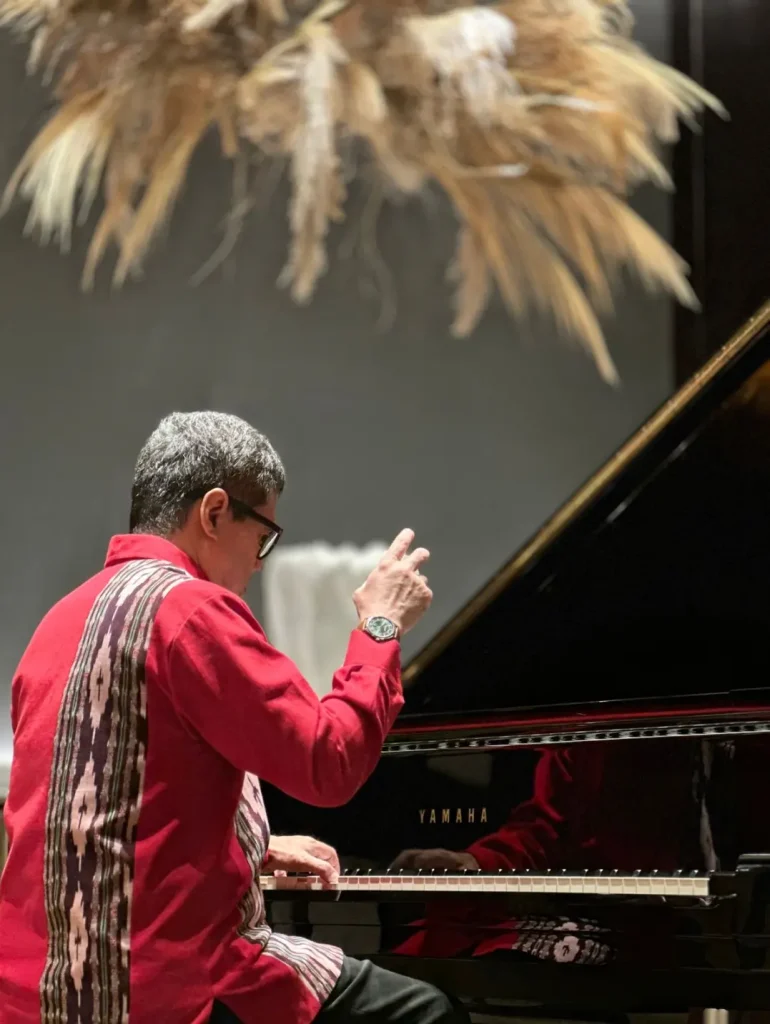
GM: Many people experience music as entertainment, yet your life’s work reflects something far deeper. What has music taught you about life, purpose, and the human experience?
AS: It reveals purpose not as a fixed destination, but as the act of creation itself: the willingness to pour out our inner world and resonate with others despite imperfection. The creative process is as important as the end product. At its core, music illuminates the human experience as profoundly shared yet intimately personal; a universal language that binds strangers across eras and continents, reminding us that joy and sorrow are temporary movements and that meaning arises when we listen deeply and harmonize with the fleeting rhythm of existence. When we experience pain, we should transform its ugliness into beauty and love and not hate. The more intense the pain, the more refined the beauty should be.
GM: Throughout your remarkable journey, has there been one performance or one composition that transformed you personally beyond its artistic significance?
AS: Not really one, but perhaps my series of Rapsodia Nusantara for piano solo. There are 44 numbers for now (and growing) since I wrote the first one in 2007, each of them is based on folksong(s) from one region or province. Those Rapsodia forced me to delve into the musical system (non-diatonic scales, rhythms, melodic curves) of each tribe to find what is Indonesian music. The other thing is “art songs” which now we have a nice translation: Tembang Puitik (poetic songs). Franz Schubert, Aaron Copland and dozens of western composers have established their music based on poems by great poets in German, English, Spanish etc., but I have to learn Indonesian again from the phonetics point of view to be able to set the great Indonesian poems to music. Until now I have written more than 600 art songs, but the quantity just shows that I keep on learning to achieve the ideal amalgam of western techniques with Indonesian musical (and poetic) materials. In fact, I got even more confused now. Apparently, there is no such thing as Indonesian music, since every tribe and region have their own point of views and manners on making their own music, which is based on the rhythms and accents of their languages (and collective personalities).
Giving Talent a Chance
GM: Through the Ananda Sukarlan Center, you have opened doors for many gifted young musicians, including children from underprivileged backgrounds and those living with disabilities. What inspired you to make this mission such an important part of your life’s work?
AS: I feel that I have accomplished my musical career, and the question aroused: what good is it? I got the validations and recognitions (and money) I needed, and it is time to make my life useful for the others, especially for children who had the same fate as I had decades ago: parents who wanted to give the best to their kids but without enough (financial) resources, or kids with some disabilities or limitations in achieving whatever they need (and sometimes even still don’t know what they are good at). Born with Asperger’s Syndrome made me different, and I learned that that difference should not make us inferior than the “all similar” people in the society. Every time I was insulted by my school friends that I’m strange and different, my answer was always “yeah, being different is so cool. I can’t imagine being you all the same, how boring life must be”. And with music and arts, I learned that we should bear that difference with high class and artistic value.
GM: Having mentored so many young talents over the years, what have your students taught you that has perhaps influenced you as much as you have influenced them?
AS: I have to give a disclaimer here. I have no students, no fixed ones at least. I wouldn’t claim someone as my student. I give masterclasses, seminars all around the world, and my passion now is to do it around Indonesia, since I have found great talents in some surprising places. Want some examples? There is the pianist Anthony Hartono (winner of Ananda Sukarlan Award 2014) who came from a family who owned a small traditional restaurant in Magelang (Central Java) who now owns a music school in Singapore after graduating from the Sibelius Academy in Helsinki, and also Veeshan Nathaniel Tandino (now only 14 or 15, winner of Kompetisi Piano Nusantara Plus 2024, strings category), a prodigy in violin in Medan, Sumatra.
What I learned from them is that how they play music (including mine) enrich my views on music. I have had my music played by great musicians from great orchestras such as Boston, Los Angeles and many European, Australian and Asian ones, and I learned the same issue from them as much as from the new prodigies: that each of us is different, with different opinions about the same musical motifs or life issues and we all enrich each other’s lives.
Finding Strength in Being Different
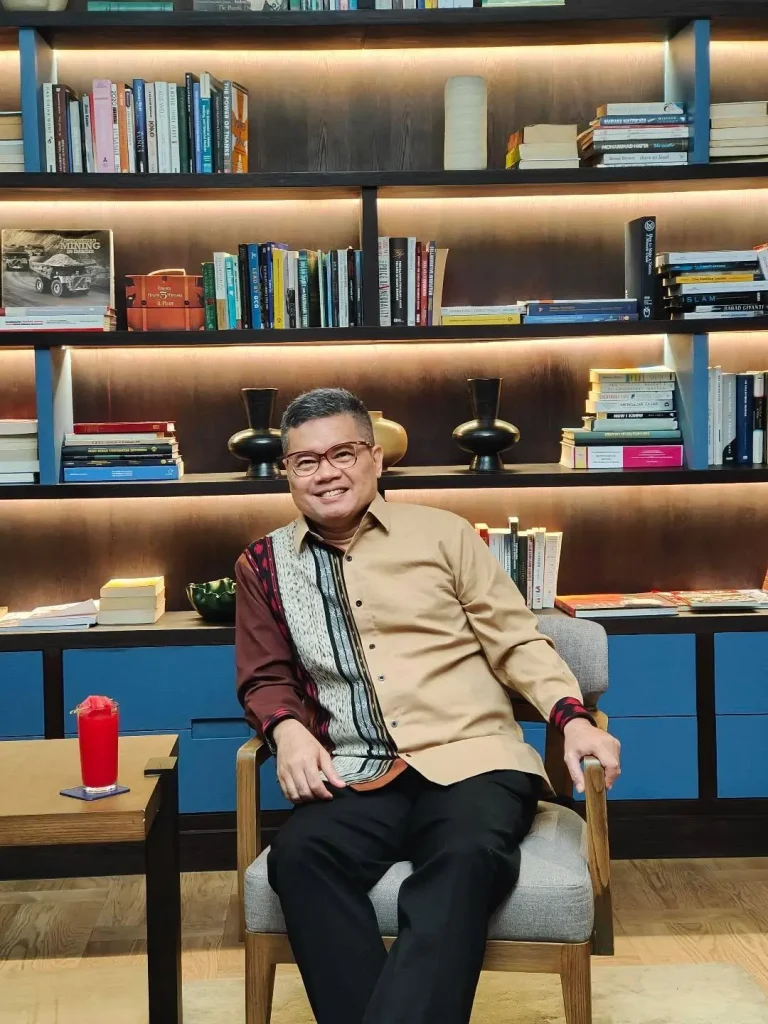
GM: You have spoken openly about living with Asperger syndrome, helping many people better understand neurodiversity. What encouraged you to share such a personal part of your life, and what message do you hope it sends to those who may feel different?
AS: I have mentioned it above. Anyway, I am always open to people who want to share their doubts, experience and pain. I am also now part of the board of the Indonesian Autism Foundation (Yayasan Autisme Indonesia) and now I’m learning about it from other perspectives. My Instagram account is an open book where everyone can write on it: message me through its inbox. Hope I can help, and hope I can learn from other people’s experiences.
GM: Do you believe the way you experience the world through Asperger syndrome has also shaped your creativity, your compositions, or your connection with music in ways others might not fully appreciate?
AS: Oh definitely. Perhaps not in some of my more “easy listening” music, but with the deeper ones, such as those containing complex polyphony and creating new sound worlds (such as Rapsodia Nusantara no. 10 where I had to use the 10 fingers to convey the complex sound of the Balinese gamelan) was definitely created when I was hyper-focused, and that is one of Asperger’s positive traits. Many high achievers with peculiar products (not necessarily artistic) apparently have Asperger’s syndrome, such as Elon Musk, film director Tim Burton, creator of Pokemon, Satoshi Tajiri and many others.
Carrying Indonesia to the World
GM: After building an international career while remaining deeply connected to Indonesia, what do you believe makes Indonesian artists uniquely capable of contributing to the global cultural landscape?
AS: I hope I have given the classical musicians a valuable asset with my music, searching deeply for the Indonesian identity and applying it to my music. Knowing that young musicians win international competitions with my music and perform it in their concerts worldwide convinced me that my music is not just pretty sounds to soothe the ears, but a universal language to bridge cultural diplomacy and artistic communication of different nations and cultural backgrounds.
GM: If you could influence one major change in Indonesia’s approach to music and arts education, what would it be, and why do you believe it would make a lasting difference for future generations?
AS: That every child should learn music, meaning reading notes and play an instrument, just like any child in any European country. This would make not only a much more intelligent but highly tolerant, respectful and sensitive new generation.
The Music That Lives On
GM: Beyond awards, standing ovations, and international recognition, what kind of legacy do you hope your music and your life’s work will leave for Indonesia and the world?
AS: I hope that my music can introduce Indonesia to the world, even long after I leave this planet, and serve for Indonesian musicians to firm their place in the classical music world. I didn’t have any Indonesian repertoire when I was young and joining the competitions because there were no Indonesian composers whose works could display and proclaim virtuosity, both technically and musically, in a high level, and indeed all musicians need to establish their identity and difference. Thousands of pianists can play music by Tchaikovsky, Beethoven etc very well; how can we compete with them? How can public notice us, how can we be different and still maintain high artistic values?
GM: Finally, many young people today are searching for purpose while navigating challenges that may seem overwhelming. What would you like to say to them about embracing who they are, persevering through adversity, and allowing their own unique voice to be heard?
AS: Be yourself. “The powerful play goes on, and you may contribute a verse” (Walt Whitman). It’s better to give the best version of yourself, than the copy of someone else, no matter how great (s)he is / was.
GM
Photography & batik wardrobe by Rosdhani