

From Rose Valley to Spice Islands: The Halal Food Opportunity Between Indonesia and Bulgaria
The next chapter in the Indonesia & Bulgaria: Unlocking the Europe–ASEAN Investment Corridor begins with food and the opportunity is already moving from potential to investment.
Indonesia brings scale, agricultural resources and the world’s largest halal food market. Bulgaria contributes sophisticated food-processing capabilities, European market access and a strong industrial base. Together, they offer a compelling proposition: produce in partnership, scale across ASEAN and reach Europe with greater value.
Bulgaria’s strategic importance extends beyond its domestic market. As a gateway to Eastern Europe, it can play a crucial role in helping Indonesian products access the wider European market. That opportunity is becoming even more significant as Indonesia and the European Union move toward the implementation of the Indonesia–EU Comprehensive Economic Partnership Agreement (IEU-CEPA). The agreement is targeted for signing in October 2026, with the long-term objective of enabling 90% of Indonesian goods to enter Europe duty-free once it takes effect.
A USD 72 million cooperation between Bulgarian food producer Bella Bulgaria and Indonesian company PT Garuda Mitra Utama (GMU) provides an early demonstration. The agreement covers USD 34 million in raw-material supply over four years and USD 38 million for a joint-venture meat-processing plant in Indonesia.
For investors and food businesses watching the next Europe–ASEAN opportunities, that transaction deserves attention. It illustrates how Bulgaria can serve not simply as a destination, but as a strategic entry point into Europe while Indonesia provides the scale, resources and expanding consumer market needed to build a commercially meaningful corridor between the two regions.
Why Halal Food Could Open the Corridor
Indonesia has a structural advantage that few markets can replicate. Its Muslim population is estimated at around 245 million, while its halal food market reached approximately US$165.4 billion, according to a 2026 analysis by Katadata Insight Center drawing on SGIE, OJK and Indonesian trade data.
The broader Islamic economy is expanding as well. Indonesia’s Ministry of Industry cited Muslim consumer spending across six Islamic-economy sectors at US$2.43 trillion in 2023, with that figure projected to reach US$3.36 trillion by 2028.
Indonesia also ranked third in the State of the Global Islamic Economy 2024/2025, reinforcing its position as a major global halal-economy market.
For Bulgaria, therefore, Indonesia offers something particularly valuable: scale.
For Indonesia, Bulgaria offers a different advantage: European food-processing knowledge and an established position inside the EU market.
From Bulgaria’s food industry to Indonesia’s Consumer Economy
Bulgaria has a substantial food-processing tradition, supported by its position within the European single market and established export networks.
Recent Bulgarian trade data illustrates the country’s outward orientation. During January–May 2026, Bulgaria exported €12.3 billion of goods to EU member states, up 9.2% from the same period in 2025.
Food and live animals remain a meaningful component of Bulgaria’s trade beyond the EU. In the first half of 2026, Bulgarian exports of food and live animals to non-EU markets reached approximately €935 million.
The opportunity in Indonesia, however, extends beyond exporting finished products.
Bulgarian companies can potentially participate in local production, joint ventures, ingredient sourcing, processing technology, distribution and product development. That distinction matters.
Indonesia’s market rewards companies that understand local consumers and build appropriate supply chains. A Bulgarian business entering through a local manufacturing partnership can potentially combine European production expertise with Indonesian sourcing, labour, distribution and consumer knowledge.
The result is a more integrated business model than simple bilateral trade.
Bella Bulgaria Shows What Partnership Can Look Like
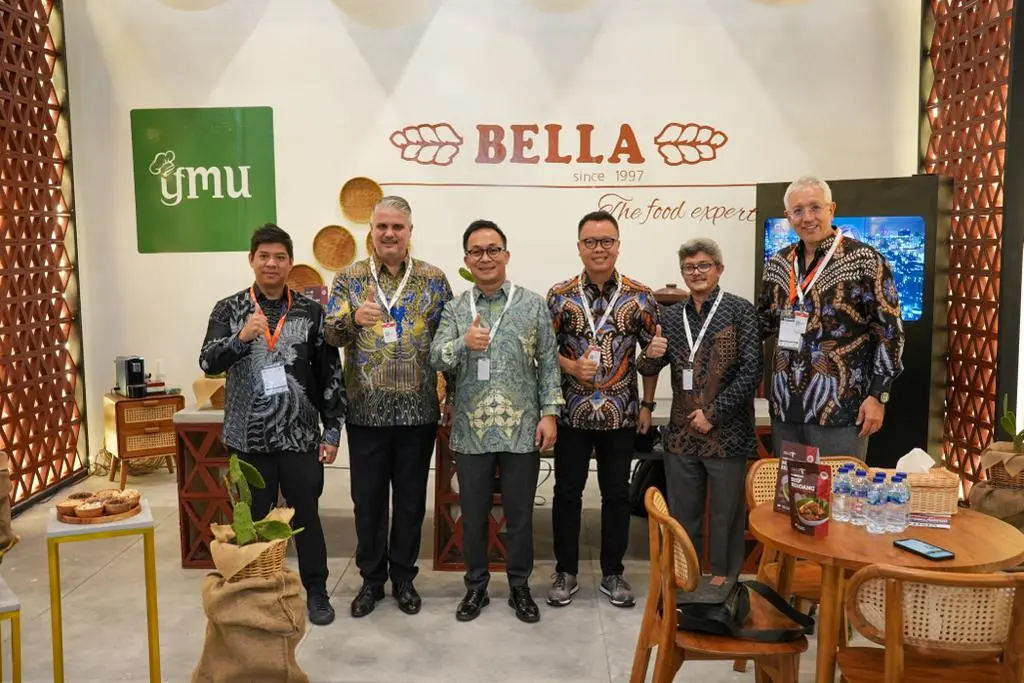
The most compelling evidence may already be sitting on the table. In October 2023, Bella Bulgaria and PT Garuda Mitra Utama signed a memorandum covering a total of US$72 million in trade and investment cooperation.
The arrangement included US$34 million for raw-material supply over four years and US$38 million for a meat-processing joint venture in Indonesia. The relationship also has an unusually distinctive cultural dimension.
Bella Bulgaria operates a rendang factory in Plovdiv, producing the Indonesian dish using the traditional Padang-style concept. The company has also participated in Indonesia’s “Spice Up the World” programme.
This creates an important lesson for businesses considering the corridor.
Internationalisation does not always begin with a completely new product. Sometimes it begins by understanding an existing product, adapting production capabilities and then taking that knowledge into another market.
Bella Bulgaria’s experience with rendang created familiarity with Indonesian flavours and consumer preferences. The next step bringing meat-processing investment into Indonesia demonstrates how commercial relationships can evolve from market discovery to industrial cooperation.
Halal Certification is Becoming a Strategic Market Issue
For companies entering Indonesia, halal compliance deserves attention from the beginning.
Indonesia’s halal-certification framework has moved into a new phase. Since 18 October 2024, mandatory halal certification has applied to food and beverages, raw materials and food additives, as well as slaughtered products and slaughtering services for medium and large businesses.
The next stage arrives on 18 October 2026, extending mandatory certification to additional categories and expanding requirements affecting micro and small businesses and imported products.
For Bulgarian food companies, this creates both a compliance requirement and a commercial opportunity.
A well-designed halal strategy can become part of product positioning, consumer trust and market expansion, rather than something addressed at the end of the investment process.
For Indonesian partners, meanwhile, international collaboration can bring production expertise, food technology and access to new European markets.
From Processed Food to A Wider Agribusiness Ecosystem

The opportunity extends well beyond meat. Indonesia has significant potential across spices, processed agricultural products, ready-to-eat foods, natural ingredients, beverages and food manufacturing.
Bulgaria, meanwhile, has capabilities across food production and processing that can complement Indonesian resources and demand. This opens several potential models.
Joint Ventures
Bulgarian companies can partner with Indonesian businesses to establish production facilities serving Indonesia and neighbouring ASEAN markets.
Technology Partnerships
Food-processing machinery, production systems, quality control and packaging technology can help Indonesian producers move further up the value chain.
Ingredient and Supply-Chain Partnerships
Indonesian agricultural products can feed into higher-value processing, while Bulgarian expertise can support product development and European distribution.
Europe–ASEAN Market Expansion
A partnership can potentially create two-way market access: Indonesian products entering Europe through Bulgarian networks, and Bulgarian food products entering Indonesia and wider ASEAN markets.
The strongest opportunities may therefore emerge where trade becomes investment and investment becomes production.
What Investors Should Watch Next
The opportunity comes with practical challenges.
Food companies entering Indonesia need to understand halal certification, local regulations, food-safety requirements, supply-chain reliability and consumer preferences. Equally important is finding the right Indonesian partner.
A strong local partnership can accelerate market entry. A poorly structured one can create unnecessary operational and regulatory friction. For Bulgarian companies, the strategic question is therefore broader than can we sell in Indonesia?
It is:
Can we build in Indonesia?
For Indonesian companies, the corresponding question is:
Can we use Bulgarian expertise and European connectivity to expand beyond Indonesia?
Those questions move the conversation from bilateral trade toward long-term investment.
The First Chapter of a Larger Investment Corridor
Food is the opening chapter of Indonesia & Bulgaria: Unlocking the Europe–ASEAN Investment Corridor.
The sequence matters.
Food asks: What can we produce together?
Then the series moves into essential oils, cosmetics and pharmaceuticals: What can we create together?
Technology asks: What can we digitise together?
Renewable energy asks: What can we power together?
Manufacturing asks: What can we build together?
Finally, logistics asks: How can we move it together?
Together, these six sectors tell a larger story about complementary economies.
Indonesia offers a market of extraordinary scale and a strategic position within ASEAN. Bulgaria offers European connectivity, technical capabilities and access to established industrial networks. The opportunity lies in connecting those advantages through serious businesses and investable projects.
From Opportunity to Action
The halal food opportunity between Indonesia and Bulgaria already has a tangible precedent. Bella Bulgaria’s US$72 million cooperation with PT Garuda Mitra Utama demonstrates that the Europe–ASEAN investment corridor can move beyond diplomatic dialogue into factories, supply agreements and commercial partnerships.
Now the question is who comes next. For Bulgarian food producers, processors and agribusiness companies seeking scale, Indonesia offers an extraordinary market and a potential ASEAN production base.
For Indonesian businesses seeking European expertise, technology and distribution, Bulgaria offers a strategic entry point.
The Opportunity is On the Table the Next Move Belongs to Business
Indonesia Rising is exploring the companies, sectors and investment pathways capable of turning this corridor into a working commercial ecosystem.
For businesses ready to explore a partnership between Indonesia and Bulgaria, reach out to Indonesia Rising. Europe meets ASEAN. Opportunity meets action.
GM


2 thoughts on “From Rose Valley to Spice Islands: The Halal Food Opportunity Between Indonesia and Bulgaria”