From Fuel to Future: How Electric Vehicles Support Sustainable Living in Indonesia
A Defining Shift in Indonesia’s Energy Narrative
Indonesia stands at a pivotal intersection between industrial growth and environmental responsibility. As urbanization accelerates and energy demand rises, the transition from fossil fuels toward cleaner alternatives has become a national priority. Within this shift, the rise of electric vehicles Indonesia sustainable living is gaining momentum, with EVs now occupying a central role in shaping not only mobility patterns but also broader concepts of sustainable living.
This shift reflects more than policy direction. It signals a reconfiguration of lifestyle, industry, and infrastructure where clean energy integrates into everyday life. At the heart of this evolution lies a global ecosystem, with China emerging as a dominant force in EV manufacturing and technological advancement.
Understanding how EVs are made, and why Chinese production systems have gained global competitiveness, provides valuable insight into how Indonesia can accelerate its own transition.
The Making of Electric Vehicles: Precision, Scale, and Integration
Electric vehicles differ fundamentally from conventional internal combustion engine cars, forming a critical foundation for electric vehicles Indonesia sustainable living. Their core components battery systems, electric motors, and power electronics require a highly specialized and interconnected manufacturing process.
Among these components, the battery remains the most critical. It determines range, efficiency, cost, and overall performance. Manufacturing EV batteries involves complex chemical engineering, including lithium-ion or lithium iron phosphate (LFP) cell production, thermal management systems, and software integration.
China leads this segment globally. The country produces approximately 75% of the world’s lithium-ion batteries and hosts the majority of processing capacity for essential materials such as lithium, cobalt, and graphite.
This level of control allows Chinese manufacturers to integrate the entire value chain from raw material extraction to battery assembly and final vehicle production. The result is a highly efficient system that reduces cost, shortens production cycles, and enhances scalability.
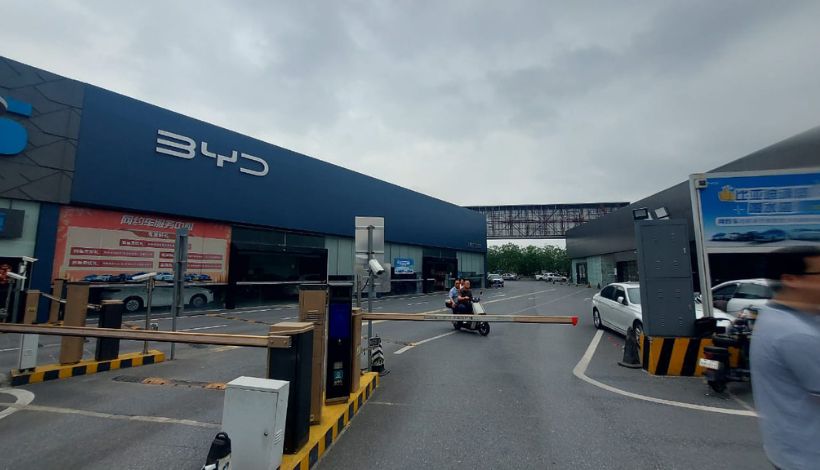
Companies such as CATL and BYD have become global leaders, supplying batteries and vehicles to markets across Asia, Europe, and beyond.
Why Chinese EV Factories Lead the Global Market
China’s leadership in EV manufacturing stems from a combination of industrial policy, technological innovation, and ecosystem development.
First, scale plays a decisive role. With over 600,000 EV-related enterprises operating within its ecosystem, China has built an industrial network unmatched in size and integration. This density enables rapid collaboration between suppliers, manufacturers, and technology developers.
Second, cost efficiency drives competitiveness. Chinese battery technologies particularly LFP batteries offer lower production costs while maintaining high safety and durability standards. These efficiencies allow EVs produced in China to be priced significantly lower than those from Western markets.
Third, innovation continues to push boundaries. Recent developments in sodium-ion batteries aim to reduce reliance on critical minerals while improving affordability and scalability.
Together, these factors have positioned China as the dominant force in global EV production, accounting for around 70% of electric vehicle output worldwide.
Guangzhou and the Rise of Integrated EV Ecosystems for Electric Vehicles Indonesia Sustainable Living
Beyond factories, China’s success in electric mobility is supported by comprehensive regional ecosystems. Guangzhou, one of the country’s leading industrial hubs, offers a compelling example.
This ecosystem extends beyond vehicle production. It includes:
- Large-scale battery manufacturing facilities
- Advanced research and development centers
- Extensive charging infrastructure networks
- Digital platforms integrating vehicles with smart city systems
In nearby Guangdong province, the scale of EV infrastructure illustrates the impact of coordinated planning. Hundreds of thousands of public charging points have been installed, creating one of the most extensive EV charging networks globally.
Such integration enables seamless adoption. Consumers experience convenience, reliability, and accessibility factors essential for widespread EV acceptance.
Electric Vehicles Indonesia Sustainable Living: Building a Similar Ecosystem
Indonesia possesses several strategic advantages that align with the EV value chain. The country holds approximately 57% of global nickel production, a critical component for battery manufacturing.
This resource base positions Indonesia as a potential global hub for EV battery production. However, natural resources alone are insufficient. The next phase requires developing a comprehensive ecosystem similar to those seen in Guangzhou.
Key components include:
1. Integrated Industrial Zones
Establishing clusters that combine mining, refining, battery production, and vehicle assembly can enhance efficiency and attract global investors.
2. Charging Infrastructure Expansion
A dense network of charging stations is essential for consumer confidence. Rapid deployment in urban centers can accelerate adoption.
3. Research and Development
Investment in technology innovation particularly battery efficiency and energy management can strengthen Indonesia’s competitive position.
4. Policy Consistency
Clear regulations, incentives, and long-term planning create a stable environment for both domestic and foreign investment.
Encouragingly, progress is already underway. Chinese EV manufacturers are investing heavily in Indonesia, including a planned $1 billion production facility capable of producing 150,000 vehicles annually.
EVs and Sustainable Living in Indonesia
The rise of electric vehicles extends beyond industrial transformation. It influences how individuals engage with their environment.
EV adoption contributes to reduced air pollution, particularly in densely populated urban areas. Lower emissions improve public health, while reduced noise levels enhance quality of life.
Energy efficiency further supports sustainability goals. Electric vehicles convert energy more effectively than traditional engines, reducing overall energy consumption.
Moreover, the integration of EVs with renewable energy sources such as solar power creates opportunities for decentralized energy systems. Households can charge vehicles using clean energy, reinforcing a circular model of sustainability, while models from companies like BYD further accelerate adoption by making efficient and accessible electric mobility part of everyday life.
These changes collectively reshape daily life. Mobility becomes quieter, cleaner, and more aligned with environmental responsibility.
Bridging Industry and Lifestyle
For Indonesia, the transition to electric vehicles represents a convergence of industry and lifestyle transformation.
On one side, large-scale investments and manufacturing capabilities drive economic growth. On the other, individual choices contribute to environmental impact and social awareness.
The influence of Chinese manufacturing ecosystems demonstrates how industrial strategy can accelerate adoption. By replicating elements of this model adapted to local context Indonesia can create a system where EVs become both accessible and desirable.
Such alignment ensures that sustainability is not confined to policy frameworks but integrated into everyday decisions.
A Scalable Future
The trajectory of electric vehicles in Indonesia points toward continued expansion. As infrastructure develops and costs decrease, adoption is expected to accelerate.
The challenge lies in maintaining balance ensuring that growth aligns with environmental standards and social inclusion. Lessons from global leaders highlight the importance of integration, innovation, and long-term planning.
Indonesia’s position within the global EV supply chain continues to strengthen. Strategic partnerships, resource advantages, and policy support provide a solid foundation for future growth.
Powering the Transition from Fuel to Future
Electric vehicles are reshaping Indonesia’s path toward sustainable living. From advanced manufacturing processes to integrated ecosystems, the transformation reflects a broader shift in how energy, mobility, and lifestyle intersect.
China’s leadership in EV production offers valuable insights into scale, efficiency, and ecosystem development. Adapting these principles within Indonesia’s unique context can accelerate progress and unlock new opportunities.
As the nation moves from fuel dependency toward cleaner alternatives, electric vehicles stand at the center of this evolution driving a future defined by innovation, sustainability, and a renewed approach to everyday living.
RL