Raja Ampat, Building Wealth Through Premium Tourism and the Blue Economy

For decades, Raja Ampat has captivated the world with its unrivaled marine biodiversity and breathtaking island landscapes. Today, the archipelago is evolving beyond its reputation as a paradise for divers. It is emerging as one of Indonesia’s most promising destinations for sustainable investment, where economic growth advances alongside environmental stewardship. Rather than relying on resource-intensive industries, Raja Ampat is generating long-term value through premium tourism, conservation, and the blue economy.
Located in Southwest Papua, Raja Ampat comprises more than 1,500 islands, cays, and shoals surrounding four main islands. The region lies within the Coral Triangle, recognized as the global epicenter of marine biodiversity. According to Conservation International, Raja Ampat is home to approximately 75 percent of the world’s known coral species and more than 1,600 species of reef fish, making it one of the richest marine ecosystems on Earth.
This extraordinary natural capital forms the basis of a distinctive investment proposition: preserving ecosystems while creating sustainable economic value. As global investors increasingly seek Environmental, Social, and Governance (ESG)-aligned opportunities, Raja Ampat offers a compelling example of how conservation can become a competitive economic advantage.
Premium Tourism Drives Raja Ampat Investment

Premium tourism represents the strongest engine of Raja Ampat’s long-term economic growth. Instead of pursuing high-volume tourism, the region has positioned itself as an exclusive destination for discerning travelers seeking authentic experiences, exceptional service, and pristine natural environments.
Recognizing this competitive advantage, the Indonesian Government has designated Raja Ampat as one of the country’s priority tourism destinations for sustainable investment. The strategy reflects a broader shift toward high-value tourism, where visitor spending, service quality, and environmental responsibility generate greater economic returns than mass arrivals.
International travelers increasingly seek destinations that combine luxury with conservation. Raja Ampat answers this demand through world-class diving, island expeditions, birdwatching, kayaking, cultural encounters, and immersive marine experiences. This approach strengthens local economies while reinforcing the conservation efforts that sustain the destination’s global appeal.
Eco-Resorts and Sustainable Hospitality Continue to Expand

Established Hospitality Brands Validate the Investment Model
One of the strongest indicators of Raja Ampat’s investment potential is the success of the premium hospitality businesses already operating across the archipelago. Rather than competing through scale, these operators have built internationally respected brands by integrating luxury hospitality with environmental conservation and community engagement.
Properties such as Misool Eco Resort, Papua Paradise Eco Resort, Sorido Bay Resort, Kri Eco Resort, Raja Ampat Biodiversity Eco Resort, Cove Eco Resort, and MahaRaja Eco Dive Lodge have demonstrated that environmentally responsible tourism can deliver premium commercial returns. Their operating models combine sustainable architecture, renewable energy, coral reef protection, scientific research, responsible waste management, and employment opportunities for indigenous Papuan communities.
Among these pioneers, Misool Eco Resort has become one of the world’s leading examples of conservation-based hospitality. Since helping establish the 1,220-square-kilometre Misool Marine Reserve in 2005, the resort has demonstrated how protecting marine ecosystems enhances both biodiversity and long-term business performance. Operating with intentionally limited capacity, Misool attracts affluent travelers willing to pay premium rates for exclusive experiences while directly supporting conservation programs throughout southern Raja Ampat.
Likewise, Papua Diving, the operator of Sorido Bay Resort and Kri Eco Resort, has played a pivotal role in establishing Raja Ampat’s international reputation among divers. Through its support for the Raja Ampat Research and Conservation Centre (RARCC), the company illustrates how private-sector investment can strengthen destination branding, marine science, and environmental protection simultaneously.
These successful businesses provide valuable market validation for prospective investors. Demand continues to grow for boutique eco-resorts, luxury villas, wellness retreats, high-quality homestays, destination dining, and personalized hospitality experiences that align with global sustainability standards.
Marine Tourism Strengthens the Blue Economy

Raja Ampat consistently ranks among the world’s premier diving destinations. Its crystal-clear waters, spectacular coral reefs, manta ray cleaning stations, and exceptional marine biodiversity attract divers, underwater photographers, marine scientists, and luxury travelers throughout the year.
The maturity of the destination is reflected in the presence of internationally recognized liveaboard operators such as Mermaid Liveaboards, Damai Liveaboards, Arenui, Gaia Love, Coralia, and Emperor Harmoni, all of which include Raja Ampat among their flagship expedition itineraries. Their continued operations demonstrate sustained global demand for premium marine tourism experiences.
This thriving ecosystem creates investment opportunities across the entire marine tourism value chain, including:
- Luxury liveaboard operations
- Dive centers and professional certification facilities
- Marina and yacht infrastructure
- Marine recreation businesses
- Island-hopping experiences
- Marine conservation tourism
- Vessel maintenance and marine logistics
The expansion of marine tourism also stimulates employment in transportation, hospitality, food supply, guiding services, equipment maintenance, and local entrepreneurship, creating broad multiplier effects throughout the regional economy.
Sustainable Fisheries Create Long-Term Economic Value
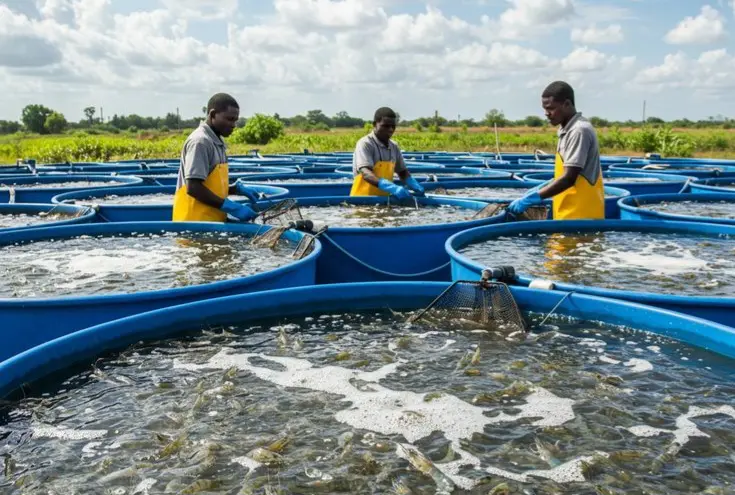
The blue economy extends well beyond tourism. Raja Ampat possesses significant potential for sustainable fisheries that generate economic returns while safeguarding marine ecosystems.
Rather than emphasizing industrial-scale extraction, investment opportunities focus on responsibly managed high-value species such as lobster, grouper, tuna, sea cucumber, and other premium seafood products. Growing international demand for sustainably sourced seafood continues to strengthen export prospects for producers that meet global traceability and sustainability standards.
Additional opportunities exist in seafood processing, cold storage, quality assurance, certification, and export logistics. Together, these investments strengthen local value chains while preserving the marine resources that underpin Raja Ampat’s tourism industry.
Infrastructure Investment Unlocks Future Growth
Although Raja Ampat enjoys global recognition, infrastructure remains one of its most compelling investment opportunities. Improved connectivity will be essential to supporting sustainable tourism growth and enhancing the competitiveness of local businesses.
Priority investment areas include:
Marine Transportation
Reliable inter-island transportation, passenger vessels, and marine logistics services improve accessibility for both residents and visitors while supporting tourism operators.
Tourism Infrastructure
New jetties, visitor facilities, environmentally sensitive marina developments, and modern mooring systems will enhance safety and elevate visitor experiences.
Cold Chain and Logistics
Expanded cold storage facilities and integrated logistics networks can improve seafood quality, reduce post-harvest losses, and strengthen export competitiveness.
Renewable Energy and Digital Connectivity

Solar energy, hybrid renewable systems, broadband internet, and digital tourism platforms will improve operational efficiency while reducing dependence on fossil fuels across remote island communities.
Why Conservation Represents the Best Investment Strategy
Unlike regions whose economies depend heavily on extractive industries, Raja Ampat derives its greatest competitive advantage from protecting its natural assets. Healthy coral reefs, abundant marine life, and well-managed coastal ecosystems are the foundation of its tourism economy, fisheries, and community livelihoods.
The commercial success of operators such as Misool Eco Resort and Papua Diving demonstrates that conservation is not simply an environmental objective it is a commercially viable business strategy capable of generating durable economic returns. Their experience provides a practical blueprint for future investors seeking to align profitability with sustainability.
As international capital increasingly prioritizes ESG performance, Raja Ampat stands out as a destination where environmental protection directly enhances long-term investment value. Rather than maximizing short-term extraction, the region demonstrates how preserving natural capital can strengthen competitiveness, attract premium visitors, and build resilient local economies.
Strategic Takeaways
Raja Ampat presents a distinctive investment proposition founded on premium tourism, sustainable hospitality, marine tourism, conservation-based fisheries, and blue economy infrastructure. The success of internationally recognized operators including Misool Eco Resort, Papua Paradise Eco Resort, Sorido Bay Resort, Kri Eco Resort, and leading liveaboard companies demonstrates that sustainable business models are already delivering tangible commercial results while protecting one of the world’s most extraordinary marine ecosystems.
For investors seeking opportunities that combine financial performance with measurable environmental and social impact, Raja Ampat offers far more than an iconic tourism destination. It represents a globally relevant model for sustainable prosperity, where preserving natural capital drives long-term competitiveness, strengthens local communities, and creates enduring value for future generations.
GM